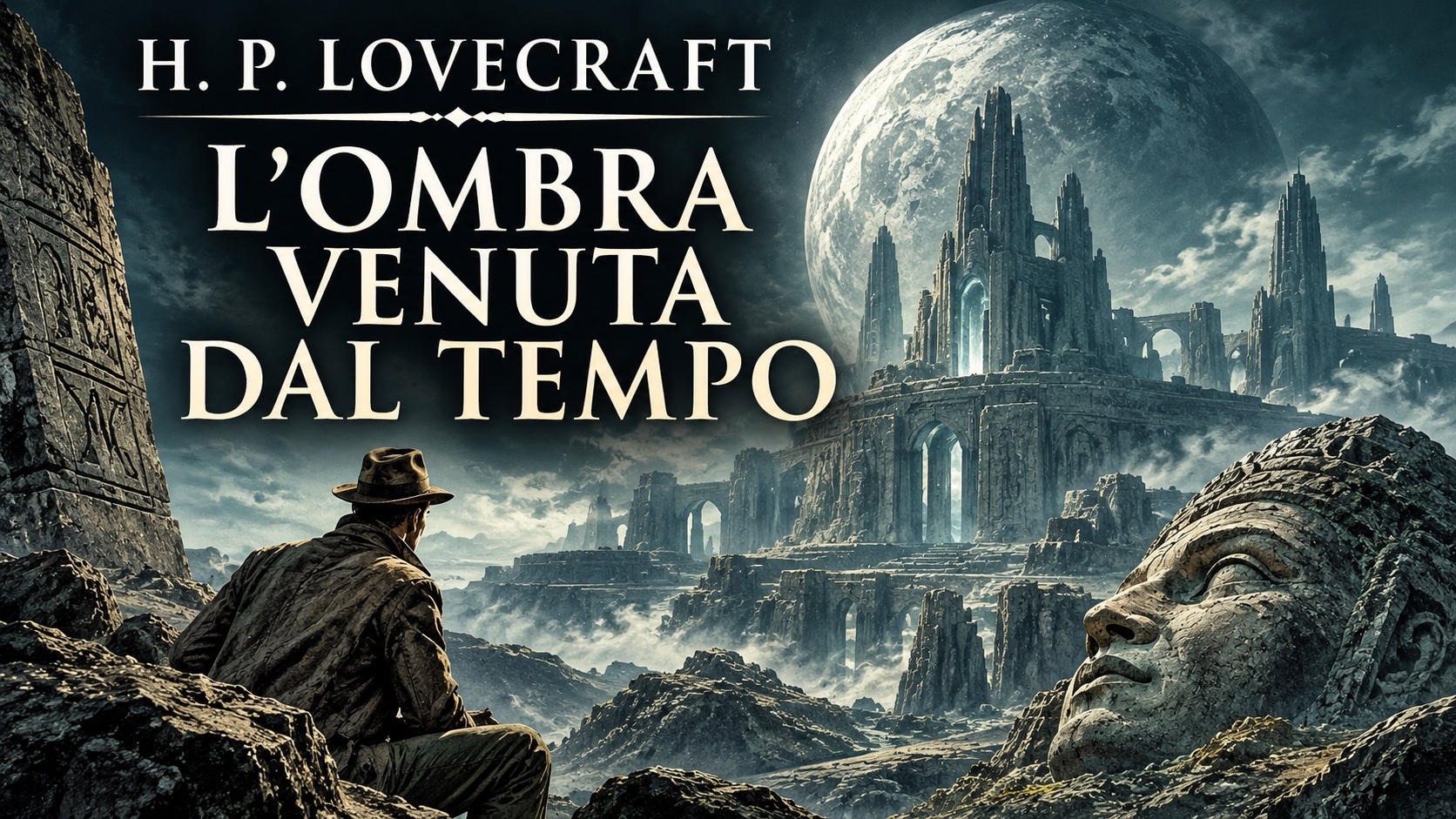
 Lucien
Nota editoriale
Il racconto che segue è stato tradotto da ChatGPT a cui è stato chiesto di mantenere le seguenti caratteristiche: la struttura narrativa, i nomi propri, i riferimenti bibliografici e il lessico scientifico e occultistico, evitando di modernizzare le espressioni.
Poi ha conservato anche le ripetizioni e le costruzioni sintattiche caratteristiche della prosa di Lovecraft, cercando di restituire il tono testimoniale, erudito e progressivamente inquietante dell’originale.
Tempo di lettura sia per l’italiano che inglese: 115~160 min.
Nell’INDICE ho aggiunto la “Descrizione” dei Capitoli, non presente nella versione originale.
I. Gli anni cancellati
Dopo ventidue anni di incubi e terrore, confortato soltanto dalla disperata convinzione che certe impressioni avessero origine mitica, non oso garantire la veridicità di quanto credo di aver scoperto nell’Australia Occidentale, durante la notte fra il 17 e il 18 luglio 1935. Vi è motivo di sperare che la mia esperienza sia stata interamente o in parte un’allucinazione, per la quale, in effetti, non mancavano certo abbondanti cause. Eppure, il suo realismo era così orribile che talvolta mi riesce impossibile nutrire una simile speranza. Se davvero accadde, allora l’uomo dovrà prepararsi ad accettare concezioni del cosmo, e della propria collocazione nel vortice ribollente del tempo, il cui solo accenno è sufficiente a paralizzare. Dovrà inoltre essere messo in guardia contro uno specifico pericolo in agguato che, sebbene non finirà mai per inghiottire l’intera razza umana, potrebbe imporre orrori mostruosi e inimmaginabili ad alcuni suoi membri più intraprendenti. È per quest’ultima ragione che esorto, con tutte le forze del mio essere, ad abbandonare definitivamente ogni tentativo di riportare alla luce quei frammenti di muratura primordiale e sconosciuta che la mia spedizione si era prefissa di investigare.
Supponendo che fossi sano di mente e perfettamente desto, la mia esperienza di quella notte fu qualcosa che nessun uomo aveva mai vissuto prima. Fu, inoltre, una spaventosa conferma di tutto ciò che avevo cercato di relegare nel regno del mito e del sogno. Per fortuna non esistono prove, poiché, nel mio terrore, smarrii l’oggetto terrificante che, se autentico e riportato fuori da quell’abisso malsano, avrebbe costituito una testimonianza inconfutabile. Quando mi imbattei in quell’orrore ero solo, e fino a oggi non ne ho parlato con nessuno. Non potei impedire agli altri di scavare in quella direzione, ma il caso e la sabbia in continuo movimento li hanno finora salvati dal ritrovarlo. Ora devo formulare una dichiarazione definitiva, non soltanto per preservare il mio equilibrio mentale, ma anche per mettere in guardia quanti altri potrebbero leggere seriamente queste righe.
Queste pagine, molte delle quali, nelle parti iniziali, saranno familiari ai lettori più attenti della stampa generale e scientifica, sono scritte nella cabina della nave che mi sta riportando a casa. Le consegnerò a mio figlio, il professor Wingate Peaslee della Miskatonic University, l’unico membro della mia famiglia che mi rimase accanto dopo la mia strana amnesia di tanti anni fa, e l’uomo maggiormente informato sui retroscena del mio caso. Fra tutte le persone ancora in vita, è il meno incline a ridicolizzare ciò che racconterò di quella fatidica notte. Non gli esposi oralmente i fatti prima della partenza, poiché ritengo sia meglio che riceva la rivelazione in forma scritta. Leggendola e rileggendola con calma, potrà farsi un quadro assai più convincente di quanto la mia lingua confusa potrebbe mai sperare di trasmettergli. Potrà fare di questo resoconto ciò che riterrà opportuno, mostrandolo, accompagnato da adeguati commenti, a tutti coloro presso i quali potrà risultare utile. È per quei lettori che non conoscono le prime fasi del mio caso che premetto alla rivelazione vera e propria un resoconto piuttosto ampio dei fatti che ne costituiscono il retroterra.
Mi chiamo Nathaniel Wingate Peaslee, e quanti ricordano i racconti apparsi sui giornali una generazione fa, oppure le lettere e gli articoli pubblicati sulle riviste di psicologia sei o sette anni or sono, sapranno chi sono e che cosa mi è accaduto. La stampa fu colma di particolari sulla mia strana amnesia del periodo 1908–1913, e molto si insistette sulle tradizioni di orrore, follia e stregoneria che aleggiano intorno all’antica cittadina del Massachusetts che allora, come oggi, costituisce il mio luogo di residenza. Desidero tuttavia che sia chiaro che nella mia eredità familiare e nella mia prima vita non vi è assolutamente nulla di folle o sinistro. Si tratta di un fatto di grandissima importanza, considerando l’ombra che mi piombò addosso così improvvisamente, provenendo da fonti esterne. Può darsi che secoli di oscure meditazioni abbiano conferito alla cadente Arkham, infestata da sussurri, una particolare vulnerabilità nei confronti di simili ombre, sebbene anche questo sembri dubbio alla luce degli altri casi che in seguito ebbi modo di studiare. Ma il punto essenziale è che le mie origini e il mio ambiente familiare sono del tutto normali. Ciò che venne, venne da qualche altra parte: un luogo che ancora oggi esito a indicare apertamente.
Sono figlio di Jonathan e Hannah (Wingate) Peaslee, entrambi appartenenti a un’antica e rispettabile famiglia di Haverhill. Nacqui e crebbi a Haverhill, nella vecchia casa di famiglia in Boardman Street, nei pressi di Golden Hill, e non mi trasferii ad Arkham fino a quando, all’età di diciotto anni, entrai alla Miskatonic University. Era il 1889. Dopo la laurea, studiai economia ad Harvard, per poi tornare alla Miskatonic nel 1895, in qualità di docente di Economia politica. Per altri tredici anni la mia vita trascorse serenamente e felicemente. Nel 1896 sposai Alice Keezar, di Haverhill, e i miei tre figli, Robert K., Wingate e Hannah, nacquero rispettivamente nel 1898, 1900 e 1903. Nel 1898 divenni professore associato e nel 1902 professore ordinario. Non avevo mai nutrito il benché minimo interesse né per l’occultismo né per la psicologia anormale.
Fu giovedì 14 maggio 1908 che si verificò quella strana amnesia. L’evento fu del tutto improvviso, sebbene in seguito mi resi conto che alcune brevi e fuggevoli visioni, avute diverse ore prima, visioni caotiche che mi avevano profondamente turbato proprio perché senza precedenti, dovevano essere state sintomi premonitori. Avevo mal di testa e provavo una sensazione singolare, del tutto nuova per me: quella che qualcun altro stesse cercando di impadronirsi dei miei pensieri.
Il collasso avvenne verso le 10:20 del mattino, mentre tenevo una lezione di Economia politica VI, dedicata alla storia e alle tendenze attuali dell’economia, per studenti del terzo anno e alcuni del secondo. Cominciai a vedere strane forme davanti agli occhi e ad avere la sensazione di trovarmi in una stanza grottesca, diversa dall’aula universitaria. I miei pensieri e le mie parole si allontanarono dall’argomento, e gli studenti si resero conto che qualcosa non andava affatto. Poi mi accasciai sulla sedia, privo di conoscenza, in uno stato di torpore dal quale nessuno riuscì a risvegliarmi. Le mie facoltà autentiche non tornarono ad affacciarsi alla luce del giorno del nostro mondo normale per altri cinque anni, quattro mesi e tredici giorni.
Naturalmente, ho appreso da altre persone ciò che accadde in seguito. Non diedi alcun segno di coscienza per sedici ore e mezza, benché fossi stato trasportato nella mia abitazione al numero 27 di Crane Street e sottoposto alle migliori cure mediche. Alle tre del mattino del 15 maggio i miei occhi si aprirono e cominciai a parlare, ma ben presto i medici e i miei familiari furono profondamente spaventati dall’andamento delle mie espressioni e del mio linguaggio. Era evidente che non ricordavo la mia identità né il mio passato, sebbene, per qualche ragione, sembrassi ansioso di nascondere questa mancanza di conoscenza. I miei occhi fissavano in modo strano le persone che mi circondavano, e le contrazioni dei muscoli del volto erano del tutto insolite.
Persino il mio modo di parlare appariva impacciato ed estraneo. Usavo gli organi vocali con goffaggine e incertezza, e la mia dizione aveva una qualità curiosamente artificiosa, come se avessi appreso faticosamente la lingua inglese attraverso i libri. La pronuncia era barbaramente aliena, mentre il linguaggio sembrava comprendere tanto frammenti di un curioso arcaismo quanto espressioni di natura assolutamente incomprensibile. Una di queste ultime, in particolare, fu ricordata con grande intensità, e persino con terrore, dal più giovane dei medici vent’anni dopo. Infatti, proprio in quel periodo successivo, una simile espressione cominciò a entrare effettivamente nell’uso comune, dapprima in Inghilterra e poi negli Stati Uniti; e sebbene fosse assai complessa e indiscutibilmente nuova, riproduceva in ogni minimo particolare le enigmatiche parole pronunciate dallo strano paziente di Arkham nel 1908.
Le mie forze fisiche tornarono immediatamente, sebbene avessi bisogno di una singolare quantità di riabilitazione per riabituarmi all’uso delle mani, delle gambe e, in generale, dell’intero apparato corporeo. Per questo motivo e per altri impedimenti legati alla perdita della memoria, fui mantenuto per qualche tempo sotto stretta sorveglianza medica. Quando mi resi conto che i miei tentativi di nascondere l’amnesia erano falliti, la ammisi apertamente e cominciai a mostrarmi ansioso di ricevere informazioni di ogni genere. In effetti, ai medici parve che avessi perso ogni interesse per la mia vera personalità non appena ebbi constatato che il caso di amnesia era stato accettato come un fenomeno naturale. Notarono che i miei sforzi principali erano rivolti ad apprendere determinati aspetti della storia, della scienza, dell’arte, delle lingue e del folclore: alcuni estremamente complessi e altri di una semplicità quasi infantile, che, in molti casi assai stranamente, restavano al di fuori della mia coscienza.
Allo stesso tempo, notarono che possedevo un’inspiegabile padronanza di numerose forme di conoscenza pressoché sconosciute, una padronanza che sembravo desideroso di nascondere piuttosto che di ostentare. Mi capitava di fare, con disinvolta sicurezza, riferimenti involontari a eventi di epoche remote e nebulose, al di fuori dei confini della storia riconosciuta, spacciandoli per scherzi quando mi accorgevo dello stupore che suscitavano. Avevo inoltre l’abitudine di parlare del futuro in un modo che, in due o tre occasioni, provocò autentico spavento. Queste inquietanti manifestazioni cessarono presto di verificarsi, sebbene alcuni osservatori attribuissero la loro scomparsa più a una certa cautela furtiva da parte mia che a un qualsiasi affievolimento delle conoscenze misteriose che le alimentavano. In effetti, sembravo anormalmente desideroso di assimilare il linguaggio, i costumi e i punti di vista dell’epoca in cui vivevo, come se fossi un viaggiatore studioso proveniente da una terra lontana e straniera.
Non appena mi fu concesso, cominciai a frequentare a tutte le ore la biblioteca universitaria; e poco dopo iniziai a organizzare quegli strani viaggi e quei corsi speciali presso università americane ed europee che suscitarono tanti commenti negli anni successivi. Non mi mancò mai la possibilità di entrare in contatto con studiosi di fama, poiché il mio caso aveva raggiunto una certa notorietà negli ambienti della psicologia dell’epoca. Venivo citato nelle lezioni come esempio tipico di personalità secondaria, sebbene talvolta riuscissi a lasciare perplessi i docenti con qualche sintomo bizzarro o qualche strana traccia di scherno accuratamente dissimulato.
Di autentica cordialità, tuttavia, ne incontrai ben poca. Qualcosa nel mio aspetto e nel mio modo di parlare sembrava suscitare in chiunque incontrassi vaghe paure e repulsioni, come se fossi un essere infinitamente lontano da tutto ciò che è normale e salubre. Questa idea di un oscuro orrore nascosto, connesso a incommensurabili abissi di una qualche sorta di distanza, era stranamente diffusa e persistente. La mia stessa famiglia non fece eccezione. Fin dal momento del mio strano risveglio, mia moglie mi aveva guardato con estremo orrore e disgusto, dichiarando che ero un completo estraneo che aveva usurpato il corpo di suo marito. Nel 1910 ottenne il divorzio legale, e non volle mai acconsentire a rivedermi, nemmeno dopo il mio ritorno alla normalità nel 1913. Gli stessi sentimenti erano condivisi da mio figlio maggiore e dalla mia bambina, nessuno dei quali ho mai più rivisto.
Soltanto il mio secondogenito, Wingate, sembrò capace di vincere il terrore e la repulsione suscitati dal mio cambiamento. Anche lui mi considerava un estraneo, ma, nonostante avesse soltanto otto anni, rimase saldamente convinto che il mio vero io sarebbe tornato. Quando ciò avvenne, venne a cercarmi e i tribunali gli affidarono la mia custodia. Negli anni successivi mi aiutò negli studi ai quali ero spinto, e oggi, all’età di trentacinque anni, è professore di psicologia alla Miskatonic. Ma non mi meraviglio dell’orrore che suscitavo, poiché certamente la mente, la voce e l’espressione del volto dell’essere che si era risvegliato il 15 maggio 1908 non appartenevano a Nathaniel Wingate Peaslee.
Non tenterò di raccontare nei dettagli la mia vita dal 1908 al 1913, poiché i lettori potranno ricavarne tutti gli elementi essenziali esteriori, come del resto dovetti fare in larga misura anch’io, consultando le raccolte dei vecchi giornali e delle riviste scientifiche. Mi fu affidata la gestione dei miei fondi, che spesi lentamente e, nel complesso, con saggezza, viaggiando e studiando presso vari centri di cultura. I miei viaggi, tuttavia, furono quanto mai singolari, poiché comportavano lunghi soggiorni in luoghi remoti e desolati. Nel 1909 trascorsi un mese sull’Himalaya e nel 1911 suscitai grande attenzione per un viaggio a dorso di cammello attraverso gli sconosciuti deserti dell’Arabia. Non sono mai riuscito a scoprire che cosa accadde durante quelle spedizioni. Nell’estate del 1912 noleggiai una nave e navigai nelle acque artiche a nord delle Spitzbergen, mostrando in seguito segni di delusione. Più tardi, quello stesso anno, trascorsi settimane da solo oltre i limiti di qualsiasi esplorazione precedente o successiva, negli immensi sistemi di caverne calcaree della Virginia occidentale: neri labirinti così intricati che non si poteva nemmeno pensare di ripercorrere i propri passi.
I miei soggiorni presso le università erano caratterizzati da un’assimilazione anormalmente rapida, come se la personalità secondaria possedesse un’intelligenza enormemente superiore alla mia. Ho inoltre scoperto che la mia velocità di lettura e di studio individuale era fenomenale. Riuscivo a padroneggiare ogni particolare di un libro semplicemente scorrendolo con lo sguardo alla massima velocità con cui potevo voltarne le pagine; mentre la mia capacità di interpretare istantaneamente figure complesse era davvero impressionante. Talvolta circolavano persino resoconti quasi inquietanti del mio potere di influenzare i pensieri e le azioni altrui, sebbene sembrassi essermi premurato di limitare al minimo le manifestazioni di tale facoltà.
Altre voci inquietanti riguardavano la mia familiarità con i capi di gruppi occultisti e con studiosi sospettati di avere legami con innominabili confraternite di abominevoli ierofanti del mondo antico. Queste dicerie, sebbene mai dimostrate all’epoca, furono senza dubbio alimentate dalla natura delle mie letture, che era ben nota, poiché consultare libri rari nelle biblioteche non è qualcosa che si possa fare di nascosto. Esistono prove tangibili, sotto forma di annotazioni a margine, del fatto che esaminai minuziosamente opere quali il Cultes des Goules del conte d’Erlette, il De Vermis Mysteriis di Ludvig Prinn, gli Unaussprechlichen Kulten di von Junzt, i frammenti superstiti del misterioso Libro di Eibon e il temuto Necronomicon dell’arabo pazzo Abdul Alhazred. Inoltre, è innegabile che, proprio nel periodo della mia strana mutazione, si verificò una nuova e malvagia ondata di attività clandestine legate ai culti sotterranei.
Nell’estate del 1913 cominciai a manifestare segni di noia e di affievolimento dell’interesse, lasciando intendere a diversi conoscenti che presto ci si sarebbe potuti aspettare un cambiamento in me. Parlai di ricordi della mia vita precedente che stavano tornando alla memoria, sebbene la maggior parte di coloro che mi ascoltavano mi giudicasse poco sincero, poiché tutti i ricordi che riferivo erano occasionali e avrebbero potuto essere appresi dai miei vecchi documenti privati. Verso la metà di agosto tornai ad Arkham e riaprii la mia casa di Crane Street, rimasta chiusa per lungo tempo. Qui installai un meccanismo dall’aspetto assai curioso, costruito in parti separate da diversi fabbricanti di apparecchiature scientifiche in Europa e in America, e accuratamente tenuto lontano dagli occhi di chiunque fosse abbastanza intelligente da poterlo analizzare. Coloro che ebbero modo di vederlo, un operaio, un domestico e la nuova governante, affermano che fosse una strana combinazione di aste, ruote e specchi, sebbene fosse alto soltanto circa sessanta centimetri, largo trenta e altrettanto profondo. Lo specchio centrale era circolare e convesso. Tutto ciò trova conferma nelle testimonianze dei fabbricanti dei singoli componenti che è stato possibile rintracciare.
La sera di venerdì 26 settembre congedai la governante e la domestica, lasciandole libere fino a mezzogiorno del giorno successivo. Le luci rimasero accese in casa fino a tarda notte, e un uomo magro, scuro di carnagione e dall’aspetto curiosamente straniero arrivò in automobile. Fu verso l’una del mattino che le luci vennero viste per l’ultima volta. Alle 2:15 un poliziotto notò che la casa era al buio, ma l’automobile dello sconosciuto era ancora ferma sul marciapiede. Alle quattro, certamente, l’automobile era ormai scomparsa. Erano circa le sei quando una voce straniera e incerta, al telefono, chiese al dottor Wilson di recarsi a casa mia e di risvegliarmi da uno strano svenimento. La chiamata, effettuata a lunga distanza, fu successivamente ricondotta a una cabina telefonica pubblica della North Station di Boston, ma non si riuscì mai a scoprire alcuna traccia dell’uomo magro e straniero.
Quando il medico raggiunse la mia abitazione, mi trovò privo di conoscenza nel salotto, seduto su una poltrona con un tavolino accostato davanti a me. Sul piano lucido del tavolo vi erano graffi che indicavano il punto in cui era stato appoggiato un oggetto pesante. La strana macchina era scomparsa e di essa non si seppe più nulla. Senza dubbio l’uomo magro e dalla carnagione scura l’aveva portata via. Nel focolare della biblioteca si trovavano abbondanti ceneri, evidentemente ciò che restava della combustione di ogni ultimo frammento di carta sul quale avevo scritto dopo l’inizio dell’amnesia. Il dottor Wilson trovò la mia respirazione assai anomala, ma, dopo un’iniezione ipodermica, essa divenne più regolare.
Alle 11:15 del mattino del 27 settembre cominciai ad agitarmi vigorosamente, e il mio volto, fino ad allora simile a una maschera, iniziò a mostrare segni di espressione. Il dottor Wilson osservò che quell’espressione non apparteneva alla mia personalità secondaria, ma somigliava molto a quella del mio io normale. Verso le 11:30 mormorai alcune sillabe assai curiose, che non sembravano avere alcuna relazione con una qualsiasi lingua umana. Sembravo inoltre lottare contro qualcosa. Poi, poco dopo mezzogiorno, mentre nel frattempo la governante e la domestica erano rientrate, cominciai a mormorare in inglese.
«… degli economisti ortodossi di quel periodo, Jevons rappresenta la tendenza dominante verso la correlazione scientifica. Il suo tentativo di collegare il ciclo commerciale della prosperità e della depressione con il ciclo fisico delle macchie solari costituisce forse il culmine di…»
Nathaniel Wingate Peaslee era tornato: uno spirito nella cui percezione del tempo era ancora quel giovedì mattina del 1908, con la classe di economia che fissava il logoro banco sulla pedana della cattedra.
II. Il ritorno alla coscienza
Il mio reinserimento nella vita normale fu un processo doloroso e difficile. La perdita di oltre cinque anni comporta complicazioni assai maggiori di quanto si possa immaginare e, nel mio caso, vi erano innumerevoli questioni da sistemare. Ciò che venni a sapere delle mie azioni dal 1908 in poi mi colmò di stupore e turbamento, ma cercai di considerare la faccenda con tutta la filosofia di cui ero capace. Dopo essere finalmente rientrato in possesso della custodia di mio figlio minore, Wingate, mi sistemai con lui nella casa di Crane Street e cercai di riprendere l’insegnamento: l’università, con grande benevolenza, mi aveva offerto nuovamente la mia vecchia cattedra.
Ripresi il lavoro con il semestre del febbraio 1914 e continuai per un anno esatto. A quel punto mi resi conto di quanto profondamente la mia esperienza mi avesse sconvolto. Benché perfettamente sano di mente, almeno così speravo, e senza alcuna alterazione della mia personalità originaria, non possedevo più l’energia nervosa di un tempo. Vaghi sogni e strane idee continuavano a perseguitarmi e, quando lo scoppio della guerra mondiale rivolse i miei pensieri alla storia, mi scoprii a riflettere su epoche ed eventi nel modo più singolare possibile. La mia concezione del tempo, la mia capacità di distinguere fra successione e simultaneità, sembrava sottilmente alterata; tanto che mi formavo idee chimeriche circa la possibilità di vivere in un’epoca e di spaziare con la mente attraverso tutta l’eternità, alla ricerca di conoscenze relative alle epoche passate e future.
La guerra mi suscitava strane impressioni, come se ricordassi alcune delle sue lontane conseguenze, quasi sapessi già quale sarebbe stato il suo esito e potessi guardare indietro a essa alla luce di informazioni future. Tutte queste quasi-memorie erano accompagnate da grande sofferenza e dalla sensazione che una sorta di barriera psicologica artificiale si opponesse al loro manifestarsi. Quando accennai timidamente ad altri le mie impressioni, ricevetti risposte diverse. Alcuni mi guardarono con disagio, ma gli uomini del dipartimento di matematica parlarono dei nuovi sviluppi di quelle teorie della relatività, allora discusse soltanto negli ambienti accademici, che in seguito sarebbero diventate tanto famose. Il dottor Albert Einstein, dissero, stava rapidamente riducendo il tempo alla condizione di una semplice dimensione.
Ma i sogni e i turbamenti si impadronirono sempre più di me, tanto che nel 1915 fui costretto ad abbandonare il mio lavoro regolare. Alcune delle impressioni stavano assumendo una forma particolarmente molesta, insinuandomi persistentemente l’idea che la mia amnesia fosse stata il risultato di una sorta di scambio sacrilego; che la personalità secondaria fosse stata davvero una forza intrusa proveniente da regioni sconosciute e che la mia stessa personalità avesse subito uno spostamento. Fui così indotto a formulare vaghe e terrificanti congetture circa il luogo in cui si trovava il mio vero io durante gli anni in cui un altro aveva occupato il mio corpo. Le conoscenze singolari e la condotta strana del precedente inquilino del mio corpo mi turbavano sempre più, man mano che apprendevo ulteriori particolari da persone, documenti e riviste. Le stranezze che avevano lasciato perplessi gli altri sembravano armonizzarsi in modo terribile con qualche oscuro retroscena di conoscenze che fermentava negli abissi del mio subconscio. Cominciai a cercare febbrilmente ogni frammento d’informazione relativo agli studi e ai viaggi di quell’altro durante gli anni oscuri.
Non tutti i miei tormenti erano di natura così semiastratta. C’erano i sogni, e questi sembravano acquistare una vividezza e una concretezza sempre maggiori. Sapendo come la maggior parte delle persone li avrebbe giudicati, ne parlavo raramente con qualcuno, fatta eccezione per mio figlio e per alcuni psicologi di fiducia. Alla fine, tuttavia, intrapresi uno studio scientifico di altri casi, allo scopo di stabilire quanto tali visioni fossero tipiche o atipiche fra le vittime dell’amnesia. I risultati delle mie ricerche, alle quali contribuirono psicologi, storici, antropologi e specialisti delle malattie mentali dotati di vasta esperienza, e che comprendevano lo studio di tutte le testimonianze relative alle personalità scisse, dai tempi delle leggende sulla possessione demoniaca fino al nostro presente di rigorosa medicina scientifica, inizialmente mi turbarono più di quanto mi recassero conforto.
Ben presto scoprii che i miei sogni non avevano effettivamente alcun riscontro nella stragrande maggioranza dei casi autentici di amnesia. Rimaneva, tuttavia, un esiguo residuo di testimonianze che per anni mi lasciarono perplesso e sconvolto per la loro somiglianza con la mia esperienza. Alcune erano frammenti di antichi racconti popolari; altre, resoconti clinici negli annali della medicina; una o due erano aneddoti sepolti nell’oscurità di opere storiche autorevoli. Sembrava dunque che, sebbene la mia particolare forma di afflizione fosse straordinariamente rara, casi del genere si fossero verificati a lunghi intervalli fin dagli albori della storia umana. Alcuni secoli potevano contenerne uno, due o tre; altri nessuno, o almeno nessuno la cui testimonianza fosse sopravvissuta.
La sostanza era sempre la stessa: una persona dotata di acuta capacità di riflessione veniva colta da una strana seconda vita e conduceva, per un periodo più o meno lungo, un’esistenza del tutto estranea, caratterizzata dapprima da impaccio nel parlare e nei movimenti del corpo e, in seguito, da una completa acquisizione di conoscenze scientifiche, storiche, artistiche e antropologiche; un’acquisizione perseguita con febbrile entusiasmo e con una capacità di assimilazione del tutto anormale. Seguivano poi il brusco ritorno della coscienza legittima e, per tutto il resto della vita, intermittenti tormenti provocati da vaghi sogni inafferrabili, che suggerivano frammenti di qualche orribile ricordo accuratamente cancellato. La strettissima somiglianza di quegli incubi con i miei, persino in alcuni dei particolari più minuti, non lasciava dubbi nella mia mente circa la loro natura significativamente tipica. Uno o due di quei casi presentavano inoltre una sfumatura di vaga e blasfema familiarità, come se ne avessi già avuto notizia attraverso qualche canale cosmico troppo morboso e terrificante anche solo da contemplare. In tre casi si faceva esplicito riferimento a una macchina sconosciuta del genere di quella che si trovava nella mia casa prima del secondo cambiamento.
Un’altra circostanza che durante le mie indagini mi procurava una vaga inquietudine era la frequenza relativamente maggiore di casi nei quali un fugace e sfuggente scorcio dei tipici incubi si manifestava in persone che non erano state colpite da un’amnesia ben definita. Si trattava per lo più di individui di intelligenza mediocre o inferiore, alcuni tanto primitivi da riuscire difficilmente a immaginarli come veicoli di una cultura anormale e di acquisizioni mentali soprannaturali. Per un istante venivano animati da una forza estranea, poi sopraggiungeva una ricaduta nel loro stato precedente e rimaneva soltanto un ricordo tenue e rapidamente svanente di orrori non umani.
Si erano verificati almeno tre casi del genere nell’ultimo mezzo secolo, uno dei quali appena quindici anni prima. Qualcosa stava forse brancolando alla cieca attraverso il tempo, provenendo da un abisso della Natura di cui nessuno sospettava l’esistenza? Erano forse questi casi minori il risultato di mostruosi e sinistri esperimenti, di natura e autori assolutamente al di là di ogni ragionevole credenza? Queste erano alcune delle speculazioni informi che occupavano le mie ore più deboli, fantasie alimentate dai miti portati alla luce dai miei studi. Non potevo infatti dubitare che certe leggende persistenti di un’antichità immemorabile, apparentemente sconosciute alle vittime e ai medici coinvolti nei recenti casi di amnesia, costituissero un’elaborazione straordinaria e terrificante di vuoti di memoria simili al mio.
Della natura dei sogni e delle impressioni che diventavano sempre più insistenti ho ancora quasi paura di parlare. Sembravano avere un sentore di follia e, a volte, credevo di stare davvero impazzendo. Esisteva forse una particolare forma di delirio che affliggeva coloro che avevano subito vuoti di memoria? Era concepibile che gli sforzi della mente subconscia per colmare un vuoto sconcertante mediante pseudo-ricordi potessero dar luogo a strane divagazioni dell’immaginazione. Questa, in effetti, era la convinzione di molti alienisti che mi avevano aiutato nella ricerca di casi analoghi e che condividevano il mio stupore di fronte alle precise somiglianze talvolta riscontrate, sebbene alla fine una teoria alternativa, fondata sul folclore, mi fosse sembrata più plausibile. Essi non definivano tale condizione una vera e propria follia, ma la classificavano piuttosto fra i disturbi nevrotici. Approvarono senza riserve il mio metodo di affrontarla, cercando di rintracciarla e analizzarla anziché tentare invano di ignorarla o dimenticarla, considerandolo corretto secondo i migliori principi della psicologia. Apprezzai particolarmente i consigli di quei medici che mi avevano studiato durante la mia possessione da parte dell’altra personalità.
I miei primi turbamenti non furono affatto di natura visiva, ma riguardavano le questioni più astratte che ho già menzionato. Vi era inoltre un sentimento di orrore profondo e inspiegabile nei confronti di me stesso. Sviluppai una strana paura di vedere la mia stessa figura, come se i miei occhi dovessero scoprirvi qualcosa di completamente estraneo e inconcepibilmente ripugnante. Quando abbassavo lo sguardo e scorgevo la familiare forma umana, vestita dei consueti abiti sobri, grigi o azzurri, provavo sempre uno strano sollievo, sebbene per ottenerlo dovessi prima vincere un terrore infinito. Evitavo gli specchi per quanto possibile e mi facevo sempre radere dal barbiere.
Trascorse molto tempo prima che riuscissi a collegare anche solo vagamente qualcuno di questi sentimenti sconnessi alle fugaci impressioni visive che cominciavano a manifestarsi. La prima correlazione di questo genere riguardò la strana sensazione di un vincolo esterno e artificiale imposto alla mia memoria. Sentivo che i frammenti di immagini che mi si presentavano avevano un significato profondo e terribile, e un legame spaventoso con me stesso, ma che una qualche influenza deliberata mi impediva di afferrare quel significato e quel legame. Poi si manifestò quella stranezza relativa all’elemento del tempo e, insieme a essa, disperati tentativi di collocare i frammentari scorci dei sogni nel loro schema cronologico e spaziale.
Inizialmente, quegli scorci erano soltanto strani, piuttosto che orribili. Mi sembrava di trovarmi in un’enorme sala a volta, le cui alte nervature di pietra si perdevano quasi nelle ombre sovrastanti. Qualunque fosse il tempo o il luogo della scena, il principio dell’arco era conosciuto e utilizzato con la stessa padronanza e diffusione che ebbe presso i Romani. Vi erano colossali finestre circolari e alte porte arcuate, nonché piedistalli o tavoli ciascuno alto quanto una normale stanza. Enormi scaffalature di legno scuro rivestivano le pareti, contenendo quelli che sembravano volumi di dimensioni gigantesche, recanti sui dorsi strani geroglifici. Le parti di muratura lasciate a vista erano ornate da curiose incisioni, sempre caratterizzate da disegni matematici curvilinei, e vi erano iscrizioni cesellate negli stessi caratteri impressi sui grandi libri. La muratura di granito scuro era di tipo megalitico mostruoso, con file di blocchi dalla sommità convessa che combaciavano con i corsi di blocchi sottostanti dalla superficie concava, sui quali poggiavano. Non vi erano sedie, ma le sommità degli enormi piedistalli erano ingombre di libri, carte e di quelli che sembravano strumenti per scrivere: bizzarri calamai dalla forma insolita, fatti di un metallo violaceo, e asticelle dalle punte macchiate. Benché i piedistalli fossero tanto alti, talvolta sembrava che riuscissi a osservarli dall’alto. Su alcuni di essi si trovavano grandi globi di cristallo luminoso che fungevano da lampade e macchinari inspiegabili, composti da tubi vitrei e aste metalliche. Le finestre erano vetrate e protette da robuste inferriate. Sebbene non osassi avvicinarmi per guardare fuori, dal punto in cui mi trovavo riuscivo a scorgere le cime ondeggianti di singolari vegetazioni simili a felci. Il pavimento era formato da massicce lastre ottagonali, mentre mancavano completamente tappeti e arazzi.
In seguito ebbi visioni nelle quali fluttuavo attraverso corridoi ciclopici di pietra e salivo e scendevo lungo giganteschi piani inclinati, costruiti con la stessa mostruosa muratura. Non vi erano scale in alcun punto, né passaggi larghi meno di trenta piedi. Alcune delle strutture attraverso le quali fluttuavo dovevano innalzarsi verso il cielo per migliaia di piedi. Al di sotto si estendevano molteplici livelli di volte nere e botole mai aperte, sigillate da fasce metalliche e capaci di suggerire oscuramente la presenza di qualche pericolo particolare. Mi sembrava di essere un prigioniero e un orrore opprimente incombeva su tutto ciò che vedevo. Sentivo che i geroglifici curvilinei e beffardi sulle pareti avrebbero devastato la mia anima con il loro messaggio, se non fossi stato protetto da una misericordiosa ignoranza.
Più tardi ancora, i miei sogni compresero vedute che si aprivano dalle grandi finestre circolari e dall’immenso tetto piano, con i suoi strani giardini, la vasta area spoglia e l’alto parapetto di pietra merlato a profilo ondulato, al quale conduceva il più elevato dei piani inclinati. Si estendevano quasi senza fine leghe di edifici giganteschi, ciascuno immerso nel proprio giardino e disposti lungo strade lastricate larghe non meno di duecento piedi. Differivano notevolmente nell’aspetto, ma pochi misuravano meno di cinquecento piedi per lato o meno di mille piedi in altezza. Molti sembravano così sconfinati da dover avere una facciata lunga diverse migliaia di piedi, mentre alcuni si innalzavano fino ad altitudini montuose, nei cieli grigi e carichi di vapori. Parevano costruiti prevalentemente in pietra o cemento e la maggior parte di essi presentava quel particolare tipo di muratura curvilinea che avevo notato nell’edificio in cui ero rinchiuso. I tetti erano piani e ricoperti di giardini, e tendevano ad avere parapetti merlati dal profilo ondulato. Talvolta vi erano terrazze e livelli superiori, nonché ampi spazi sgombri fra i giardini. Sulle grandi strade si intuivano movimenti, ma nelle prime visioni non riuscivo a tradurre questa impressione in particolari definiti.
In alcuni luoghi scorgevo enormi torri cilindriche e scure, che si innalzavano molto al di sopra di tutte le altre costruzioni. Sembravano appartenere a una tipologia del tutto particolare e mostravano i segni di un’età prodigiosa e di un avanzato stato di rovina. Erano costruite con una bizzarra muratura di blocchi di basalto squadrati e si restringevano leggermente verso le sommità arrotondate. In nessuna di esse riuscivo a scorgere la minima traccia di finestre o altre aperture, fatta eccezione per enormi porte. Notai anche alcuni edifici più bassi, tutti sgretolati dall’azione corrosiva di eoni, che nell’architettura di base somigliavano a quelle oscure torri cilindriche. Intorno a tutte queste aberranti masse di muratura in blocchi squadrati aleggiava un’inspiegabile aura di minaccia e di paura concentrata, simile a quella suscitata dalle botole sigillate.
I giardini onnipresenti erano quasi terrificanti nella loro stranezza, con forme di vegetazione bizzarre e sconosciute che ondeggiavano sopra ampi sentieri fiancheggiati da monoliti curiosamente scolpiti. Predominavano vegetazioni simili a felci, di dimensioni anormalmente vaste, alcune verdi e altre di un pallore fungino e spettrale. Fra esse si innalzavano grandi forme spettrali simili a calamiti, i cui tronchi simili a bambù raggiungevano altezze favolose. Vi erano poi forme cespugliose simili a cicadee leggendarie, e grotteschi arbusti e alberi verde scuro dall’aspetto conifero. I fiori erano piccoli, incolori e irriconoscibili, e sbocciavano in aiuole geometriche e sparsi in mezzo alla vegetazione. In alcuni giardini terrazzati e sui tetti crescevano fiori più grandi e dai colori più vivaci, con contorni quasi offensivi che sembravano suggerire una coltivazione artificiale. Funghi di dimensioni, forme e colori inconcepibili punteggiavano il paesaggio secondo schemi che rivelavano una tradizione orticola sconosciuta, ma consolidata da lungo tempo. Nei giardini più vasti, a livello del suolo, sembrava esservi qualche tentativo di conservare le irregolarità della Natura; sui tetti, invece, si notavano una maggiore selettività e più evidenti tracce dell’arte topiaria.
I cieli erano quasi sempre umidi e nuvolosi e talvolta mi sembrava di assistere a piogge torrenziali. Di tanto in tanto, tuttavia, apparivano scorci del sole, che sembrava anormalmente grande, e della luna, le cui macchie presentavano una lieve differenza rispetto a quelle normali, che non riuscivo mai del tutto a comprendere. Quando, molto raramente, il cielo notturno si schiariva in misura sufficiente, scorgevo costellazioni quasi irriconoscibili. Talvolta si potevano distinguere approssimativamente le forme note, ma quasi mai esse coincidevano esattamente; e, in base alla posizione dei pochi gruppi che riuscivo a riconoscere, avevo la sensazione di trovarmi nell’emisfero australe della Terra, vicino al Tropico del Capricorno. L’orizzonte lontano era sempre velato dai vapori e indistinto, ma riuscivo a vedere che fuori dalla città si estendevano immense giungle di sconosciute felci arboree, calamiti, lepidodendri e sigillarie, le cui fantastiche fronde ondeggiavano beffardamente nei vapori mutevoli. Di tanto in tanto si intravedevano anche movimenti nel cielo, ma nelle mie prime visioni non riuscivo mai a distinguerli con chiarezza.
Nell’autunno del 1914 cominciai ad avere, seppure raramente, sogni nei quali fluttuavo sopra la città e attraverso le regioni circostanti. Vedevo strade interminabili che attraversavano foreste di vegetazione terrificante, con tronchi maculati, scanalati e fasciati, e costeggiavano altre città altrettanto strane di quella che continuava a perseguitarmi. Scorgevo costruzioni mostruose di pietra nera o iridescente, situate in radure e spazi aperti dove regnava un crepuscolo perpetuo, e percorrevo lunghi terrapieni sopra paludi così oscure che riuscivo a distinguere ben poco della loro vegetazione umida e gigantesca. Una volta vidi una regione estesa per innumerevoli miglia, disseminata di rovine basaltiche corrose dal tempo, la cui architettura era stata simile a quella delle poche torri senza finestre e dalla sommità arrotondata che sorgevano nella città dei miei incubi. Un’altra volta vidi il mare: un’immensa distesa sconfinata e avvolta dai vapori, oltre i colossali moli di pietra di un’enorme città di cupole e archi. Su di esso si muovevano grandi forme indistinte simili a ombre e, qua e là, la sua superficie era turbata da anomale colonne d’acqua che si levavano verso l’alto.
III. Le ombre della memoria
Come ho già detto, non fu immediatamente che queste visioni selvagge cominciarono ad assumere il loro carattere terrificante. Certamente, molte persone hanno sognato cose intrinsecamente più strane: cose composte da frammenti sconnessi della vita quotidiana, immagini e letture, disposti dai capricci incontrollati del sonno in forme fantasticamente nuove. Per qualche tempo accettai le visioni come fenomeni naturali, benché in precedenza non fossi mai stato un sognatore particolarmente fantasioso. Sostenevo che molte delle vaghe anomalie dovessero provenire da fonti banali, troppo numerose perché fosse possibile rintracciarle; mentre altre sembravano riflettere le comuni conoscenze scolastiche sulle piante e sulle altre condizioni del mondo primordiale di centocinquanta milioni di anni fa: il mondo del Permiano o del Triassico. Nel corso di alcuni mesi, tuttavia, l’elemento del terrore cominciò ad acquistare un’intensità sempre maggiore. Ciò avvenne quando i sogni iniziarono immancabilmente ad assumere l’aspetto di ricordi e la mia mente cominciò a collegarli ai crescenti turbamenti di natura astratta: la sensazione di un impedimento imposto alla memoria, le singolari impressioni riguardanti il tempo, il senso di un odioso scambio con la mia personalità secondaria del 1908–1913 e, considerevolmente più tardi, l’inspiegabile repulsione nei confronti della mia stessa persona.
Quando nei sogni cominciarono a comparire alcuni particolari ben definiti, il loro orrore aumentò di mille volte, finché, nell’ottobre del 1915, sentii che dovevo fare qualcosa. Fu allora che intrapresi uno studio approfondito di altri casi di amnesia e di visioni, nella convinzione che in tal modo avrei potuto oggettivare il mio tormento e liberarmi dalla sua presa emotiva. Tuttavia, come ho già accennato, il risultato fu inizialmente quasi esattamente l’opposto. Mi turbò profondamente scoprire che i miei sogni erano stati riprodotti con tanta fedeltà, soprattutto perché alcuni resoconti erano così antichi da escludere che i soggetti potessero possedere conoscenze geologiche e, di conseguenza, qualsiasi nozione relativa ai paesaggi primordiali. Per di più, molti di quei resoconti fornivano particolari e spiegazioni assai terrificanti in relazione alle visioni dei grandi edifici, dei giardini nella giungla e di altre cose. Le immagini effettivamente viste e le vaghe impressioni erano già abbastanza inquietanti, ma quanto veniva suggerito o affermato da alcuni degli altri sognatori aveva un sapore di follia e blasfemia. Peggio ancora, la mia stessa pseudo-memoria venne risvegliata, dando origine a sogni ancora più sfrenati e ad accenni di rivelazioni imminenti. Eppure, la maggior parte dei medici giudicava nel complesso consigliabile il mio metodo di ricerca.
Studiai sistematicamente la psicologia e, sotto il medesimo stimolo, anche mio figlio Wingate fece altrettanto, studi che alla fine lo avrebbero condotto all’attuale cattedra universitaria. Nel 1917 e nel 1918 frequentai corsi speciali alla Miskatonic. Nel frattempo, il mio esame dei documenti medici, storici e antropologici divenne instancabile; comportò viaggi presso biblioteche lontane e finì per comprendere persino la lettura degli orribili libri di antiche conoscenze proibite, ai quali la mia personalità secondaria si era interessata in modo tanto inquietante. Alcuni di questi erano proprio gli esemplari che avevo consultato durante il mio stato alterato, e rimasi profondamente turbato da certe annotazioni a margine e da apparenti correzioni del testo orribile, redatte in una grafia e in un linguaggio che, per qualche ragione, sembravano stranamente non umani.
Queste annotazioni erano per lo più scritte nelle rispettive lingue dei vari libri, tutte lingue che l’autore sembrava conoscere con pari facilità, benché evidentemente di natura accademica. Una nota aggiunta agli Unaussprechlichen Kulten di von Junzt, tuttavia, era di tutt’altra natura e risultava allarmante. Consisteva in alcuni geroglifici curvilinei, tracciati con lo stesso inchiostro delle correzioni in tedesco, ma disposti secondo uno schema che non seguiva alcun modello umano riconosciuto. E questi geroglifici erano strettamente e inequivocabilmente affini ai caratteri che incontravo continuamente nei miei sogni: caratteri il cui significato talvolta mi sembrava, per un istante, di conoscere o di essere sul punto di ricordare. A completare la mia cupa confusione, i bibliotecari mi assicurarono che, alla luce delle precedenti consultazioni e delle registrazioni relative alla lettura dei volumi in questione, tutte quelle annotazioni dovevano essere state fatte da me durante il mio stato secondario. E questo nonostante io ignorassi, e ignori tuttora, tre delle lingue coinvolte.
Ricomponendo i documenti sparsi, antichi e moderni, antropologici e medici, scoprii una miscela abbastanza coerente di mito e allucinazione, la cui portata e la cui stravaganza mi lasciarono completamente stordito. Una sola circostanza mi recava conforto: il fatto che quei miti fossero di origine così remota. Quale conoscenza perduta avesse potuto introdurre in quelle primitive leggende immagini dei paesaggi paleozoici o mesozoici, non ero neppure in grado di immaginarlo, ma quelle immagini vi erano presenti. Esisteva dunque una base sulla quale poteva essersi formato un tipo ben definito di delirio. Senza dubbio, i casi di amnesia avevano generato lo schema generale del mito; in seguito, però, le fantasiose aggiunte dei miti dovevano aver reagito sulle vittime dell’amnesia, colorandone le pseudo-memorie. Io stesso avevo letto e ascoltato tutti quei racconti antichi durante il mio vuoto di memoria: le mie ricerche lo avevano ampiamente dimostrato. Non era forse naturale, allora, che i miei sogni successivi e le mie impressioni emotive fossero stati colorati e plasmati da ciò che la memoria aveva sottilmente conservato del mio stato secondario? Alcuni dei miti presentavano significativi legami con altre nebulose leggende del mondo preumano, specialmente con quei racconti indù che riguardavano abissi temporali stupefacenti e che facevano parte del patrimonio dei teosofi moderni.
Il mito primordiale e il delirio moderno concordavano nel supporre che l’umanità fosse soltanto una, forse la meno importante, fra le razze altamente evolute e dominanti che avevano popolato questo pianeta nel corso della sua lunga e in gran parte sconosciuta esistenza. Creature dalle forme inconcepibili, suggerivano quei racconti, avevano innalzato torri fino al cielo e penetrato ogni segreto della Natura prima ancora che il primo antenato anfibio dell’uomo strisciasse fuori dal mare caldo, trecento milioni di anni fa. Alcune erano giunte dalle stelle; poche erano antiche quanto il cosmo stesso; altre erano sorte rapidamente da germi terrestri, tanto lontani nel passato dai primi germi del nostro ciclo vitale quanto questi ultimi lo sono da noi. Si parlava liberamente di periodi lunghi miliardi di anni e di collegamenti con altre galassie e altri universi. In effetti, il tempo, nel senso in cui lo intende l’uomo, semplicemente non esisteva.
La maggior parte dei racconti e delle impressioni riguardava tuttavia una razza relativamente più recente, dalla forma strana e complessa, simile a nessuna forma di vita conosciuta dalla scienza, che era sopravvissuta fino a soli cinquanta milioni di anni prima della comparsa dell’uomo. Secondo quelle testimonianze, essa era stata la più grande di tutte le razze, poiché era l’unica ad aver conquistato il segreto del tempo. Aveva appreso ogni cosa che fosse mai stata conosciuta, o che sarebbe mai stata conosciuta, sulla Terra, grazie alla capacità delle sue menti più acute di proiettarsi nel passato e nel futuro, persino attraverso abissi di milioni di anni, e di studiare il sapere di ogni epoca. Da quanto aveva realizzato questa razza erano nate tutte le leggende sui profeti, comprese quelle appartenenti alla mitologia umana.
Nelle sue immense biblioteche si trovavano volumi di testi e immagini che custodivano l’intera storia della Terra: cronache e descrizioni di ogni specie che fosse mai esistita o che sarebbe mai esistita, corredate da resoconti completi delle rispettive arti, conquiste, lingue e psicologie. Grazie a questa conoscenza che abbracciava interi eoni, la Grande Razza sceglieva, da ogni epoca e forma di vita, quei pensieri, quelle arti e quei procedimenti che meglio si adattavano alla propria natura e alla propria condizione. La conoscenza del passato, ottenuta attraverso una sorta di proiezione mentale al di fuori dei sensi riconosciuti, era più difficile da acquisire rispetto alla conoscenza del futuro.
In quest’ultimo caso, il procedimento era più semplice e materiale. Con l’ausilio di adeguati strumenti meccanici, una mente si proiettava in avanti nel tempo, procedendo a tentoni attraverso le tenebre con i propri sensi extrasensoriali, finché non si avvicinava all’epoca desiderata. Poi, dopo alcuni tentativi preliminari, si impadroniva del rappresentante migliore che fosse possibile individuare fra le forme di vita più evolute di quel periodo; penetrava nel cervello dell’organismo e vi stabiliva le proprie vibrazioni, mentre la mente spodestata veniva proiettata all’indietro, fino all’epoca del soggetto che aveva effettuato lo scambio, rimanendo nel corpo di quest’ultimo finché non veniva predisposto il procedimento inverso. La mente proiettata, nel corpo dell’organismo appartenente al futuro, si presentava allora come un membro della razza di cui indossava l’aspetto esteriore, apprendendo nel minor tempo possibile tutto ciò che era possibile conoscere sull’epoca prescelta e sull’insieme delle sue conoscenze e delle sue tecniche.
Nel frattempo, la mente spodestata, ricondotta all’epoca e al corpo di colui che aveva operato lo scambio, veniva accuratamente sorvegliata. Le si impediva di nuocere al corpo che occupava e i suoi ricordi venivano sistematicamente estratti da interrogatori appositamente addestrati. Spesso poteva essere interrogata nella propria lingua, qualora precedenti spedizioni nel futuro avessero riportato testimonianze relative a quella lingua. Se la mente proveniva da un corpo la cui lingua non poteva essere fisicamente riprodotta dalla Grande Razza, venivano costruite ingegnose macchine sulle quali il linguaggio alieno poteva essere riprodotto come se fosse uno strumento musicale. I membri della Grande Razza erano immensi coni rugosi, alti dieci piedi, con la testa e gli altri organi attaccati a arti estensibili, spessi un piede e disposti a raggiera a partire dal vertice. Parlavan facendo schioccare o strisciare enormi zampe o artigli attaccati alle estremità di due dei loro quattro arti e camminavano mediante l’espansione e la contrazione di uno strato viscoso fissato alle loro immense basi, larghe dieci piedi.
Quando lo stupore e il risentimento della mente prigioniera si erano attenuati e, supponendo che provenisse da un corpo assai diverso da quello della Grande Razza, essa aveva superato l’orrore per la propria temporanea forma sconosciuta, le veniva concesso di studiare il nuovo ambiente e di sperimentare una meraviglia e una saggezza paragonabili a quelle di chi aveva effettuato lo scambio. Adottando opportune precauzioni e in cambio di adeguati servigi, le era permesso di vagare per tutto il mondo abitabile a bordo di titanici dirigibili o di enormi veicoli simili a imbarcazioni, dotati di motori atomici, che percorrevano le grandi strade; poteva inoltre esplorare liberamente le biblioteche contenenti le cronache del passato e del futuro del pianeta. Ciò riconciliava molte menti prigioniere con la propria sorte, poiché nessuna di esse era priva di acutezza e, per menti di tale natura, la rivelazione dei misteri nascosti della Terra, dei capitoli perduti di passati inconcepibili e dei vertiginosi vortici del tempo futuro, comprendenti anche gli anni che si trovavano oltre la propria epoca naturale, rappresentava sempre, nonostante gli orrori abissali spesso portati alla luce, la suprema esperienza della vita.
Di tanto in tanto, ad alcuni prigionieri era consentito incontrare altre menti catturate nel futuro, per scambiare pensieri con coscienze vissute cento, mille o un milione di anni prima o dopo la propria epoca. A tutti veniva inoltre richiesto di scrivere ampiamente, nelle rispettive lingue, su se stessi e sui periodi ai quali appartenevano; tali documenti venivano poi conservati nei grandi archivi centrali.
Si può aggiungere che esisteva una particolare e triste categoria di prigionieri, i cui privilegi erano assai maggiori di quelli concessi alla maggioranza. Si trattava degli esiliati permanenti prossimi alla morte, i cui corpi futuri erano stati occupati da membri della Grande Razza dotati di menti acute che, trovandosi di fronte alla morte, cercavano di sfuggire all’estinzione mentale. Questi malinconici esiliati non erano tanto numerosi quanto ci si potrebbe aspettare, poiché la longevità della Grande Razza attenuava il suo attaccamento alla vita, soprattutto fra quelle menti superiori capaci di proiezione. Dai casi di proiezione permanente delle menti degli antichi erano derivati molti di quei duraturi cambiamenti di personalità osservati nella storia successiva, compresi quelli dell’umanità.
Quanto ai normali casi di esplorazione, quando la mente che aveva operato lo scambio aveva appreso tutto ciò che desiderava conoscere sul futuro, costruiva un apparecchio simile a quello che aveva dato inizio al suo viaggio e invertiva il procedimento di proiezione. Si ritrovava così nel proprio corpo e nella propria epoca, mentre la mente che fino a quel momento era stata prigioniera tornava nel corpo futuro al quale legittimamente apparteneva. Questo ripristino diventava impossibile soltanto quando uno dei due corpi era morto durante lo scambio. In tali circostanze, naturalmente, la mente esploratrice era costretta, come quelle degli individui che cercavano di sfuggire alla morte, a vivere nel futuro un’intera esistenza in un corpo estraneo; oppure la mente prigioniera, come gli esiliati permanenti prossimi alla morte, doveva concludere i propri giorni nella forma e nell’epoca passata della Grande Razza.
Questa sorte era meno orribile quando anche la mente prigioniera apparteneva alla Grande Razza, circostanza tutt’altro che infrequente, poiché in tutte le epoche quella razza era profondamente interessata al proprio futuro. Il numero degli esiliati permanenti della Grande Razza prossimi alla morte era assai esiguo, soprattutto a causa delle tremende pene previste per gli spostamenti delle menti della Grande Razza futura operati da individui in punto di morte. Mediante la proiezione, venivano predisposte misure affinché tali pene fossero inflitte alle menti colpevoli nei loro nuovi corpi futuri e, talvolta, si effettuavano persino scambi forzati per ripristinare la situazione precedente. Erano stati conosciuti casi complessi nei quali menti esploratrici o già prigioniere erano state spodestate da menti provenienti da diverse regioni del passato, e tali situazioni erano state accuratamente corrette. In ogni epoca successiva alla scoperta della proiezione mentale, una componente esigua ma ben riconosciuta della popolazione era costituita da menti della Grande Razza provenienti da epoche passate, che vi soggiornavano per periodi più o meno lunghi.
Quando una mente di origine aliena veniva restituita al proprio corpo nel futuro, era sottoposta a un complesso procedimento di ipnosi meccanica che cancellava tutto ciò che aveva appreso durante il soggiorno nell’epoca della Grande Razza. Ciò era necessario a causa di alcune conseguenze problematiche insite nella trasmissione generalizzata di grandi quantità di conoscenze. I pochi casi di trasmissione integrale di tali conoscenze avevano provocato, e avrebbero provocato in determinati momenti futuri già noti, gravi catastrofi. E fu proprio in conseguenza di due casi del genere, secondo quanto narravano gli antichi miti, che l’umanità era venuta a conoscenza di ciò che sapeva della Grande Razza. Di tutte le cose sopravvissute materialmente e direttamente a quel mondo tanto remoto nel tempo, rimanevano soltanto alcune rovine di grandi pietre in luoghi lontani e sotto il mare, oltre a parti del testo dei terrificanti Manoscritti Pnakotici.
In tal modo, la mente di ritorno raggiungeva la propria epoca conservando soltanto le più vaghe e frammentarie visioni di ciò che aveva vissuto dopo essere stata catturata. Tutti i ricordi che potevano essere cancellati venivano eliminati, cosicché nella maggior parte dei casi non rimaneva, fino al momento del primo scambio, che un vuoto avvolto dall’ombra dei sogni. Alcune menti ricordavano più di altre e, in rare occasioni, la fortuita riunione di certi ricordi aveva fatto giungere alle epoche future indizi di quel passato proibito. Probabilmente non vi fu mai un’epoca in cui gruppi o culti non custodissero segretamente alcuni di questi indizi. Nel Necronomicon si accennava all’esistenza di un simile culto fra gli esseri umani: un culto che talvolta prestava aiuto alle menti in viaggio attraverso gli eoni, provenienti dai giorni della Grande Razza.
E intanto la Grande Razza stessa diventava pressoché onnisciente e si dedicava al compito di stabilire scambi con le menti di altri pianeti, esplorandone il passato e il futuro. Cercava inoltre di sondare gli anni passati e le origini di quel nero astro, morto da eoni e sperduto nello spazio remoto, dal quale proveniva la propria eredità mentale, poiché la mente della Grande Razza era più antica della sua stessa forma corporea. Gli esseri di un antico mondo morente, sapienti dei segreti supremi, avevano guardato al futuro alla ricerca di un nuovo mondo e di una nuova specie nella quale poter godere di una lunga esistenza; avevano quindi inviato in massa le proprie menti in quella razza futura che meglio si prestava a ospitarle: le creature coniche che popolavano la nostra Terra un miliardo di anni fa. Così ebbe origine la Grande Razza, mentre le innumerevoli menti inviate all’indietro vennero abbandonate a morire nell’orrore di forme sconosciute. In seguito, la razza avrebbe nuovamente affrontato la morte, ma sarebbe sopravvissuta attraverso un’altra migrazione delle sue menti migliori verso il futuro, nei corpi di altri esseri ai quali restava davanti un’esistenza fisica più lunga.
Questo era il retroscena di quella leggenda intrecciata all’allucinazione. Quando, intorno al 1920, riuscii a dare una forma coerente alle mie ricerche, avvertii una lieve diminuzione della tensione che le fasi iniziali avevano invece accresciuto. Dopo tutto, e nonostante le fantasie suggerite da emozioni cieche, la maggior parte dei miei fenomeni non era forse facilmente spiegabile? Qualche circostanza casuale poteva avermi indirizzato verso studi oscuri durante l’amnesia; e in seguito avevo letto le leggende proibite e incontrato i membri di antichi culti malfamati. Ciò forniva chiaramente il materiale per i sogni e i turbamenti che erano seguiti al ritorno della memoria. Quanto alle annotazioni marginali, redatte in geroglifici onirici e in lingue a me sconosciute, ma attribuite dai bibliotecari alla mia mano, avrei potuto facilmente acquisire una conoscenza superficiale di quelle lingue durante il mio stato secondario; mentre i geroglifici erano senza dubbio invenzioni della mia fantasia, ricavate dalle descrizioni contenute nelle antiche leggende e successivamente intrecciate ai miei sogni. Cercai di verificare alcuni particolari attraverso conversazioni con noti capi di culto, ma non riuscii mai a stabilire i collegamenti appropriati.
Talvolta, la somiglianza fra così tanti casi verificatisi in epoche tanto lontane continuava a inquietarmi come all’inizio; d’altra parte, riflettevo che il folclore che aveva agito da stimolo era indubbiamente assai più diffuso nel passato che nel presente. Probabilmente tutte le altre vittime i cui casi erano simili al mio avevano avuto una conoscenza lunga e familiare dei racconti che io avevo appreso soltanto durante il mio stato secondario. Quando queste vittime avevano perso la memoria, si erano identificate con le creature appartenenti ai miti della propria cultura, i favolosi invasori ritenuti capaci di spodestare le menti degli uomini, e avevano così intrapreso ricerche di conoscenza che credevano di poter riportare in un immaginario passato non umano. Poi, quando la memoria era tornata, avevano invertito il processo associativo, considerando se stesse come le precedenti menti prigioniere anziché come coloro che avevano operato lo scambio. Da qui derivavano i sogni e le pseudo-memorie conformi allo schema mitologico tradizionale.
Nonostante l’apparente macchinosità di queste spiegazioni, esse finirono per sostituire nella mia mente tutte le altre, soprattutto a causa della maggiore debolezza di qualsiasi teoria alternativa. E un numero considerevole di eminenti psicologi e antropologi giunse gradualmente a concordare con me. Più riflettevo, più il mio ragionamento mi appariva convincente, finché alla fine riuscii a costruire una difesa davvero efficace contro le visioni e le impressioni che continuavano ad assalirmi. Supponiamo che di notte vedessi cose strane. Non erano forse soltanto cose di cui avevo sentito parlare e che avevo letto? Supponiamo che provassi strane repulsioni, percezioni insolite e pseudo-memorie. Anche queste non erano forse soltanto echi di miti assorbiti durante il mio stato secondario? Nulla di ciò che avessi potuto sognare, nulla di ciò che avessi potuto provare, poteva avere alcun significato reale.
Rafforzato da questa filosofia, migliorai considerevolmente il mio equilibrio nervoso, sebbene le visioni, più che le impressioni astratte, diventassero costantemente più frequenti e inquietanti per la ricchezza dei loro particolari. Nel 1922 mi sentii in grado di riprendere regolarmente il lavoro e misi a frutto le conoscenze appena acquisite accettando un incarico di docenza in psicologia presso l’università. La mia vecchia cattedra di economia politica era stata da tempo adeguatamente ricoperta, oltre al fatto che i metodi d’insegnamento dell’economia erano molto cambiati dai tempi del mio massimo splendore accademico. Mio figlio, in quel periodo, stava appena iniziando gli studi postuniversitari che lo avrebbero condotto alla sua attuale cattedra e lavorammo molto insieme.
IV. Le tracce di un passato impossibile
Continuai, nondimeno, a tenere un’accurata registrazione degli stravaganti sogni che si affollavano in me con tanta frequenza e vividezza. Sostenevo che un simile resoconto avesse un autentico valore quale documento psicologico. Quelle visioni continuavano ad assomigliare dannatamente a ricordi, benché riuscissi a combattere tale impressione con un discreto successo. Nello scriverne, trattavo le fantasmagorie come cose vedute; in ogni altro momento, però, le scacciavo come si farebbe con le più inconsistenti illusioni notturne. Non avevo mai menzionato simili questioni nelle conversazioni ordinarie, sebbene le voci al riguardo, diffondendosi come inevitabilmente accade in questi casi, avessero suscitato varie dicerie sulla mia salute mentale. È divertente riflettere sul fatto che tali dicerie fossero circoscritte esclusivamente ai profani, senza che un solo medico o psicologo si fosse schierato a sostenerle.
Delle mie visioni successive al 1914 menzionerò qui soltanto alcune, poiché resoconti più particolareggiati e documentazioni sono a disposizione dello studioso serio. È evidente che, col passare del tempo, le curiose inibizioni si attenuarono in una certa misura, giacché l’ampiezza delle mie visioni aumentò considerevolmente. Esse, tuttavia, non divennero mai altro che frammenti sconnessi, apparentemente privi di una motivazione precisa. Nei sogni mi sembrava di acquisire gradualmente una libertà di movimento sempre maggiore. Fluttuavo attraverso numerosi edifici di pietra dall’aspetto singolare, passando dall’uno all’altro per mezzo di giganteschi passaggi sotterranei che parevano costituire le comuni vie di transito. Talvolta m’imbattevo in quelle enormi botole sigillate del livello più basso, attorno alle quali aleggiava un’atmosfera di terrore e di proibizione. Vedevo immense vasche a mosaico e stanze contenenti utensili curiosi e inspiegabili, di innumerevoli specie. Vi erano poi colossali caverne gremite di macchinari complessi, le cui forme e funzioni mi erano del tutto estranee, e il cui rumore si manifestò soltanto dopo molti anni di sogni. Posso qui osservare che la vista e l’udito sono gli unici sensi di cui mi sia mai servito nel mondo delle visioni.
Il vero orrore ebbe inizio nel maggio del 1915, quando vidi per la prima volta gli esseri viventi. Ciò avvenne prima che i miei studi mi avessero insegnato che cosa aspettarmi, alla luce dei miti e delle testimonianze relative a casi analoghi. Man mano che le barriere mentali si dissolvevano, scorgevo in varie parti dell’edificio e nelle strade sottostanti grandi masse di vapore sottile. Esse si facevano via via più solide e distinte, finché giunsi a discernere con inquietante facilità i loro contorni mostruosi. Sembravano enormi coni iridescenti, alti circa tre metri e larghi altrettanto alla base, costituiti da una materia scanalata, squamosa e semielastica. Dalla loro sommità sporgevano quattro appendici flessibili e cilindriche, ciascuna dello spessore di circa trenta centimetri e composta di una sostanza scanalata simile a quella dei coni stessi. Talvolta queste appendici si contraevano fino quasi a scomparire, altre volte si estendevano per una lunghezza che poteva raggiungere i tre metri. Due di esse terminavano in enormi chele o tenaglie. All’estremità di una terza si trovavano quattro appendici rosse a forma di tromba. La quarta terminava in una sfera giallastra e irregolare, del diametro di circa sessanta centimetri, sulla cui circonferenza centrale erano disposti tre grandi occhi scuri. Al di sopra di questa testa si elevavano quattro sottili peduncoli grigi, recanti appendici simili a fiori, mentre dalla parte inferiore pendevano otto antenne o tentacoli verdastri. L’ampia base del cono centrale era orlata da una sostanza grigia e gommosa, che consentiva all’intera creatura di muoversi mediante contrazioni ed espansioni.
Le loro azioni, per quanto innocue, mi atterrivano persino più del loro aspetto, poiché non è cosa salutare osservare creature mostruose compiere gesti che si è sempre visto compiere soltanto agli esseri umani. Questi esseri si muovevano con intelligenza nelle grandi sale, prelevando libri dagli scaffali e portandoli ai grandi tavoli, o viceversa; talvolta scrivevano diligentemente servendosi di un’asta simile a una penna, stretta dai tentacoli verdastri della testa. Le enormi chele venivano adoperate per trasportare i libri e per conversare, giacché il loro linguaggio consisteva in una sorta di schiocchi e raschiamenti. Gli esseri non portavano abiti, ma recavano borse o zaini appesi alla sommità del tronco conico. Di norma tenevano la testa e il relativo sostegno all’altezza della sommità del cono, sebbene spesso li sollevassero o abbassassero. Le altre tre grandi appendici tendevano a rimanere adagiate lungo i fianchi del cono, contratte fino a una lunghezza di circa un metro e mezzo, quando non venivano utilizzate. Dalla velocità con cui leggevano, scrivevano e azionavano i loro macchinari — quelli collocati sui tavoli sembravano in qualche modo collegati al pensiero — conclusi che la loro intelligenza fosse enormemente superiore a quella dell’uomo.
In seguito li vidi dappertutto: brulicavano in tutte le grandi sale e nei corridoi, accudivano mostruosi macchinari in cripte a volta e sfrecciavano lungo le immense strade a bordo di gigantesche vetture a forma di barca. Cessai di temerli, poiché sembravano costituire una parte del tutto naturale del loro ambiente. Cominciarono a manifestarsi differenze individuali, e alcuni di loro apparivano sottoposti a una qualche forma di restrizione. Questi ultimi, pur non mostrando alcuna variazione fisica, presentavano una varietà di gesti e abitudini che li distingueva non soltanto dalla maggioranza, ma anche, in larga misura, gli uni dagli altri. Scrivevano moltissimo in quella che, alla mia visione ancora confusa, appariva una vastissima varietà di caratteri, mai i tipici geroglifici curvilinei della maggioranza. Alcuni, mi parve, adoperavano il nostro stesso alfabeto. La maggior parte di loro lavorava assai più lentamente rispetto alla massa generale degli esseri.
Per tutto quel tempo, il mio ruolo nei sogni sembrava essere quello di una coscienza disincarnata, dotata di un campo visivo più ampio del normale: fluttuavo liberamente qua e là, pur restando confinato alle consuete vie e velocità di spostamento. Soltanto nell’agosto del 1915 cominciarono a tormentarmi le prime indicazioni di un’esistenza corporea. Dico tormentarmi, perché la fase iniziale consistette in un’associazione puramente astratta, benché infinitamente terribile, tra la mia già nota avversione per il corpo e le scene delle mie visioni. Per qualche tempo, durante i sogni, la mia principale preoccupazione fu quella di evitare di guardare in basso verso me stesso; ricordo con quanta gratitudine accogliessi la totale assenza di grandi specchi nelle strane stanze. Mi turbava enormemente il fatto che vedessi sempre i grandi tavoli — la cui altezza non poteva essere inferiore ai tre metri — da un livello non più basso delle loro superfici.
E poi la morbosa tentazione di guardare in basso verso me stesso divenne sempre più forte, finché una notte non riuscii più a resisterle. In un primo momento, il mio sguardo rivolto verso il basso non rivelò assolutamente nulla. Un istante dopo compresi che ciò dipendeva dal fatto che la mia testa si trovava all’estremità di un collo flessibile di lunghezza smisurata. Ritirando il collo e volgendo lo sguardo decisamente verso il basso, scorsi la massa squamosa, rugosa e iridescente di un enorme cono alto tre metri e largo altrettanto alla base. Fu allora che, mentre mi precipitavo follemente fuori dall’abisso del sonno, svegliai con le mie grida metà degli abitanti di Arkham.
Soltanto dopo settimane di orribili ripetizioni giunsi a una sorta di parziale rassegnazione di fronte a quelle visioni di me stesso in forma mostruosa. Nei sogni ora mi muovevo corporalmente fra gli altri esseri sconosciuti, leggendo libri terrificanti tratti dagli scaffali interminabili e scrivendo per ore ai grandi tavoli con uno stilo manovrato dai tentacoli verdi che pendevano dalla mia testa. Frammenti di ciò che leggevo e scrivevo rimanevano impressi nella mia memoria. Vi erano orribili annali di altri mondi e di altri universi, e di fermenti di vita informe al di fuori di tutti gli universi. Vi erano cronache di strane stirpi di esseri che avevano popolato il mondo in epoche remote e dimenticate, e spaventose testimonianze di intelligenze dai corpi grotteschi che lo avrebbero popolato milioni di anni dopo la morte dell’ultimo essere umano. Appresi inoltre l’esistenza di capitoli della storia umana di cui nessuno studioso dei nostri giorni aveva mai sospettato. La maggior parte di questi scritti era redatta nella lingua dei geroglifici, che studiavo in modo singolare con l’ausilio di macchine dal ronzio monotono e che si rivelò essere una lingua agglutinante, dotata di sistemi di radici del tutto diversi da quelli presenti nelle lingue umane. Altri volumi erano scritti in altre lingue sconosciute, apprese nello stesso modo bizzarro. Pochissimi erano in lingue a me note. Immagini di straordinaria ingegnosità, sia inserite nei testi sia raccolte in opere separate, mi erano di grande aiuto. E per tutto quel tempo sembrava che stessi redigendo, in inglese, una storia della mia stessa epoca. Al risveglio riuscivo a ricordare soltanto minuscoli e insignificanti frammenti delle lingue sconosciute che il mio io onirico aveva padroneggiato, sebbene intere frasi della storia mi rimanessero impresse.
Appresi — ancor prima che il mio io desto avesse studiato i casi paralleli o gli antichi miti dai quali quei sogni senza dubbio traevano origine — che gli esseri attorno a me appartenevano alla più grande razza del mondo, una razza che aveva conquistato il tempo e inviato menti esploratrici in ogni epoca. Sapevo inoltre che ero stato strappato alla mia epoca mentre, in quel medesimo tempo, un altro essere utilizzava il mio corpo; e che alcuni degli altri strani involucri ospitavano, allo stesso modo, menti catturate. Mi sembrava di conversare, in una lingua singolare fatta di schiocchi di chele, con intelletti esiliati provenienti da ogni angolo del sistema solare.
Vi era una mente proveniente dal pianeta che noi conosciamo come Venere, destinata a vivere in un’epoca lontanissima nel futuro, e un’altra proveniente da una luna esterna di Giove, vissuta sei milioni di anni nel passato. Fra le menti terrestri ve n’erano alcune appartenute alla razza alata, dalla testa stellata e per metà vegetale, dell’Antartide paleozoica; una appartenuta al popolo rettiliano della favolosa Valusia; tre ai pelosi adoratori preumani di Tsathoggua, vissuti nell’iperborea; una ai completamente abominevoli Tcho-Tcho; due agli abitanti aracnoidi dell’ultima era terrestre; cinque alla robusta specie coleotteriforme immediatamente successiva all’umanità, nella quale la Grande Razza avrebbe un giorno trasferito in massa le proprie menti più acute, dinanzi a un pericolo spaventoso; e parecchie ad appartenenti a differenti rami dell’umanità.
Conversai con la mente di Yiang-Li, un filosofo dell’atroce impero di Tsan-Chan, che sarebbe sorto nel 5000 d.C.; con quella di un generale del popolo bruno dalla grande testa, che dominava l’Africa meridionale nel 50.000 a.C.; con quella di un monaco fiorentino del XII secolo, chiamato Bartolomeo Corsi; con quella di un re di Lomar, che aveva governato quella terribile terra polare centomila anni prima che i tozzi e giallastri Inutos giungessero da occidente per sommergerla; con quella di Nug-Soth, un mago degli oscuri conquistatori del 16.000 d.C.; con quella di un romano di nome Titus Sempronius Blaesus, che era stato questore ai tempi di Silla; con quella di Khephnes, un egiziano della XIV dinastia, che mi rivelò l’orribile segreto di Nyarlathotep; con quella di un sacerdote del regno centrale di Atlantide; con quella di un gentiluomo del Suffolk vissuto ai tempi di Cromwell, James Woodville; con quella di un astronomo di corte del Perù preincaico; con quella del fisico australiano Nevil Kingston-Brown, che morirà nel 2518 d.C.; con quella di un arcimago della scomparsa Yhe, nel Pacifico; con quella di Theodotides, un funzionario greco-battriano del 200 a.C.; con quella di un anziano francese vissuto ai tempi di Luigi XIII, di nome Pierre-Louis Montmagny; con quella di Crom-Ya, un capo cimmerio del 15.000 a.C.; e con quella di tanti altri, che la mia mente non è in grado di contenere gli sconvolgenti segreti e le vertiginose meraviglie che appresi da loro.
Mi risvegliavo ogni mattina in preda alla febbre, talvolta tentando freneticamente di verificare o smentire quelle informazioni che rientravano nell’ambito delle conoscenze umane moderne. I fatti tradizionalmente acquisiti assumevano aspetti nuovi e dubbi, e mi meravigliavo di come la fantasia onirica potesse inventare aggiunte così sorprendenti alla storia e alla scienza. Rabbrividivo dinanzi ai misteri che il passato poteva celare e tremavo al pensiero delle minacce che il futuro avrebbe potuto generare. Ciò che le parole degli esseri postumani lasciavano intendere sul destino dell’umanità mi produsse una tale impressione che non lo riferirò qui. Dopo l’uomo sarebbe venuta la possente civiltà dei coleotteri, i cui corpi sarebbero stati occupati dai membri più eletti della Grande Razza quando la mostruosa catastrofe si fosse abbattuta sul mondo antico. Più tardi, quando la vita della Terra si fosse avviata alla conclusione, le menti trasferite sarebbero nuovamente migrate attraverso il tempo e lo spazio, verso un’altra dimora: i corpi delle bulbose entità vegetali di Mercurio. Ma dopo di loro sarebbero venute altre razze, aggrappate pateticamente al freddo pianeta e intente a scavare cunicoli verso il suo nucleo colmo di orrori, prima della fine assoluta.
Nel frattempo, nei miei sogni, continuavo a scrivere senza sosta quella storia della mia epoca che stavo preparando — in parte volontariamente e in parte in cambio della promessa di maggiori opportunità di accesso alla biblioteca e di viaggio — per gli archivi centrali della Grande Razza. Gli archivi si trovavano in una colossale struttura sotterranea presso il centro della città, che imparai a conoscere bene grazie ai frequenti lavori e alle consultazioni che vi svolgevo. Destinato a durare quanto la razza stessa e a resistere alle più violente convulsioni terrestri, quel titanico deposito superava ogni altro edificio per la solidità massiccia, simile a quella di una montagna, della sua costruzione.
I documenti, scritti o stampati su grandi fogli di un tessuto cellulosico dalla singolare resistenza, erano rilegati in libri che si aprivano dall’alto e custoditi in apposite custodie, ciascuna di uno strano metallo inossidabile, leggerissimo e di colore grigiastro, decorato con disegni matematici e recante il titolo nei geroglifici curvilinei della Grande Razza. Queste custodie erano disposte in file all’interno di scomparti rettangolari — simili a scaffali chiusi a chiave — fabbricati con lo stesso metallo inossidabile e muniti di manopole dai complessi meccanismi di rotazione. Alla mia storia era stato assegnato un posto preciso negli scomparti del livello più basso, o vertebrato: la sezione dedicata alla cultura dell’umanità e a quella delle razze pelose e rettiliane che l’avevano immediatamente preceduta nel predominio terrestre.
Ma nessuno dei sogni mi offrì mai un quadro completo della vita quotidiana. Tutti erano soltanto frammenti nebulosi e sconnessi, e certamente non si presentavano nella loro corretta successione. Per esempio, ho un’idea assai imperfetta delle mie condizioni di vita nel mondo onirico, benché sembri che disponessi di una grande stanza di pietra tutta mia. Le restrizioni cui ero sottoposto in quanto prigioniero gradualmente scomparvero, cosicché alcune visioni comprendevano vividi viaggi lungo le possenti strade nella giungla, soggiorni in città sconosciute ed esplorazioni di alcune delle vaste rovine oscure e prive di finestre, dalle quali la Grande Razza rifuggiva con un timore singolare. Vi erano anche lunghi viaggi per mare a bordo di enormi imbarcazioni velocissime, dotate di numerosi ponti, e traversate di regioni selvagge su aeronavi chiuse, simili a proiettili, sollevate e sospinte dalla repulsione elettrica. Oltre il vasto oceano caldo si trovavano altre città della Grande Razza e, su un lontano continente, vidi i rozzi villaggi delle creature alate dal muso nero, che sarebbero divenute una specie dominante dopo che la Grande Razza avesse inviato nel futuro le proprie menti più eminenti per sfuggire all’orrore incombente. La pianura e l’esuberante vegetazione verde erano sempre le caratteristiche dominanti del paesaggio. Le colline erano basse e rade e mostravano di solito i segni di forze vulcaniche.
Degli animali che vidi potrei scrivere interi volumi. Erano tutti selvatici, poiché la cultura meccanizzata della Grande Razza aveva da lungo tempo eliminato gli animali domestici, mentre l’alimentazione era interamente vegetale o sintetica. Ingombranti rettili di enormi dimensioni si dibattevano in acquitrini fumanti, svolazzavano nell’aria pesante o eruttavano colonne d’acqua nei mari e nei laghi; e fra questi mi parve di riconoscere vagamente forme primitive di dimensioni minori, progenitrici di molte specie: dinosauri, pterodattili, ittiosauri, labirintodonti, ramforinchi, plesiosauri e simili, che la paleontologia aveva reso familiari. Non riuscii a distinguere alcun uccello né alcun mammifero.
Il terreno e le paludi pullulavano incessantemente di serpenti, lucertole e coccodrilli, mentre gli insetti ronzavano senza tregua fra la lussureggiante vegetazione. E molto lontano, al largo, mostri sconosciuti e invisibili spruzzavano colonne di schiuma alte come montagne verso il cielo vaporoso. Una volta fui condotto sotto la superficie dell’oceano a bordo di un gigantesco sommergibile munito di proiettori, e intravidi alcuni orrori viventi di proporzioni terrificanti. Vidi anche le rovine di incredibili città sommerse e la ricchezza di vita costituita da crinoidi, brachiopodi, coralli e creature ittiche, che abbondava ovunque.
Della fisiologia, della psicologia, dei costumi e della storia particolareggiata della Grande Razza, le mie visioni conservarono ben poche informazioni; molti dei punti sparsi che qui riporto furono ricavati dai miei studi sulle antiche leggende e sugli altri casi analoghi, piuttosto che dai miei sogni. Col tempo, naturalmente, le mie letture e ricerche raggiunsero e superarono i sogni sotto molti aspetti; così alcuni frammenti onirici vennero spiegati in anticipo e costituirono conferme di ciò che avevo appreso. Questo fatto, che era di conforto, consolidò la mia convinzione che analoghe letture e ricerche, compiute dal mio io secondario, fossero state all’origine dell’intera terribile trama di pseudo-ricordi.
L’epoca dei miei sogni, a quanto pareva, risaliva a poco meno di centocinquanta milioni di anni fa, quando l’era paleozoica stava cedendo il posto alla mesozoica. I corpi occupati dalla Grande Razza non appartenevano ad alcuna linea evolutiva terrestre sopravvissuta, né tantomeno scientificamente conosciuta, ma erano di un tipo organico peculiare, strettamente omogeneo e altamente specializzato, che tendeva tanto allo stato vegetale quanto a quello animale. L’attività cellulare era di natura unica, tale da precludere quasi del tutto la fatica ed eliminare completamente la necessità del sonno. Il nutrimento, assimilato attraverso le appendici rosse a forma di tromba situate su uno dei grandi arti flessibili, era sempre semiliquido e, sotto molti aspetti, del tutto diverso dal cibo degli animali esistenti. Gli esseri possedevano soltanto due dei sensi che noi riconosciamo: la vista e l’udito; quest’ultimo era esercitato per mezzo delle appendici simili a fiori poste sui peduncoli grigi al di sopra delle loro teste. Ma disponevano di molti altri sensi, per noi incomprensibili, dei quali tuttavia le menti aliene prigioniere nei loro corpi non potevano fare un uso agevole. I loro tre occhi erano disposti in modo da consentire un campo visivo più ampio del normale. Il loro sangue era una sorta di icore denso, di colore verde cupo. Non avevano sesso, ma si riproducevano mediante semi o spore che si raggruppavano sulle loro basi e potevano svilupparsi soltanto sott’acqua. Per la crescita dei piccoli venivano utilizzate grandi vasche poco profonde; tuttavia, a causa della longevità degli individui, essi venivano allevati soltanto in numero ridotto, poiché la durata comune della vita era di quattromila o cinquemila anni.
Gli individui gravemente difettosi venivano eliminati senza clamore non appena si manifestavano i loro difetti. In assenza del senso del tatto e del dolore fisico, le malattie e l’avvicinarsi della morte erano riconosciuti attraverso sintomi puramente visivi. I defunti venivano cremati con cerimonie solenni. Di tanto in tanto, come già detto, una mente particolarmente acuta riusciva a sfuggire alla morte proiettandosi in avanti nel tempo; ma simili casi non erano numerosi. Quando se ne verificava uno, la mente esiliata proveniente dal futuro veniva trattata con la massima benevolenza fino alla dissoluzione del suo insolito involucro corporeo.
La Grande Razza sembrava costituire un’unica nazione, o lega, debolmente unita, dotata di istituzioni comuni, sebbene fosse suddivisa in quattro distinte ramificazioni. Il sistema politico ed economico di ciascuna unità era una sorta di socialismo fascista, nel quale le risorse principali venivano distribuite razionalmente e il potere era delegato a un ristretto consiglio direttivo, eletto mediante il voto di tutti coloro che fossero in grado di superare determinati esami d’istruzione e di natura psicologica. L’organizzazione familiare non era particolarmente enfatizzata, benché fossero riconosciuti i legami fra individui di discendenza comune e i piccoli venissero generalmente allevati dai genitori.
Le somiglianze con gli atteggiamenti e le istituzioni umane erano, naturalmente, più marcate in quei campi nei quali, da un lato, entravano in gioco elementi altamente astratti oppure, dall’altro, prevalevano gli impulsi fondamentali e non specializzati, comuni a ogni forma di vita organica. Alcune altre somiglianze derivavano da un’adozione consapevole, avvenuta mentre la Grande Razza esplorava il futuro e ne copiava gli aspetti che le piacevano. L’industria, altamente meccanizzata, richiedeva a ciascun cittadino soltanto un impegno limitato; e il tempo libero, di cui tutti disponevano in abbondanza, veniva dedicato ad attività intellettuali ed estetiche di vario genere. Le scienze erano state sviluppate a un livello incredibile e l’arte costituiva una parte essenziale della vita, benché, all’epoca dei miei sogni, avesse già oltrepassato il proprio apogeo. La tecnologia era stata enormemente stimolata dalla lotta incessante per la sopravvivenza e per il mantenimento delle strutture fisiche delle grandi città, messe a dura prova dagli immani sconvolgimenti geologici di quei giorni primordiali.
La criminalità era sorprendentemente scarsa e veniva affrontata mediante un sistema di polizia assai efficiente. Le pene andavano dalla privazione dei privilegi e dalla reclusione fino alla morte o a gravi sconvolgimenti emotivi, e non venivano mai inflitte senza un attento esame delle motivazioni del colpevole. La guerra, prevalentemente civile negli ultimi millenni, ma talvolta combattuta contro invasori rettiliani e cefalopodi, oppure contro gli Antichi alati dalla testa stellata, stanziati in Antartide, era rara, sebbene infinitamente devastante. Un enorme esercito, dotato di armi simili a macchine fotografiche che producevano tremendi effetti elettrici, veniva mantenuto in costante allerta per scopi di cui si parlava assai di rado, ma che erano evidentemente connessi al timore incessante delle antiche rovine oscure e prive di finestre e delle grandi botole sigillate situate nei livelli sotterranei più profondi.
Questo timore delle rovine di basalto e delle botole era in gran parte una questione di suggestioni mai espresse o, tutt’al più, di furtivi mezzi sussurri. Tutto ciò che avrebbe potuto fornire indicazioni precise al riguardo era significativamente assente dai libri collocati sugli scaffali accessibili a tutti. Era l’unico argomento sul quale gravasse un assoluto tabù presso la Grande Razza, e sembrava collegato tanto a orribili lotte del passato remoto quanto a quel pericolo futuro che un giorno avrebbe costretto la razza a inviare in massa le proprie menti più acute in avanti nel tempo. Per quanto imperfette e frammentarie fossero le altre informazioni offerte dai sogni e dalle leggende, questa questione era avvolta da un velo ancora più impenetrabile. Gli antichi miti, vaghi com’erano, la evitavano, oppure forse ogni allusione era stata per qualche ragione espunta. E nei sogni miei e degli altri, gli accenni erano particolarmente rari. I membri della Grande Razza non facevano mai intenzionalmente riferimento alla questione; ciò che si riusciva a scoprire proveniva soltanto da alcune delle menti prigioniere più attente e perspicaci.
Secondo questi frammenti d’informazione, all’origine del timore vi era un’orribile razza primordiale di entità completamente aliene, in parte polipoidi, giunte attraverso lo spazio da universi immensamente lontani e che, circa seicento milioni di anni prima, avevano dominato la Terra e altri tre pianeti del sistema solare. Erano soltanto in parte materiali, secondo il significato che noi attribuiamo alla materia, e il loro tipo di coscienza e i loro mezzi di percezione differivano completamente da quelli degli organismi terrestri. I loro sensi, per esempio, non comprendevano la vista: il loro universo mentale era costituito da un singolare schema non visivo di impressioni. Erano tuttavia sufficientemente materiali da poter utilizzare strumenti di materia ordinaria quando si trovavano in regioni cosmiche che ne contenessero, e necessitavano di dimore, sebbene di natura peculiare. Benché i loro sensi potessero penetrare ogni barriera materiale, la loro sostanza non era in grado di farlo; inoltre, determinate forme di energia elettrica potevano annientarli completamente. Possedevano la capacità di muoversi nell’aria, pur essendo privi di ali o di qualsiasi altro mezzo visibile di levitazione. La natura delle loro menti era tale che la Grande Razza non poteva stabilire con loro alcuna forma di scambio.
Quando questi esseri erano giunti sulla Terra, avevano costruito possenti città di basalto, costituite da torri prive di finestre, e si erano abbandonati a orribili predazioni sulle creature che vi avevano trovato. Fu in tali circostanze che le menti della Grande Razza attraversarono il vuoto, provenendo da quel remoto mondo transgalattico conosciuto con il nome di Yith nei controversi e inquietanti Frammenti di Eltdown. I nuovi arrivati, grazie agli strumenti che avevano creato, erano riusciti facilmente a sottomettere le entità predatorie e a ricacciarle nelle caverne del sottosuolo, che quelle creature avevano già collegato alle proprie dimore e cominciato ad abitare. Quindi ne avevano sigillato gli ingressi, abbandonandole al loro destino; in seguito avevano occupato la maggior parte delle loro grandi città, conservando alcuni edifici importanti per ragioni legate più alla superstizione che all’indifferenza, all’audacia o allo zelo scientifico e storico.
Ma, con il trascorrere degli eoni, cominciarono ad apparire vaghi e sinistri indizi che gli Esseri Antichi si stessero moltiplicando e rafforzando nel mondo sotterraneo. Si verificarono sporadiche irruzioni, di natura particolarmente orribile, in alcune piccole e remote città della Grande Razza e in certe antiche città abbandonate che essa non aveva popolato: luoghi nei quali i passaggi verso gli abissi sottostanti non erano stati adeguatamente sigillati o sorvegliati. In seguito furono adottate precauzioni più rigorose e molti di quei passaggi vennero chiusi per sempre; alcuni, tuttavia, furono lasciati con botole sigillate, affinché potessero essere utilizzati strategicamente nella lotta contro gli Esseri Antichi, qualora questi fossero riusciti a irrompere in luoghi imprevisti. Si trattava di nuove fenditure provocate proprio da quegli stessi mutamenti geologici che avevano ostruito alcuni passaggi e avevano progressivamente ridotto il numero delle strutture e delle rovine in superficie sopravvissute alla sconfitta delle entità conquistate.
Le irruzioni degli Esseri Antichi dovevano essere state sconvolgenti oltre ogni possibilità di descrizione, poiché avevano lasciato un’impronta permanente nella psicologia della Grande Razza. Il terrore era così profondamente radicato che persino l’aspetto di quelle creature non veniva mai menzionato: in nessuna occasione riuscii a ottenere un’indicazione chiara su come fossero fatte. Vi erano allusioni velate a una mostruosa plasticità e a temporanee sparizioni dalla vista, mentre altri frammenti di furtivi sussurri facevano riferimento al loro dominio sui grandi venti e al loro impiego in guerra. Anche singolari fischi e impronte colossali composte da cinque segni circolari delle dita sembravano essere associati a loro.
Era evidente che la catastrofe futura tanto temuta dalla Grande Razza — quella che un giorno avrebbe spinto milioni di menti acute oltre l’abisso del tempo, verso corpi sconosciuti in un futuro più sicuro — fosse legata a una definitiva e vittoriosa irruzione degli Esseri Antichi. Le proiezioni mentali attraverso le epoche avevano chiaramente predetto un simile orrore e la Grande Razza aveva deciso che nessuno di coloro che fossero riusciti a fuggire avrebbe dovuto affrontarlo. Dal momento che le loro proiezioni mostravano l’avvento e la scomparsa di razze successive, non turbate dalle mostruose entità, sapevano che l’incursione sarebbe stata un atto di vendetta, anziché un tentativo di riconquistare il mondo esterno. Forse quelle entità avevano finito per preferire gli abissi interni della Terra alla superficie mutevole e sconvolta dalle tempeste, poiché per loro la luce non aveva alcun significato. Forse, inoltre, si stavano lentamente indebolendo con il trascorrere degli eoni. Si sapeva, infatti, che sarebbero state del tutto estinte all’epoca della razza postumana dei coleotteri, i cui corpi sarebbero stati abitati dalle menti in fuga. Nel frattempo la Grande Razza manteneva una prudente vigilanza, con armi potenti costantemente pronte, nonostante il tema fosse stato bandito con orrore dalle conversazioni comuni e dai documenti accessibili. E sempre l’ombra di una paura senza nome aleggiava intorno alle botole sigillate e alle oscure torri antiche prive di finestre.
V. Il mondo prima dell’uomo
Questo è il mondo del quale i miei sogni mi recavano ogni notte deboli e frammentarie eco. Non posso sperare di rendere un’idea fedele dell’orrore e del terrore racchiusi in tali echi, poiché quei sentimenti dipendevano soprattutto da una qualità del tutto intangibile: la netta sensazione di falsi ricordi. Come ho già detto, i miei studi mi offrirono gradualmente una difesa contro simili sensazioni, sotto forma di razionali spiegazioni psicologiche; e questa influenza salvifica fu accresciuta dal sottile effetto dell’assuefazione, che sopraggiunge con il trascorrere del tempo. Eppure, nonostante tutto, quel vago terrore strisciante tornava di tanto in tanto, per brevi istanti. Non mi sopraffaceva più, tuttavia, come in passato; e dopo il 1922 condussi una vita del tutto normale, dedicandomi al lavoro e allo svago.
Col passare degli anni cominciai a ritenere che la mia esperienza, insieme ai casi analoghi e alle tradizioni popolari a essi collegate, dovesse essere riassunta in modo definitivo e pubblicata a beneficio degli studiosi seri; preparai quindi una serie di articoli che ne esponevano brevemente l’intera materia, corredandoli di rozzi disegni di alcune forme, scene, motivi ornamentali e geroglifici ricordati dai sogni. Essi apparvero in varie occasioni, nel corso del 1928 e del 1929, sul Journal of the American Psychological Society, ma non suscitarono grande interesse. Nel frattempo continuai ad annotare i miei sogni con la massima scrupolosità, sebbene la pila sempre più alta dei resoconti avesse ormai raggiunto proporzioni fastidiosamente imponenti.
Il 10 luglio 1934 mi fu inoltrata dalla Società di Psicologia una lettera che diede inizio alla fase culminante e più orribile di tutta quella folle prova. Recava il timbro postale di Pilbarra, nell’Australia Occidentale, e la firma di un uomo che, dopo alcune ricerche, scoprii essere un ingegnere minerario di notevole reputazione. Erano allegate alcune fotografie assai curiose. Ne riprodurrò integralmente il testo, e nessun lettore potrà non comprendere quanto profondo fosse l’effetto che la lettera e le fotografie produssero su di me.
Per qualche tempo rimasi quasi stordito e incredulo; poiché, sebbene avessi spesso pensato che alcune fasi delle leggende che avevano colorato i miei sogni dovessero avere un fondamento reale, non ero tuttavia preparato a qualcosa di simile alla sopravvivenza tangibile di un mondo perduto, remoto oltre ogni immaginazione. Le fotografie furono, fra tutte, la cosa più sconvolgente: ecco, infatti, che sullo sfondo della sabbia si stagliavano, con un realismo freddo e inconfutabile, alcuni blocchi di pietra consunti, solcati dall’acqua e corrosi dalle intemperie, le cui sommità lievemente convesse e le basi leggermente concave raccontavano da sole la propria storia. E quando li esaminai con una lente d’ingrandimento, riuscii a distinguere fin troppo chiaramente, fra le ammaccature e le erosioni, le tracce di quegli immensi disegni curvilinei e di quegli occasionali geroglifici il cui significato era divenuto per me così orribile. Ma ecco la lettera, che parla da sé:
49, Dampier Str.,
Pilbarra, Australia Occidentale,
18 maggio 1934.Prof. N. W. Peaslee,
c/o Am. Psychological Society,
30, E. 41st Str.,
New York City, U.S.A.Mio caro Professore,
Una recente conversazione con il dottor E. M. Boyle di Perth, e alcuni documenti contenenti i vostri articoli che egli mi ha appena inviato, mi inducono a informarvi di certe cose che ho visto nel Grande Deserto Sabbioso, a est del nostro giacimento aurifero qui vicino. Considerate le singolari leggende riguardanti antiche città con imponenti costruzioni in pietra e strani disegni e geroglifici da voi descritte, sembrerebbe che io mi sia imbattuto in qualcosa di assai importante.
Gli aborigeni parlano da sempre di «grandi pietre con segni sopra» e sembrano nutrire un terrore profondo per simili cose. Le collegano in qualche modo alle loro comuni leggende tribali su Buddai, il gigantesco vecchio che giace addormentato per intere ere sotto terra, con la testa appoggiata sul braccio, e che un giorno si risveglierà e divorerà il mondo. Esistono alcuni racconti antichissimi e ormai quasi dimenticati, che parlano di enormi capanne sotterranee costruite con grandi pietre, nelle quali i passaggi scendono sempre più in profondità e sono accadute cose orribili. Gli aborigeni sostengono che un tempo alcuni guerrieri, in fuga durante una battaglia, siano entrati in una di esse senza fare mai ritorno; poco dopo, tuttavia, dal luogo cominciarono a soffiare venti spaventosi. Di solito, però, non c’è molto da fidarsi di ciò che raccontano questi indigeni.
Ma ciò che ho da riferirvi va ben oltre. Due anni fa, mentre effettuavo prospezioni nel deserto, a circa ottocento chilometri a est, mi imbattei in un gran numero di strani frammenti di pietra lavorata, forse di un metro per sessanta centimetri per sessanta, erosi e butterati fino all’estremo limite. Dapprima non riuscii a trovare nessuno dei segni di cui mi avevano parlato gli aborigeni; ma, osservando più attentamente, riuscii a distinguere alcune linee profondamente incise, nonostante l’erosione. Erano curve singolari, proprio come quelle che gli indigeni avevano cercato di descrivere. Immagino vi fossero trenta o quaranta blocchi, alcuni quasi interamente sepolti nella sabbia, tutti raccolti entro un’area circolare del diametro di circa quattrocento metri.
Dopo averne individuati alcuni, mi guardai attentamente intorno alla ricerca di altri e rilevai con cura la posizione del luogo mediante i miei strumenti. Scattai inoltre fotografie di dieci o dodici dei blocchi più caratteristici e vi allego le stampe affinché possiate esaminarle. Consegnai le mie informazioni e le fotografie al governo di Perth, ma non ne fecero nulla. In seguito conobbi il dottor Boyle, che aveva letto i vostri articoli sul Journal of the American Psychological Society, e a un certo punto mi capitò di menzionargli le pietre. Si mostrò enormemente interessato e si entusiasmò quando gli mostrai le mie fotografie, affermando che le pietre e le incisioni erano proprio come quelle delle murature di cui avevate sognato e che erano descritte nelle leggende. Aveva intenzione di scrivervi, ma ne fu impedito da alcuni ritardi. Nel frattempo mi inviò la maggior parte delle riviste contenenti i vostri articoli, e dalle vostre illustrazioni e descrizioni compresi subito che le mie pietre erano certamente del tipo a cui vi riferite. Potrete rendervene conto dalle stampe allegate. In seguito riceverete direttamente notizie dal dottor Boyle.
Ora posso comprendere quanto tutto ciò sia importante per voi. Senza dubbio ci troviamo di fronte ai resti di una civiltà sconosciuta, più antica di qualsiasi altra mai immaginata, che costituisce il fondamento delle vostre leggende. In qualità di ingegnere minerario, possiedo qualche conoscenza di geologia e posso assicurarvi che questi blocchi sono tanto antichi da incutermi timore. Sono per la maggior parte di arenaria e granito, sebbene uno sia quasi certamente costituito da una strana specie di cemento o calcestruzzo. Presentano tracce dell’azione dell’acqua, come se questa parte del mondo fosse stata sommersa e fosse poi riemersa dopo lunghissime ere, tutto ciò dopo che i blocchi erano stati fabbricati e utilizzati. Si tratta di centinaia di migliaia di anni, o Dio solo sa quanto altro ancora. Non mi piace pensarci.
Considerato il vostro precedente e diligente lavoro nel rintracciare le leggende e tutto ciò che vi è connesso, non dubito che desidererete guidare una spedizione nel deserto ed effettuare scavi archeologici. Tanto il dottor Boyle quanto io siamo pronti a collaborare a un simile lavoro, qualora voi — o organizzazioni a voi note — possiate fornire i fondi necessari. Posso mettere insieme una dozzina di minatori per i lavori di scavo più pesanti; gli aborigeni non sarebbero di alcuna utilità, poiché ho scoperto che questo luogo particolare suscita in loro un timore quasi maniacale. Io e Boyle non stiamo dicendo nulla agli altri, poiché è del tutto evidente che spetti a voi avere la precedenza su ogni scoperta e il relativo merito.
Il luogo è raggiungibile da Pilbarra in circa quattro giorni, utilizzando un trattore a motore, che ci occorrerebbe per trasportare le nostre attrezzature. Si trova un po’ a ovest e a sud del percorso seguito da Warburton nel 1873, e cento miglia a sud-est di Joanna Spring. Potremmo trasportare il materiale risalendo il fiume De Grey, anziché partire da Pilbarra, ma tutto questo potrà essere discusso più avanti. In linea di massima, le pietre si trovano in un punto situato a circa 22° 3′ 14″ di latitudine sud e 125° 0′ 39″ di longitudine est. Il clima è tropicale e le condizioni del deserto sono assai dure. Sarebbe meglio organizzare qualsiasi spedizione durante l’inverno, in giugno, luglio o agosto. Attendo con piacere ulteriori comunicazioni sull’argomento e sono vivamente desideroso di contribuire a qualsiasi piano vogliate concepire. Dopo aver letto i vostri articoli, sono profondamente colpito dal significato straordinario dell’intera questione. Il dottor Boyle vi scriverà in seguito. Quando sia necessaria una comunicazione rapida, un telegramma diretto a Perth può essere inoltrato via radio.
Nella viva speranza di ricevere presto vostre notizie,– – Credetemi,
– – – – vostro devotissimo,
– – – – – – Robert B. F. Mackenzie.
Delle conseguenze immediate di questa lettera si può apprendere molto dalla stampa. Ebbi la grande fortuna di ottenere il sostegno dell’Università Miskatonic, e tanto il signor Mackenzie quanto il dottor Boyle si rivelarono preziosissimi nell’organizzare le cose sul versante australiano. Non fummo troppo espliciti con il pubblico riguardo ai nostri obiettivi, poiché l’intera vicenda si sarebbe prestata in modo assai sgradevole a trattamenti sensazionalistici e faceti da parte dei giornali più dozzinali. Di conseguenza, le notizie pubblicate furono poche; tuttavia ne apparvero abbastanza da riferire della nostra ricerca di presunte rovine australiane e da documentare i vari preparativi che stavamo compiendo.
Mi accompagnarono il professor William Dyer, del dipartimento di geologia dell’università — già capo della Spedizione Antartica Miskatonic del 1930-31 —, Ferdinand C. Ashley, del dipartimento di storia antica, e Tyler M. Freeborn, del dipartimento di antropologia, insieme a mio figlio Wingate. Il mio corrispondente Mackenzie giunse ad Arkham all’inizio del 1935 e ci aiutò nei preparativi finali. Si dimostrò un uomo di circa cinquant’anni, estremamente competente e affabile, ammirevolmente colto e profondamente esperto di tutte le condizioni dei viaggi in Australia. Aveva fatto trovare alcuni trattori a Pilbarra e noi noleggiammo un piroscafo da carico, di pescaggio sufficientemente ridotto da poter risalire il fiume fino a quel luogo. Eravamo pronti a procedere agli scavi nel modo più scrupoloso e scientifico, setacciando ogni granello di sabbia e senza spostare nulla che potesse trovarsi nella sua posizione originaria o nelle immediate vicinanze.
Salpati da Boston a bordo del malandato Lexington il 28 marzo 1935, compimmo un tranquillo viaggio attraverso l’Atlantico e il Mediterraneo, passando per il Canale di Suez, scendendo lungo il Mar Rosso e attraversando l’Oceano Indiano fino alla nostra meta. Non occorre che dica quanto mi deprimette la vista della bassa e sabbiosa costa dell’Australia Occidentale, né quanto detestassi la rozza cittadina mineraria e gli squallidi giacimenti auriferi dove vennero scaricati gli ultimi carichi destinati ai trattori. Il dottor Boyle, che venne ad accoglierci, si rivelò anziano, cordiale e intelligente; le sue conoscenze psicologiche lo portarono a intrattenere numerose e lunghe discussioni con mio figlio e con me.
Quando finalmente il nostro gruppo di diciotto persone si mise in marcia, sobbalzando attraverso le aride distese di sabbia e roccia, in molti di noi si mescolavano stranamente disagio e aspettativa. Venerdì 31 maggio attraversammo a guado un ramo del fiume De Grey ed entrammo nel regno della desolazione assoluta. Man mano che ci avvicinavamo a quello che era il luogo autentico del mondo primordiale celato dietro le leggende, un certo terrore concreto si impadroniva di me; un terrore, naturalmente, accresciuto dal fatto che i miei inquietanti sogni e falsi ricordi continuavano a perseguitarmi con immutata intensità.
Fu lunedì 3 giugno che vedemmo i primi blocchi semisepolti. Non saprei descrivere le emozioni che provai quando toccai davvero, nella realtà oggettiva, un frammento di muratura ciclopica, per ogni aspetto simile ai blocchi delle pareti degli edifici sognati. Vi erano evidenti tracce d’incisioni e le mie mani tremarono quando riconobbi una parte di quello schema ornamentale curvilineo che, attraverso anni di tormentosi incubi e sconcertanti ricerche, era divenuto per me infernale.
Un mese di scavi portò alla luce un totale di circa milleduecentocinquanta blocchi, in vari stadi di usura e disgregazione. La maggior parte era costituita da megaliti scolpiti, con sommità e basi curve. Una minoranza era composta da blocchi più piccoli, più piatti, dalla superficie liscia e di forma quadrata oppure ottagonale, simili a quelli dei pavimenti e delle pavimentazioni che avevo visto nei sogni; alcuni, invece, erano singolarmente massicci e incurvati o inclinati in modo tale da suggerire un impiego nella costruzione di volte o di volte a crociera, oppure come parti di archi o di cornici circolari per finestre. Più scavavamo in profondità — e più ci spingevamo verso nord e verso est — più blocchi trovavamo; eppure continuavamo a non scoprire alcuna traccia di una loro disposizione ordinata. Il professor Dyer era sconvolto dall’età smisurata dei frammenti, mentre Freeborn individuò tracce di simboli che si accordavano in modo sinistro con certe leggende papuane e polinesiane di antichità immemorabile. Le condizioni e la dispersione dei blocchi parlavano silenziosamente di vertiginosi cicli temporali e di sconvolgimenti geologici di una ferocia cosmica.
Avevamo con noi un aeroplano, e mio figlio Wingate si levava spesso in volo a diverse altitudini, scrutando la distesa desolata di sabbia e roccia alla ricerca di tracce di grandi contorni appena percettibili, che si trattasse di differenze di livello o di scie di blocchi sparsi. I suoi risultati furono pressoché negativi, poiché ogni volta che un giorno credeva di aver intravisto un andamento significativo, al volo successivo trovava che quell’impressione era stata sostituita da un’altra, altrettanto inconsistente: un effetto della sabbia mobile, sospinta dal vento. Una o due di queste tracce effimere, tuttavia, suscitarono in me sensazioni strane e sgradevoli. Sembravano, in qualche modo, combaciare in modo orribile con qualcosa che avevo sognato o letto, ma che non riuscivo più a ricordare. Vi era in esse una terribile parvenza di familiarità, che mi induceva in qualche modo a gettare sguardi furtivi e apprensivi verso il nord e il nord-est, oltre quell’abominevole territorio sterile.
Verso la prima settimana di luglio sviluppai un insieme inspiegabile di emozioni contrastanti nei confronti di quella regione nord-orientale. Vi erano terrore e curiosità, ma soprattutto persisteva una sconcertante e tenace illusione di ricordo. Tentai ogni sorta di espediente psicologico per scacciare dalla mente simili pensieri, ma senza alcun successo. Anche l’insonnia cominciò ad avere la meglio su di me, eppure quasi la accoglievo con favore, poiché ne conseguiva un accorciamento dei miei periodi di sogno. Presi l’abitudine di compiere lunghe passeggiate solitarie nel deserto, a notte fonda, di solito verso nord o nord-est, dove sembrava che la somma dei miei strani e nuovi impulsi mi attirasse sottilmente.
Talvolta, durante quelle passeggiate, inciampavo in frammenti quasi interamente sepolti dell’antica muratura. Sebbene qui i blocchi visibili fossero meno numerosi che nella zona in cui avevamo iniziato gli scavi, ero certo che sotto la superficie ve ne fosse una quantità enorme. Il terreno era meno pianeggiante rispetto a quello del nostro accampamento e i forti venti dominanti accumulavano di tanto in tanto la sabbia in fantastici rilievi temporanei, scoprendo alcune tracce delle pietre antiche e ricoprendone altre. Provavo una strana ansia al pensiero che gli scavi si estendessero fino a quella zona, ma al tempo stesso temevo ciò che avrebbe potuto venire alla luce. Era evidente che mi trovavo in uno stato piuttosto preoccupante, tanto più grave perché non riuscivo a spiegarmelo.
Un’indicazione delle mie precarie condizioni nervose può essere ricavata dalla reazione che ebbi a una singolare scoperta fatta durante una delle mie escursioni notturne. Accadde la sera dell’11 luglio, quando una luna gibbosa inondava di una strana pallidezza i misteriosi rilievi di sabbia. Mi ero spinto un poco oltre i miei consueti limiti quando m’imbattei in una grande pietra che sembrava differire notevolmente da tutte quelle incontrate fino ad allora. Era quasi interamente ricoperta, ma mi chinai e liberai la superficie dalla sabbia con le mani; in seguito esaminai attentamente l’oggetto, integrando la luce lunare con quella della mia torcia elettrica. A differenza delle altre rocce di grandi dimensioni, questa era perfettamente squadrata, senza alcuna superficie convessa o concava. Sembrava inoltre composta da una sostanza basaltica scura, del tutto diversa dal granito, dall’arenaria e dall’occasionale calcestruzzo dei frammenti ormai familiari.
Improvvisamente mi rialzai, mi voltai e corsi verso l’accampamento a tutta velocità. Fu una fuga del tutto inconsapevole e irrazionale; soltanto quando fui vicino alla mia tenda compresi pienamente perché fossi scappato. Allora mi tornò alla mente. Quella strana pietra scura era qualcosa di cui avevo sognato e letto, e che era legato agli orrori più estremi delle leggende risalenti a eoni addietro. Era uno dei blocchi di quell’antica muratura basaltica che la leggendaria Grande Razza temeva tanto: le alte rovine prive di finestre lasciate da quegli Esseri alieni, semimateriali e contemplativi, che imputridivano negli abissi più profondi della Terra e contro le cui forze invisibili, simili al vento, venivano sigillate le botole e disposti sentinelle insonni.
Rimasi sveglio per tutta la notte, ma all’alba mi resi conto di quanto fosse sciocco aver permesso all’ombra di un mito di sconvolgermi. Invece di lasciarmi impaurire, avrei dovuto provare l’entusiasmo di uno scopritore. La mattina seguente raccontai agli altri ciò che avevo trovato, e Dyer, Freeborn, Boyle, mio figlio e io partimmo per esaminare il blocco anomalo. Ci attendeva, tuttavia, un insuccesso. Non avevo formato un’idea precisa dell’ubicazione della pietra e, durante la notte, il vento aveva completamente modificato i rilievi della sabbia mobile.
VI. Verso l’ignoto
Vengo ora alla parte cruciale e più difficile del mio racconto, tanto più difficile perché non posso essere del tutto certo della sua realtà. A tratti provo la sgradevole certezza di non aver sognato né delirato; ed è proprio questa sensazione — considerate le portentose implicazioni che deriverebbero dalla verità oggettiva della mia esperienza — a spingermi a mettere tutto ciò per iscritto. Mio figlio, psicologo preparato e profondamente al corrente di ogni aspetto del mio caso, con piena comprensione e partecipazione, sarà il primo giudice di quanto ho da riferire.
Anzitutto, esporrò i fatti esteriori della vicenda, così come li conoscono coloro che si trovavano al campo. Nella notte tra il 17 e il 18 luglio, dopo una giornata ventosa, mi ritirai presto, ma non riuscii a prendere sonno. Alzandomi poco prima delle undici, e afflitto come al solito da quella strana sensazione nei confronti del terreno a nord-est, intrapresi una delle mie consuete passeggiate notturne; mentre lasciavo il nostro accampamento, incontrai una sola persona, che salutai: un minatore australiano di nome Tupper. La luna, appena oltre il plenilunio, splendeva in un cielo terso e inondava le sabbie antiche di un chiarore bianco, lebbroso, che mi parve in qualche modo infinitamente malvagio. Il vento era ormai cessato, né tornò a soffiare per quasi cinque ore, come attestano ampiamente Tupper e altri che rimasero svegli durante la notte. L’australiano mi vide per l’ultima volta mentre attraversavo a passo rapido i pallidi dossi, custodi di segreti, dirigendomi verso nord-est.
Verso le tre e mezzo del mattino si levò all’improvviso un vento violento, che svegliò tutti gli uomini del campo e abbatté tre tende. Il cielo era senza nubi e il deserto ardeva ancora sotto quella luce lunare lebbrosa. Mentre il gruppo provvedeva a rimettere in piedi le tende, ci si accorse della mia assenza; ma, considerate le mie precedenti passeggiate, la circostanza non destò allarme in nessuno. Eppure ben tre uomini, tutti australiani, parvero avvertire nell’aria qualcosa di sinistro. Mackenzie spiegò al professor Freeborn che si trattava di una paura attinta dal folclore dei negri: gli indigeni avevano intessuto una singolare trama di miti maligni intorno ai forti venti che, a lunghi intervalli, spazzano le sabbie sotto un cielo sereno. Si mormora che tali venti provengano dalle grandi dimore di pietra sotterranee, dove sono accadute cose terribili, e che non si facciano mai sentire se non in prossimità dei luoghi in cui sono disseminate le grandi pietre contrassegnate da incisioni. Poco prima delle quattro, la tempesta si placò con la stessa improvvisa violenza con cui era cominciata, lasciando le dune di sabbia trasformate in forme nuove e sconosciute.
Erano da poco passate le cinque, e la luna gonfia, fungosa, stava tramontando a occidente, quando barcollai fino al campo: senza cappello, lacero, con il volto graffiato e insanguinato, e privo della mia torcia elettrica. La maggior parte degli uomini era tornata a letto, ma il professor Dyer fumava la pipa davanti alla propria tenda. Vedendomi ansimante e in uno stato quasi frenetico, chiamò il dottor Boyle, e insieme mi adagiarono sulla branda, cercando di mettermi a mio agio. Mio figlio, destato dal trambusto, si unì presto a loro, e tutti cercarono di costringermi a rimanere immobile e a tentare di dormire.
Ma per me il sonno era impossibile. Il mio stato psicologico era davvero straordinario, diverso da qualsiasi cosa avessi mai provato in precedenza. Dopo un po’ insistetti per parlare, spiegando con nervosismo e dovizia di particolari le mie condizioni. Dissi loro che ero stato colto dalla stanchezza e mi ero disteso sulla sabbia per schiacciare un pisolino. Avevo fatto, raccontai, sogni ancora più spaventosi del solito e, quando ero stato destato dall’improvviso levarsi del vento impetuoso, i miei nervi, già eccessivamente tesi, avevano ceduto. Ero fuggito in preda al panico, inciampando di frequente nelle pietre semisepolte e riducendomi così nelle condizioni lacere e malconce in cui mi trovavo. Dovevo aver dormito a lungo: ecco spiegate le ore della mia assenza.
Non accennai assolutamente a nulla di strano che avessi visto o sperimentato, esercitando al riguardo il massimo autocontrollo. Parlai invece di un mutamento di opinione sull’intero lavoro della spedizione, e sollecitai vivamente la sospensione di tutti gli scavi in direzione nord-est. Le mie argomentazioni erano palesemente deboli: menzionai la scarsità di blocchi, il desiderio di non offendere i minatori superstiziosi, una possibile carenza di fondi da parte del collegio e altre ragioni false o irrilevanti. Naturalmente, nessuno prestò la minima attenzione ai miei nuovi desideri, nemmeno mio figlio, la cui preoccupazione per la mia salute era più che evidente.
Il giorno seguente mi alzai e mi aggirai per il campo, ma non presi parte agli scavi. Vedendo che non potevo arrestare i lavori, decisi di tornare a casa il più presto possibile, per il bene dei miei nervi, e strappai a mio figlio la promessa di accompagnarmi in aereo fino a Perth, mille miglia a sud-ovest, non appena avesse sorvolato la regione che desideravo fosse lasciata in pace. Riflettei che, se ciò che avevo visto fosse stato ancora visibile, avrei potuto decidere di lanciare un avvertimento preciso, anche a costo di espormi al ridicolo. Era appena concepibile che i minatori a conoscenza del folclore locale potessero darmi manforte. Per assecondarmi, mio figlio effettuò il sopralluogo proprio quel pomeriggio, sorvolando tutto il territorio che la mia passeggiata avrebbe potuto plausibilmente interessare. Eppure, di quanto avevo scoperto, non rimaneva più nulla in vista. Si ripeteva il caso dell’anomalo blocco di basalto: la sabbia mobile aveva cancellato ogni traccia. Per un istante provai un vago rammarico per aver perduto, nel mio terrore assoluto, un certo oggetto terrificante; ma ora so che quella perdita fu una grazia. Posso ancora credere che tutta la mia esperienza sia stata un’illusione, soprattutto se, come fervidamente spero, quell’infernale abisso non verrà mai scoperto.
Wingate mi condusse a Perth il 20 luglio, pur rifiutandosi di abbandonare la spedizione e di tornare a casa. Rimase con me fino al 25, quando salpò il piroscafo diretto a Liverpool. Ora, nella cabina dell’Empress, rifletto a lungo e febbrilmente sull’intera vicenda, e ho deciso che almeno mio figlio deve esserne informato. Spetterà a lui decidere se divulgare ulteriormente la questione. Per far fronte a ogni eventualità, ho preparato questo riepilogo della mia storia personale, già nota in modo frammentario ad altri, e ora riferirò, nel modo più conciso possibile, ciò che sembrò accadere durante la mia assenza dal campo, in quella notte orribile.
Con i nervi a fior di pelle, e sospinto verso una sorta di perversa bramosia da quell’inspiegabile impulso, misto a terrore e a pseudo-ricordi, che mi attirava verso nord-est, avanzavo faticosamente sotto la luna malvagia e ardente. Qua e là scorgevo, per metà celati dalla sabbia, quegli arcaici blocchi ciclopici, residuo di eoni senza nome e dimenticati. L’età incalcolabile e l’orrore opprimente di quella distesa mostruosa cominciarono a gravarmi addosso come mai prima, e non riuscivo a distogliere il pensiero dai miei sogni esasperanti, dalle spaventose leggende che vi si celavano dietro e dai timori che, nel presente, indigeni e minatori nutrivano nei confronti del deserto e delle sue pietre scolpite.
Eppure continuavo ad avanzare, come se mi attendesse un qualche convegno eldritch, sempre più assalito da fantasie sconcertanti, compulsioni e pseudo-ricordi. Pensai ad alcune delle possibili configurazioni delle file di pietre, così come mio figlio le aveva osservate dall’alto, e mi domandai perché apparissero al tempo stesso tanto minacciose e tanto familiari. Qualcosa armeggiava e faceva tintinnare il chiavistello dei miei ricordi, mentre un’altra forza sconosciuta cercava di mantenere sprangato il portale.
La notte era senza vento, e la sabbia pallida si sollevava e abbassava come le onde ghiacciate del mare. Non avevo una meta, eppure avanzavo a fatica, come guidato da una certezza imposta dal destino. I miei sogni traboccavano nel mondo della veglia, tanto che ogni megalite incastonato nella sabbia mi appariva parte di un’infinita successione di stanze e corridoi, costruiti con murature anteriori all’uomo, scolpiti e ricoperti di geroglifici con simboli che conoscevo fin troppo bene, per averli visti per anni, quando ero una mente prigioniera della Grande Razza. A tratti immaginavo di scorgere quegli orrori conici onniscienti intenti alle loro consuete occupazioni, e temevo di abbassare lo sguardo, per non scoprire di avere io stesso il loro medesimo aspetto. Eppure, per tutto il tempo, vedevo tanto i blocchi coperti di sabbia quanto le stanze e i corridoi; tanto la luna malvagia e ardente quanto le lampade di cristallo luminoso; tanto il deserto sconfinato quanto le felci ondeggianti e le cicadee oltre le finestre. Ero sveglio e sognavo nello stesso momento.
Non so per quanto tempo, né per quale distanza, e neppure in quale direzione precisa, avessi camminato quando scorsi per la prima volta il cumulo di blocchi messi a nudo dal vento del giorno. Era il più grande gruppo di pietre riunite in un solo luogo che avessi visto fino ad allora, e l’impressione che mi suscitò fu così intensa che le visioni di ere favolose svanirono all’improvviso. Ancora una volta non vi furono che il deserto, la luna malvagia e i frammenti di un passato inimmaginabile. Mi avvicinai, mi fermai e proiettai sul mucchio rovesciato la luce supplementare della mia torcia elettrica. Un dosso di sabbia era stato spazzato via, lasciando scoperta una massa di megaliti e frammenti più piccoli, bassa e pressappoco circolare, larga una quarantina di piedi e alta dai due agli otto.
Fin dal primo istante mi resi conto che quelle pietre possedevano una qualità del tutto senza precedenti. Non soltanto il loro numero era assolutamente incomparabile, ma qualcosa nelle tracce dei disegni, consumate dalla sabbia, mi trattenne mentre le esaminavo alla luce combinata della luna e della torcia. Non che una singola pietra differisse sostanzialmente dagli esemplari precedenti che avevamo rinvenuto. Era qualcosa di più sottile. L’impressione non nasceva quando osservavo un solo blocco, ma soltanto quando passavo lo sguardo su parecchi di essi quasi simultaneamente. Allora, finalmente, la verità mi si rivelò. I motivi curvilinei presenti su molti di quei blocchi erano strettamente collegati tra loro: erano parti di un’unica, vastissima concezione decorativa. Per la prima volta, in quella distesa sconvolta dagli eoni, mi ero imbattuto in una massa di muratura ancora nella sua posizione originaria: rovinata e frammentaria, è vero, ma pur sempre esistente in un senso ben preciso.
Arrampicandomi in un punto più basso, mi feci faticosamente strada sopra il cumulo; qua e là spostavo la sabbia con le dita, cercando incessantemente di interpretare le diverse dimensioni, forme e stili, nonché le relazioni tra i disegni. Dopo un po’ riuscii a intuire vagamente la natura della struttura scomparsa e i motivi che un tempo si estendevano sulle immense superfici della muratura primordiale. La perfetta identità dell’insieme con alcune delle immagini intraviste nei miei sogni mi atterrì e mi sconvolse. Quello era stato un corridoio ciclopico alto trenta piedi, pavimentato con blocchi ottagonali e coperto da una solida volta. Sulla destra si sarebbero aperte delle stanze, e all’estremità più lontana uno di quegli strani piani inclinati sarebbe disceso a spirale verso profondità ancora maggiori.
Ebbi un violento sussulto quando mi affiorarono alla mente tali concezioni, perché in esse vi era ben più di quanto i blocchi stessi potessero suggerire. Come facevo a sapere che quel livello si trovava molto al di sotto del terreno? Come facevo a sapere che il piano che conduceva verso l’alto doveva trovarsi alle mie spalle? Come facevo a sapere che il lungo passaggio sotterraneo diretto alla Piazza dei Pilastri doveva trovarsi sulla sinistra, un livello più in alto? Come facevo a sapere che la sala delle macchine e il tunnel che conduceva a destra, verso gli archivi centrali, dovevano trovarsi due livelli più in basso? Come facevo a sapere che, proprio in fondo, quattro livelli sotto di me, vi sarebbe stata una di quelle orribili botole rinforzate con fasce metalliche? Sconcertato da questa intrusione proveniente dal mondo dei sogni, mi ritrovai a tremare, madido di sudore freddo.
Poi, come ultimo tocco intollerabile, avvertii quel debole e insidioso filo d’aria fresca che risaliva da una depressione situata vicino al centro dell’enorme cumulo. Immediatamente, come già una volta, le mie visioni svanirono, e vidi di nuovo soltanto il chiarore malvagio della luna, il deserto oppresso dal suo stesso silenzio e il tumulo sconfinato di muratura paleozoica. Mi trovavo ora di fronte a qualcosa di reale e tangibile, eppure carico di infinite suggestioni di misteri notturni. Quel filo d’aria poteva significare una cosa soltanto: un vasto abisso nascosto sotto i blocchi disordinati in superficie.
Il mio primo pensiero corse alle sinistre leggende dei negri sulle immense dimore sotterranee tra i megaliti, dove accadono orrori e nascono grandi venti. Poi tornarono alla mente i miei stessi sogni, e sentii deboli pseudo-ricordi tirare i fili della mia coscienza. Che genere di luogo si trovava sotto di me? Quale fonte primordiale e inconcepibile di antichi cicli mitologici e di incubi ossessionanti stavo per scoprire? Esitai soltanto per un istante, perché qualcosa di più della curiosità e dello zelo scientifico mi spingeva avanti e agiva in contrasto con la paura crescente.
Mi sembrò di muovermi quasi automaticamente, come stretto nella morsa di un destino ineluttabile. Riposta in tasca la torcia, e sforzandomi con una forza che non credevo di possedere, spostai a fatica prima un enorme frammento di pietra e poi un altro, finché non si levò una forte corrente d’aria, la cui umidità contrastava stranamente con la secchezza dell’atmosfera desertica. Una fenditura nera cominciò ad aprirsi davanti a me e, alla fine, quando ebbi allontanato ogni frammento abbastanza piccolo da poter essere smosso, il chiarore lunare lebbroso illuminò un’apertura sufficientemente ampia da permettermi di passarvi.
Estrassi la torcia e proiettai un fascio luminoso nell’apertura. Sotto di me si stendeva un caos di murature crollate, che digradava approssimativamente verso nord con un’inclinazione di circa quarantacinque gradi, evidentemente a causa di un cedimento avvenuto in epoche remote dall’alto. Tra la sua superficie e il livello del terreno si apriva un abisso di tenebra impenetrabile, sul cui margine superiore si distinguevano i segni di una gigantesca volta deformata dalle sollecitazioni. In quel punto, a quanto pareva, le sabbie del deserto poggiavano direttamente sul pavimento di una struttura titanica risalente alla giovinezza della Terra: come avesse potuto conservarsi attraverso gli eoni e le convulsioni geologiche, allora non potevo nemmeno tentare di immaginarlo, e neppure oggi ne sarei capace.
A ripensarci, la sola idea di una discesa improvvisa e solitaria in un abisso tanto incerto, in un momento in cui nessun essere vivente conosceva la mia posizione, sembra rappresentare il culmine assoluto della follia. Forse lo era; eppure, quella notte, intrapresi la discesa senza la minima esitazione. Ancora una volta era evidente quell’attrazione, quella spinta del destino che sembrava aver guidato il mio cammino fin dall’inizio. Con la torcia che si accendeva a intermittenza per risparmiare la batteria, cominciai una folle discesa lungo la sinistra inclinazione ciclopica che si apriva sotto l’imboccatura: talvolta rivolto in avanti, quando trovavo appigli sicuri per mani e piedi, altre volte voltandomi verso il cumulo di megaliti, mentre mi aggrappavo e procedevano a tentoni con sempre maggiore precarietà. Ai miei lati, in due direzioni, si intravedevano debolmente, alla luce diretta della torcia, le pareti lontane di murature scolpite e in rovina. Davanti a me, tuttavia, non vi era che un’oscurità ininterrotta.
Durante la mia discesa non tenni alcun conto del tempo. La mia mente era talmente in fermento, colma di allusioni e immagini sconcertanti, che ogni questione oggettiva sembrava essersi ritirata in distanze incalcolabili. Le sensazioni fisiche erano svanite, e persino la paura era rimasta soltanto come un gargoyle spettrale e inerte, che mi sogghignava impotente. Alla fine raggiunsi un pavimento pianeggiante, disseminato di blocchi caduti, frammenti di pietra informi, sabbia e detriti di ogni genere. Su entrambi i lati, forse a una distanza di trenta piedi l’una dall’altra, si ergevano massicce pareti, che culminavano in enormi volte a crociera. Riuscivo appena a distinguere che erano scolpite, ma la natura delle decorazioni sfuggiva alla mia percezione. Ciò che più mi colpiva era la volta sovrastante. Il fascio della torcia non riusciva a raggiungere il soffitto, ma le parti inferiori dei mostruosi archi si stagliavano distintamente. E la loro identità con ciò che avevo visto in innumerevoli sogni del mondo antico era così perfetta che, per la prima volta, cominciai a tremare davvero.
Alle mie spalle, molto in alto, una vaga macchia luminosa indicava il lontano mondo esterno illuminato dalla luna. Un qualche oscuro residuo di prudenza mi ammonì a non perderla di vista, per non rimanere senza una guida al momento del ritorno. Mi diressi allora verso la parete alla mia sinistra, dove le tracce delle sculture erano più evidenti. Il pavimento ingombro di detriti era quasi altrettanto difficile da attraversare quanto il cumulo lungo il quale ero disceso, ma riuscii a trovare con fatica un percorso. In un punto spostai alcuni blocchi e allontanai con un calcio i detriti, per vedere com’era fatto il pavimento, e rabbrividii dinanzi alla familiarità assoluta, fatale, delle grandi pietre ottagonali, la cui superficie deformata era ancora in parte rimasta compatta.
Raggiunta una distanza conveniente dalla parete, vi proiettai lentamente e con cautela la luce della torcia, esaminando i resti consunti delle sculture. Una qualche antica infiltrazione d’acqua sembrava aver agito sulla superficie di arenaria, mentre erano presenti curiose incrostazioni che non riuscivo a spiegare. In alcuni punti la muratura era molto allentata e deformata, e mi domandai quanti altri eoni quell’edificio primordiale e nascosto avrebbe potuto conservare le tracce residue della propria forma, in mezzo ai sommovimenti della Terra.
Ma erano soprattutto le sculture a suscitare il mio interesse. Nonostante il loro stato di corrosione dovuto al tempo, da vicino risultava relativamente facile seguirne i contorni; e la familiarità completa e intima di ogni particolare quasi stordiva la mia immaginazione. Che le caratteristiche principali di quella veneranda muratura mi fossero familiari non era del tutto incredibile. Avendo profondamente impressionato i creatori di certi miti, esse erano entrate a far parte di una corrente di tradizioni arcane che, giunta in qualche modo alla mia attenzione durante il periodo di amnesia, aveva evocato immagini vivide nel mio subconscio. Ma come avrei potuto spiegare il modo esatto e minuzioso in cui ogni linea e ogni spirale di quei disegni inconsueti corrispondeva a ciò che avevo sognato per oltre vent’anni? Quale oscura iconografia dimenticata avrebbe potuto riprodurre ogni sottile sfumatura e ogni minima peculiarità che, con tanta insistenza, precisione e invariabilità, assediavano notte dopo notte le mie visioni nel sonno?
Non si trattava, infatti, di una somiglianza casuale o lontana. In modo netto e assoluto, il corridoio millenario, nascosto agli occhi del mondo per eoni, nel quale mi trovavo era l’originale di qualcosa che conoscevo nel sonno con la stessa intimità con cui conoscevo la mia casa di Crane Street, ad Arkham. È vero, i miei sogni mi mostravano quel luogo nel pieno della sua incontaminata perfezione; ma ciò non rendeva meno reale l’identità. Mi trovavo orientato in modo completo e spaventoso. Conoscevo la struttura in cui mi trovavo. Conoscevo anche il suo posto in quella terribile città antica dei sogni. Compresi, con un’orribile certezza istintiva, che avrei potuto raggiungere senza errore qualsiasi punto di quella struttura o di quella città che fosse sfuggito ai mutamenti e alle devastazioni di innumerevoli ere. Che cosa, in nome di Dio, poteva significare tutto questo? Come ero giunto a conoscere ciò che sapevo? E quale terribile realtà si celava dietro quegli antichi racconti sugli esseri che avevano abitato quel labirinto di pietra primordiale?
Le parole possono rendere soltanto in minima parte il tumulto di terrore e smarrimento che mi divorava l’animo. Conoscevo quel luogo. Sapevo che cosa si trovava davanti a me e che cosa si era trovato sopra la mia testa, prima che le miriadi di piani svettanti crollassero riducendosi in polvere, detriti e sabbia del deserto. Non vi era più alcun bisogno, pensai rabbrividendo, di tenere sott’occhio quella debole macchia di luce lunare. Ero lacerato tra il desiderio di fuggire e una febbrile mescolanza di curiosità ardente e irresistibile impulso del destino. Che cosa era accaduto a quella mostruosa megalopoli dell’antichità, nel corso dei milioni di anni trascorsi dall’epoca dei miei sogni? E quanto era sopravvissuto, dei labirinti sotterranei che si estendevano sotto la città e collegavano tutte le sue torri titaniche, alle contorsioni della crosta terrestre?
Mi ero imbattuto in un intero mondo sepolto, di un’antichità sacrilega? Avrei potuto ancora trovare la casa del maestro di scrittura e la torre in cui S’gg’ha, una mente prigioniera appartenente ai carnivori vegetali dalle teste stellate dell’Antartide, aveva inciso certe immagini negli spazi vuoti delle pareti? Il passaggio al secondo livello inferiore, che conduceva alla sala delle menti aliene, sarebbe stato ancora libero e percorribile? In quella sala la mente prigioniera di un’entità incredibile — un abitante semiplastico dell’interno cavo di un pianeta sconosciuto, situato oltre Plutone, diciotto milioni di anni nel futuro — aveva custodito un certo oggetto che aveva modellato con l’argilla.
Chiusi gli occhi e mi portai una mano alla testa, nel vano e patetico tentativo di scacciare dalla coscienza quei frammenti di sogno insensati. Poi, per la prima volta, avvertii con acuta intensità la freschezza, il movimento e l’umidità dell’aria circostante. Rabbrividendo, compresi che una vasta successione di abissi neri, morti da eoni, doveva davvero spalancarsi da qualche parte oltre e sotto di me. Pensai alle camere, ai corridoi e ai piani inclinati spaventosi, così come li ricordavo dai miei sogni. Il passaggio verso gli archivi centrali sarebbe stato ancora aperto? Ancora una volta quell’impulso inesorabile del destino mi tirò insistentemente il cervello, mentre ricordavo gli impressionanti documenti che un tempo erano custoditi in quelle volte rettangolari di metallo inossidabile.
Lì, secondo i sogni e le leggende, riposava l’intera storia, passata e futura, del continuum cosmico dello spazio-tempo, scritta dalle menti prigioniere provenienti da ogni globo e da ogni epoca del sistema solare. Follia, naturalmente; ma non mi ero forse imbattuto in un mondo tenebroso folle quanto me? Pensai agli scaffali metallici chiusi a chiave e alle curiose rotazioni delle manopole necessarie per aprirli. Ricordavo perfettamente il mio sistema. Quante volte avevo seguito quell’intricata procedura di rotazioni e pressioni differenti nella sezione dei vertebrati terrestri, al livello più basso! Ogni particolare mi era fresco e familiare. Se una volta esisteva davvero una simile volta, avrei potuto aprirla in un istante. Fu allora che la follia si impadronì completamente di me. Un istante dopo, balzavo e inciampavo tra i detriti rocciosi, diretto verso il piano inclinato, ben noto alla mia memoria, che conduceva alle profondità sottostanti.
VII. Nel cuore delle rovine
Da quel momento in poi, le mie impressioni sono a malapena degne di fiducia; anzi, conservo tuttora una disperata speranza che esse costituiscano tutte frammenti di qualche sogno demoniaco, o di un’illusione nata dal delirio. Una febbre infuriava nel mio cervello, e ogni cosa mi giungeva attraverso una sorta di nebbia, talvolta soltanto a intermittenza. I raggi della mia torcia penetravano debolmente nell’oscurità che mi inghiottiva, facendo emergere fuggevoli visioni spettrali di pareti e sculture orrendamente familiari, tutte corrose dal decadimento dei secoli. In un punto, una massa enorme della volta era crollata, costringendomi ad arrampicarmi su un possente cumulo di pietre che raggiungeva quasi il soffitto frastagliato, grottescamente ricoperto di stalattiti. Era tutto il culmine estremo di un incubo, reso ancor più atroce dall’empia attrazione esercitata dai pseudo-ricordi. Una sola cosa mi risultava estranea: le dimensioni del mio corpo in rapporto a quelle della mostruosa muratura. Mi sentivo oppresso da un senso di insolita piccolezza, come se contemplare quelle pareti torreggianti da un corpo meramente umano fosse qualcosa di del tutto nuovo e anormale. Più volte abbassai nervosamente lo sguardo su me stesso, vagamente turbato dalla forma umana che possedevo.
Proseguii nell’oscurità dell’abisso, balzando, precipitando e barcollando, cadendo spesso e procurandomi contusioni, e una volta rischiando persino di mandare in frantumi la torcia. Ogni pietra e ogni angolo di quell’abisso demoniaco mi erano noti, e in molti punti mi fermai per proiettare fasci di luce attraverso arcate ostruite e fatiscenti, eppure familiari. Alcune stanze erano completamente crollate; altre erano vuote o colme di detriti. In alcune scorsi ammassi di metallo, in parte ancora abbastanza integri, in parte spezzati, in altri casi schiacciati o ammaccati, che riconobbi come gli enormi piedistalli o tavoli dei miei sogni. Che cosa fossero realmente, non osai immaginarlo.
Trovai il piano inclinato discendente e cominciai a percorrerlo, ma dopo un certo tratto fui fermato da un baratro spalancato e frastagliato, il cui punto più stretto non poteva misurare meno di quattro piedi. Qui la muratura era sprofondata, lasciando scoperti sotto di essa abissi d’inchiostro di profondità incalcolabile. Sapevo che in quell’edificio titanico vi erano ancora due livelli sotterranei, e fui colto da un nuovo brivido di terrore al ricordo della botola serrata da staffe metalliche che si trovava al livello più basso. Ormai non potevano esserci guardiani: ciò che si celava laggiù aveva da tempo compiuto la propria opera orribile ed era sprofondato nel suo lungo declino. All’epoca della razza postumana degli scarabei sarebbe stato ormai del tutto morto. Eppure, al pensiero delle leggende indigene, rabbrividii di nuovo.
Mi occorse uno sforzo tremendo per saltare oltre quell’abisso spalancato, poiché il pavimento ingombro di detriti non consentiva di prendere la rincorsa; ma la follia mi spingeva avanti. Scelsi un punto vicino alla parete di sinistra, dove la fenditura era meno ampia e il punto d’arrivo abbastanza sgombro da detriti pericolosi, e dopo un istante di frenetica tensione raggiunsi sano e salvo l’altro lato. Raggiunto infine il livello inferiore, proseguii barcollando oltre l’arcata della sala delle macchine, all’interno della quale si trovavano fantastici ruderi metallici, semisepolti sotto la volta crollata. Ogni cosa si trovava dove sapevo che sarebbe stata, e mi arrampicai con sicurezza sui cumuli che ostruivano l’ingresso di un vasto corridoio trasversale. Compresi che quel passaggio mi avrebbe condotto sotto la città, fino agli archivi centrali.
Mi parve che trascorressero ere interminabili mentre barcollavo, saltavo e strisciavo lungo quel corridoio ingombro di detriti. Di tanto in tanto riuscivo a distinguere le sculture sulle pareti macchiate dal tempo: alcune mi erano familiari, altre sembravano essere state aggiunte dopo l’epoca dei miei sogni. Poiché si trattava di una via sotterranea che collegava le abitazioni, non vi erano arcate, tranne nei punti in cui il percorso attraversava i livelli inferiori dei vari edifici. In corrispondenza di alcuni di questi incroci mi fermai per gettare uno sguardo nei corridoi ben noti alla mia memoria e nelle stanze che ricordavo altrettanto bene. Soltanto in due occasioni riscontrai cambiamenti radicali rispetto a quanto avevo sognato; e in uno di questi casi riuscii a riconoscere i contorni dell’arcata che ricordavo, ormai murata.
Rabbrividii violentemente e avvertii una strana ondata di debolezza che mi tratteneva, mentre attraversavo in fretta, seppure controvoglia, la cripta di una di quelle grandi torri in rovina, prive di finestre, la cui muratura aliena di basalto lasciava intuire un’origine sussurrata e orribile. Questa volta primordiale era circolare e misurava ben duecento piedi di diametro; sulla muratura di pietra scura non vi era alcuna incisione. Il pavimento era sgombro da ogni cosa, fatta eccezione per polvere e sabbia, e riuscivo a distinguere le aperture che conducevano verso l’alto e verso il basso. Non vi erano scale né piani inclinati: nei miei sogni, infatti, quelle torri antiche erano state rappresentate come del tutto estranee all’opera della favolosa Grande Razza. Coloro che le avevano costruite non avevano avuto bisogno di scale o rampe. Nei sogni, l’apertura discendente era stata saldamente sigillata e sorvegliata con apprensione. Ora, invece, giaceva aperta, nera e spalancata, e ne usciva una corrente d’aria fresca e umida. Quali caverne illimitate di notte eterna potessero celarsi laggiù, non volli permettermi di immaginarlo.
Più avanti, mentre mi facevo strada a fatica lungo un tratto del corridoio colmo di detriti ammassati alla rinfusa, raggiunsi un punto in cui il soffitto era completamente crollato. I detriti si innalzavano come una montagna, e mi arrampicai su di essi, attraversando un immenso spazio vuoto nel quale la luce della torcia non riusciva a rivelare né pareti né volte. Riflettei che doveva trattarsi della cantina della casa dei fornitori di metallo, affacciata sulla terza piazza, non lontano dagli archivi. Non riuscivo a immaginare che cosa le fosse accaduto.
Ritrovai il corridoio oltre la montagna di detriti e pietre, ma dopo un breve tratto mi imbattei in un punto completamente ostruito, dove la volta crollata quasi toccava il soffitto, pericolosamente incurvato verso il basso. Non so come riuscii a strappare e spostare un numero sufficiente di blocchi per aprirmi un passaggio, né come osai smuovere quei frammenti così strettamente incastrati, quando il minimo mutamento di equilibrio avrebbe potuto far precipitare su di me tonnellate di muratura sovrastante, schiacciandomi fino ad annientarmi. Fu la pura follia a spingermi e guidarmi, sempre che la mia intera avventura sotterranea non fosse, come spero, una diabolica allucinazione o una fase del sogno. Ma riuscii, o sognai di riuscire, ad aprirmi un varco attraverso il quale potevo strisciare. Mentre mi contorcevo sopra il cumulo di detriti, con la torcia, continuamente accesa, infilata profondamente nella bocca, sentii le fantastiche stalattiti del pavimento frastagliato sovrastante lacerarmi il corpo.
Mi trovavo ormai vicino alla grande struttura sotterranea degli archivi, che sembrava costituire la meta del mio viaggio. Scivolando e arrampicandomi lungo il versante opposto dell’ostacolo, e facendomi strada lungo il tratto rimanente del corridoio con la torcia in mano, che si accendeva a intermittenza, giunsi infine a una cripta circolare e bassa, dalla quale si aprivano in ogni direzione arcate in uno stato di conservazione ancora meraviglioso. Le pareti, o almeno le parti che rientravano nel raggio della luce della mia torcia, erano fittamente ricoperte di geroglifici e incise con i consueti simboli curvilinei, alcuni dei quali aggiunti dopo l’epoca dei miei sogni.
Compresi che quella era la meta cui il destino mi aveva condotto, e mi inoltrai subito attraverso un’arcata familiare alla mia sinistra. Avevo stranamente pochi dubbi sul fatto che avrei trovato un passaggio libero lungo il piano inclinato, sia verso l’alto sia verso il basso, per raggiungere tutti i livelli ancora esistenti. Quell’immenso edificio, protetto dalla terra e destinato a custodire gli annali dell’intero sistema solare, era stato costruito con una perizia e una solidità sovrumane, affinché durasse quanto il sistema stesso. Blocchi di dimensioni prodigiose, collocati con geniale precisione matematica e saldati con cementi di incredibile tenacia, erano stati combinati in modo da formare una massa solida quanto il nucleo roccioso del pianeta. Lì, dopo ere più prodigiose di quanto la mia mente potesse ragionevolmente concepire, la sua massa sepolta conservava ancora tutti i contorni essenziali; gli immensi pavimenti, ricoperti di polvere accumulata, erano appena cosparsi dei detriti che altrove dominavano ogni cosa.
La relativa facilità di movimento da quel punto in avanti mi diede stranamente alla testa. Tutto l’ardore frenetico fino ad allora frustrato dagli ostacoli si riversò in una sorta di velocità febbrile, e letteralmente corsi lungo i corridoi dalle volte basse, mostruosamente familiari, che si aprivano oltre l’arcata. Avevo ormai superato ogni stupore per la familiarità di ciò che vedevo. Da ogni parte si ergevano minacciosi i grandi sportelli metallici degli scaffali, ricoperti di geroglifici: alcuni ancora al loro posto, altri spalancati, altri ancora piegati e deformati dalle tensioni geologiche di epoche remote, che non erano state abbastanza forti da frantumare la muratura titanica. Qua e là, sotto uno scaffale spalancato e vuoto, un cumulo ricoperto di polvere sembrava indicare il punto in cui alcune cassette erano state rovesciate dai terremoti. Su alcuni pilastri comparivano grandi simboli o lettere che indicavano le classi e le sottoclassi dei volumi.
Una volta mi fermai davanti a una volta aperta, nella quale scorsi alcune delle consuete cassette metalliche ancora al loro posto, in mezzo alla polvere granulosa onnipresente. Allungando una mano, riuscii con qualche difficoltà a staccarne uno degli esemplari più sottili e lo posai sul pavimento per esaminarlo. Il titolo era scritto nei consueti geroglifici curvilinei, sebbene qualcosa nella disposizione dei caratteri apparisse sottilmente insolito. Conoscevo perfettamente lo strano meccanismo della chiusura a gancio, e sollevai di scatto il coperchio, ancora privo di ruggine e perfettamente funzionante, estraendone il libro contenuto all’interno. Come previsto, quest’ultimo misurava circa venti per quindici pollici ed era spesso due pollici; le sottili copertine metalliche si aprivano dall’alto. Le sue resistenti pagine di cellulosa sembravano non aver risentito dei miriadi di cicli temporali che avevano attraversato, e studiai con una memoria inquietante, quasi risvegliata, le strane lettere del testo, tracciate a pennello e caratterizzate da insolite pigmentazioni. Erano simboli del tutto diversi sia dai consueti geroglifici curvilinei sia da qualsiasi alfabeto conosciuto dagli studiosi umani. Mi venne in mente che quella fosse la lingua usata da una mente prigioniera che avevo conosciuto superficialmente nei miei sogni: una mente proveniente da un grande asteroide sul quale erano sopravvissuti gran parte della vita e del sapere arcaici del pianeta primordiale, di cui quell’asteroide costituiva un frammento. Nello stesso momento ricordai che quel livello degli archivi era dedicato ai volumi riguardanti i pianeti non terrestri.
Quando smisi di esaminare quel documento incredibile, mi accorsi che la luce della torcia stava cominciando ad affievolirsi, e sostituii rapidamente la batteria con quella di riserva che portavo sempre con me. Quindi, armato della luce più intensa, ripresi la mia corsa febbrile attraverso l’infinito intrico di corridoi e passaggi, riconoscendo di tanto in tanto qualche scaffale familiare e provando un vago fastidio per le condizioni acustiche, che facevano riecheggiare in modo incongruo i miei passi in quelle catacombe di morte e silenzio protrattisi per eoni. Persino le impronte delle mie scarpe, lasciate alle mie spalle nella polvere che nessuno calpestava da millenni, mi facevano rabbrividire. Mai prima di allora, se i miei folli sogni contenevano anche un solo frammento di verità, piedi umani avevano calcato quei pavimenti immemorabili. La mia mente cosciente non aveva alcuna idea della meta particolare verso cui mi precipitavo in quella folle corsa. Eppure, una forza di maligna potenza esercitava la propria attrazione sulla mia volontà stordita e sui ricordi sepolti, tanto che avvertivo vagamente di non correre a caso.
Raggiunsi un piano inclinato discendente e lo seguii verso profondità ancora maggiori. I vari livelli mi sfrecciavano accanto mentre correvo, ma non mi fermai a esplorarli. Nel mio cervello in tumulto aveva cominciato a pulsare un certo ritmo, che faceva contrarre la mia mano destra all’unisono. Volevo aprire qualcosa, e sentivo di conoscere tutte le intricate rotazioni e pressioni necessarie per riuscirci. Sarebbe stato come aprire una moderna cassaforte con serratura a combinazione. Sogno o realtà, un tempo lo avevo saputo e lo sapevo ancora. Non tentai di spiegarmi come un sogno, o un frammento di leggenda assorbito inconsapevolmente, avesse potuto insegnarmi un particolare tanto minuto, intricato e complesso. Ero ormai incapace di qualsiasi pensiero coerente. Non era forse l’intera esperienza — quella sconvolgente familiarità con un complesso di rovine sconosciute e quella mostruosa, esatta corrispondenza di ogni cosa davanti a me con ciò che soltanto sogni e frammenti di miti avrebbero potuto suggerire — un orrore al di là di ogni ragione? Probabilmente, allora, la mia convinzione più profonda era, come lo è ancora oggi nei miei momenti di maggiore lucidità, che non fossi affatto sveglio e che l’intera città sepolta fosse soltanto un frammento di allucinazione febbrile.
Alla fine raggiunsi il livello più basso e mi diressi a destra del piano inclinato. Per qualche oscuro motivo cercai di attutire i miei passi, sebbene ciò rallentasse la mia andatura. Su quell’ultimo livello, sepolto a grande profondità, vi era uno spazio che temevo di attraversare; e, mentre mi avvicinavo, ricordai che cosa vi fosse in quel punto a incutermi tanta paura. Si trattava soltanto di una delle botole sbarrate da grate metalliche e strettamente sorvegliate. Ormai non vi sarebbero stati guardiani, e proprio per questo rabbrividii e avanzai in punta di piedi, come avevo fatto attraversando quella volta di basalto nero nella quale si spalancava una botola simile. Avvertii una corrente d’aria fresca e umida, proprio come laggiù, e desiderai che il mio percorso conducesse in un’altra direzione. Non sapevo perché dovessi seguire proprio quel tragitto.
Quando giunsi in quello spazio, vidi che la botola era spalancata. Davanti a me ricominciavano gli scaffali, e sul pavimento, davanti a uno di essi, intravidi un cumulo appena ricoperto di polvere, dove alcune cassette erano cadute di recente. Nello stesso istante fui afferrato da una nuova ondata di panico, benché per qualche tempo non riuscissi a capire il motivo. I cumuli di cassette cadute non erano insoliti, poiché nel corso degli eoni quel labirinto privo di luce era stato sconvolto dai sommovimenti della terra, e a intervalli aveva riecheggiato del fragore assordante degli oggetti che precipitavano. Soltanto quando ebbi quasi attraversato lo spazio compresi perché stessi tremando così violentemente.
Non era il cumulo a turbarmi, bensì qualcosa nella polvere che ricopriva il pavimento uniforme. Alla luce della torcia, mi sembrò che quella polvere non fosse distribuita in modo omogeneo come avrebbe dovuto: vi erano punti in cui appariva più sottile, come se fosse stata smossa non molti mesi prima. Non potevo esserne certo, perché anche quei punti apparentemente meno impolverati erano sufficientemente coperti di polvere; eppure, un certo sospetto di regolarità in quella presunta disomogeneità mi inquietava profondamente. Quando avvicinai la luce della torcia a uno di quegli strani punti, ciò che vidi non mi piacque affatto, perché l’illusione di regolarità divenne molto evidente. Sembrava trattarsi di linee regolari composte da impronte, disposte a gruppi di tre, ciascuna delle dimensioni di poco superiori a un piede quadrato e costituita da cinque segni quasi circolari, larghi tre pollici, uno davanti agli altri quattro.
Quelle possibili file di impronte quadrate sembravano dirigersi in due direzioni, come se qualcosa fosse andato da qualche parte e poi fosse tornato indietro. Erano, naturalmente, molto deboli, e potevano essere illusioni o segni accidentali; ma nel modo in cui mi sembrava si sviluppassero vi era un elemento di terrore oscuro e incerto. A un’estremità si trovava il cumulo di cassette, che dovevano essere precipitate con fragore non molto tempo prima; all’altra, l’inquietante botola, dalla quale spirava il vento fresco e umido, spalancata e priva di guardiani sopra abissi che superavano ogni immaginazione.
VIII. La voce dal passato
Che il mio strano senso di costrizione fosse profondo e irresistibile lo dimostrò il fatto che riuscì a sopraffare la mia paura. Nessun motivo razionale avrebbe potuto spingermi avanti dopo quell’orribile sospetto suscitato dalle impronte e dai ricordi onirici che, strisciando, avevano ridestato in me. Eppure la mia mano destra, sebbene tremasse per lo spavento, continuava a contrarsi ritmicamente, nell’impazienza di far girare una serratura che sperava di trovare. Prima ancora che me ne rendessi conto, avevo oltrepassato il cumulo delle casse cadute di recente e correvo in punta di piedi attraverso corridoi di polvere assolutamente intatta, diretto verso un punto che sembravo conoscere in modo morboso, orribilmente bene. La mia mente si poneva domande la cui origine e pertinenza cominciavo appena a intuire. Lo scaffale sarebbe stato raggiungibile da un corpo umano? La mia mano umana sarebbe riuscita a padroneggiare tutti i movimenti della serratura, ricordati attraverso gli eoni? La serratura sarebbe stata intatta e funzionante? E che cosa avrei fatto — che cosa avrei osato fare — con ciò che, come cominciavo ormai a comprendere, al tempo stesso speravo e temevo di trovare? Si sarebbe rivelata la tremenda verità, capace di sconvolgere la mente, di qualcosa che oltrepassava ogni normale concezione, oppure avrebbe dimostrato soltanto che stavo sognando?
Quando me ne resi conto, avevo smesso di correre in punta di piedi e me ne stavo immobile, fissando una fila di scaffali dalle iscrizioni geroglifiche follemente familiari. Erano in uno stato di conservazione quasi perfetto e soltanto tre sportelli, in quella zona, erano scattati aprendosi. Non saprei descrivere ciò che provavo davanti a quegli scaffali: tanto assoluto e insistente era il senso di un’antica familiarità. Guardavo in alto, verso una fila vicina alla sommità e del tutto fuori dalla mia portata, chiedendomi come avrei potuto arrampicarmi nel modo più conveniente. Uno sportello aperto, quattro file più in basso, mi sarebbe stato d’aiuto, mentre le serrature degli sportelli chiusi offrivano possibili appigli per mani e piedi. Avrei stretto la torcia fra i denti, come avevo fatto in altri luoghi dove mi erano occorse entrambe le mani. Soprattutto, non dovevo fare rumore. Sarebbe stato difficile far scendere ciò che desideravo prelevare, ma probabilmente avrei potuto agganciarne il fermaglio mobile al colletto del cappotto e trasportarlo come uno zaino. Mi domandai ancora una volta se la serratura fosse rimasta intatta. Non avevo il minimo dubbio di poter ripetere ciascuno di quei movimenti familiari. Speravo soltanto che l’oggetto non strisciasse né cigolasse e che la mia mano riuscisse a manovrarlo correttamente.
Mentre formulavo questi pensieri, avevo già preso la torcia fra i denti e cominciato ad arrampicarmi. Le serrature sporgenti offrivano appigli poco sicuri; ma, come avevo previsto, lo scaffale aperto mi fu di grande aiuto. Per salire utilizzai sia lo sportello, che si muoveva con difficoltà, sia il bordo stesso dell’apertura, riuscendo a evitare qualsiasi cigolio troppo forte. In equilibrio sul margine superiore dello sportello e sporgendomi molto verso destra, potevo appena raggiungere la serratura che cercavo. Le dita, mezzo intorpidite dall’arrampicata, all’inizio erano assai impacciate; ma ben presto mi accorsi che, dal punto di vista anatomico, erano adeguate. E il ritmo della memoria era forte in esse. Da ignoti abissi del tempo, gli intricati movimenti segreti erano in qualche modo giunti al mio cervello, corretti in ogni particolare: infatti, dopo meno di cinque minuti di tentativi, si udì uno scatto, tanto più sconcertante per la sua familiarità in quanto non lo avevo consapevolmente previsto. Un istante dopo, lo sportello metallico si apriva lentamente, accompagnato soltanto da un lievissimo stridore.
Stordito, guardai la fila delle estremità grigiastre delle cassette così messe a nudo e sentii dentro di me prorompere un’ondata immensa di un’emozione del tutto inspiegabile. Proprio a portata della mia mano destra si trovava una cassetta le cui iscrizioni geroglifiche ricurve mi fecero tremare, provocandomi un turbamento infinitamente più complesso del semplice spavento. Ancora tremante, riuscii a estrarla fra una pioggia di scaglie polverose e ad avvicinarla a me senza produrre alcun rumore violento. Come l’altra cassetta che avevo maneggiato, misurava poco più di venti pollici per quindici, ed era ornata da disegni matematici curvilinei in bassorilievo. Lo spessore superava appena i tre pollici. Incastrandola alla meglio fra il mio corpo e la superficie su cui mi arrampicavo, armeggiai con il fermaglio e infine riuscii a liberarne il gancio. Sollevato il coperchio, spostai il pesante oggetto sulla schiena e lasciai che il gancio si agganciasse al colletto. Con le mani finalmente libere, ridiscesi goffamente fino al pavimento polveroso e mi preparai a esaminare il mio bottino.
Inginocchiato nella polvere granulosa, girai la cassetta e la posai davanti a me. Le mani mi tremavano e temevo di estrarre il libro che conteneva quasi quanto desideravo farlo, sentendomi irresistibilmente spinto a compiere quel gesto. A poco a poco mi era divenuto chiaro che cosa avrei dovuto trovare, e questa consapevolezza quasi paralizzava le mie facoltà. Se quell’oggetto fosse stato davvero lì — e se non avessi sognato — le implicazioni sarebbero state del tutto insopportabili per lo spirito umano. Ciò che più mi tormentava era la momentanea incapacità di percepire il mio ambiente come un sogno. Il senso di realtà era orribile, e tale diventa nuovamente mentre rievoco quella scena.
Alla fine estrassi tremando il libro dal suo contenitore e fissai affascinato i ben noti geroglifici sulla copertina. Sembrava in condizioni perfette e le lettere curvilinee del titolo mi tenevano in uno stato quasi ipnotico, come se fossi in grado di leggerle. In effetti, non posso giurare di non averle realmente lette durante un fugace e terribile accesso di memoria anormale. Non so quanto tempo trascorse prima che osassi sollevare quella sottile copertina metallica. Presi tempo e accampai pretesti davanti a me stesso. Tolsi la torcia dalla bocca e la spensi per risparmiare la batteria. Poi, nell’oscurità, raccolsi tutto il mio coraggio e infine sollevai la copertina senza accendere la luce. Per ultimo, puntai effettivamente la torcia sulla pagina scoperta, preparandomi in anticipo a soffocare qualsiasi grido, qualunque cosa avessi trovato.
Guardai per un istante, poi fui sul punto di crollare. Stringendo i denti, tuttavia, mantenni il silenzio. Mi lasciai cadere completamente sul pavimento e portai una mano alla fronte, mentre le tenebre mi inghiottivano. Ciò che temevo e mi aspettavo era lì. O stavo sognando, oppure il tempo e lo spazio erano diventati una beffa. Dovevo stare sognando; ma avrei messo alla prova quell’orrore riportando l’oggetto indietro e mostrandolo a mio figlio, se fosse stato davvero reale. La testa mi girava terribilmente, benché nell’oscurità impenetrabile non vi fossero oggetti visibili che potessero turbinarmi intorno. Idee e immagini del più assoluto terrore, suscitate dagli abissi di visione che il mio fugace sguardo aveva dischiuso, cominciarono ad assalirmi in massa, offuscando i miei sensi.
Pensai a quelle possibili impronte nella polvere e, nel farlo, rabbrividii al suono del mio stesso respiro. Ancora una volta puntai la luce sulla pagina e la osservai come la vittima di un serpente potrebbe guardare gli occhi e le zanne del proprio carnefice. Poi, con dita impacciate nell’oscurità, chiusi il libro, lo riposi nel suo contenitore e serrai il coperchio e il curioso fermaglio a gancio. Era questo ciò che dovevo riportare nel mondo esterno, se davvero esisteva; se esisteva davvero l’intero abisso; se esistevo davvero io e se esisteva il mondo stesso.
Non saprei dire esattamente quando mi rialzai barcollando e intrapresi il cammino del ritorno. Mi sembra strano — e dà la misura del mio senso di separazione dal mondo normale — che durante quelle orribili ore sotterranee non abbia guardato neppure una volta l’orologio. Con la torcia in mano e la minacciosa cassetta sotto un braccio, alla fine mi ritrovai a camminare in punta di piedi, in una sorta di panico silenzioso, oltre l’abisso da cui proveniva la corrente d’aria e quelle insinuanti tracce di possibili impronte. Allentai le mie precauzioni mentre risalivo le interminabili rampe, ma non riuscii a liberarmi di un’ombra di apprensione che non avevo provato durante la discesa.
Temevo di dover attraversare nuovamente quella cripta di basalto nero, più antica della città stessa, dove correnti d’aria gelida sgorgavano da profondità prive di sorveglianza. Pensai a ciò che la Grande Razza aveva temuto e a ciò che poteva ancora annidarsi laggiù, per quanto debole e prossimo alla morte. Pensai a quelle possibili impronte a cinque cerchi e a ciò che i miei sogni mi avevano rivelato su impronte simili, nonché agli strani venti e ai fischi che vi erano associati. E pensai ai racconti dei negri moderni, nei quali si insisteva sull’orrore di grandi venti e di rovine sotterranee senza nome.
Riconobbi, grazie a un simbolo scolpito su una parete, il piano giusto in cui entrare e, dopo aver oltrepassato quell’altro libro che avevo esaminato, giunsi infine al grande spazio circolare con i suoi archi diramati. Alla mia destra, subito riconoscibile, si trovava l’arco attraverso il quale ero arrivato. Vi entrai, consapevole che il resto del percorso sarebbe stato più difficile a causa delle condizioni caotiche delle murature all’esterno dell’edificio degli archivi. Il nuovo carico, racchiuso nella custodia metallica, pesava su di me e, mentre inciampavo tra detriti e frammenti di ogni sorta, diventava sempre più difficile procedere senza fare rumore.
Giunsi allora al cumulo di detriti alto fino al soffitto, attraverso il quale avevo aperto a forza uno stretto passaggio. Il terrore di dovermi insinuare nuovamente al suo interno era infinito; il mio primo attraversamento aveva prodotto qualche rumore e ora, dopo aver visto quelle possibili impronte, temevo il suono sopra ogni altra cosa. Anche la cassetta raddoppiava la difficoltà di attraversare la stretta fenditura. Tuttavia mi arrampicai come meglio potei sulla barriera e spinsi la cassetta attraverso l’apertura davanti a me. Poi, con la torcia fra i denti, mi feci strada a mia volta, strisciando: la schiena venne nuovamente lacerata dalle stalattiti. Mentre cercavo di afferrare di nuovo la cassetta, questa cadde a una certa distanza davanti a me lungo il pendio dei detriti, producendo un rumore inquietante e suscitando echi che mi fecero sudare freddo. Mi slanciai immediatamente verso di essa e la recuperai senza altri rumori; ma un istante dopo, lo scivolamento dei blocchi sotto i miei piedi provocò un frastuono improvviso e senza precedenti.
Quel frastuono segnò la mia rovina. Perché, a torto o a ragione, credetti di udirlo ricevere una risposta terribile dagli spazi molto lontani alle mie spalle. Mi parve di udire un suono acuto e fischiante, simile a nulla di ciò che esiste sulla terra e impossibile da descrivere adeguatamente a parole. Forse era soltanto frutto della mia immaginazione. Se così fosse, ciò che seguì assume una cupa ironia, poiché, senza il panico provocato da quell’episodio, la seconda cosa forse non sarebbe mai accaduta.
Com’era, la mia frenesia fu assoluta e inarrestabile. Presa la torcia in mano e aggrappandomi debolmente alla cassetta, balzai e mi slanciai in avanti con furia selvaggia, senza avere in mente altro che il folle desiderio di fuggire da quelle rovine da incubo e raggiungere il mondo desto del deserto e della luce lunare, che si trovava tanto lontano, al di sopra di me. Quasi non mi accorsi di aver raggiunto il monte di detriti che si innalzava nell’immensa oscurità oltre il soffitto crollato; mentre mi arrampicavo lungo il suo ripido pendio di blocchi e frammenti aguzzi, mi contusi e ferii ripetutamente. Poi sopraggiunse la grande catastrofe. Proprio mentre attraversavo alla cieca la sommità, impreparato all’improvviso avvallamento che si apriva davanti a me, i piedi mi scivolarono del tutto e mi ritrovai coinvolto in una valanga devastante di muratura in movimento, il cui fragore, forte come quello di un cannone, squarciò l’aria nera della caverna con una serie assordante di rimbombi che fecero tremare la terra.
Non ricordo di essere uscito da quel caos, ma un fugace frammento di coscienza mi mostra mentre precipito, inciampo e mi trascino lungo il corridoio in mezzo al frastuono, con la cassetta e la torcia ancora con me. Poi, proprio mentre mi avvicinavo a quella primordiale cripta di basalto che tanto avevo temuto, sopraggiunse la follia più assoluta. Infatti, mentre gli echi della valanga si spegnevano, divenne udibile una ripetizione di quel terrificante fischio alieno che credevo di aver già udito. Questa volta non vi era alcun dubbio; e, quel che era peggio, proveniva da un punto non alle mie spalle, bensì davanti a me.
Probabilmente allora lanciai un grido. Ho un’immagine confusa di me stesso mentre volavo attraverso la infernale volta di basalto degli Esseri Antichi, udendo quel maledetto suono alieno levarsi dalla porta spalancata e priva di guardiani, che dava su tenebre sotterranee senza limiti. C’era anche il vento: non una semplice corrente fresca e umida, ma una violenta raffica, animata da una volontà propria, che eruttava selvaggiamente e con gelida furia da quell’abominevole abisso da cui proveniva il fischio osceno.
Conservo ricordi di salti e barcollamenti oltre ostacoli di ogni genere, mentre quel torrente di vento e di suoni stridenti cresceva di momento in momento, sembrando avvolgersi e attorcigliarsi intenzionalmente intorno a me, mentre si scagliava malignamente dagli spazi retrostanti e sottostanti. Benché provenisse da dietro, quel vento produceva lo strano effetto di ostacolare, anziché favorire, il mio avanzare, quasi agisse come un cappio o un lazo gettato intorno a me. Senza più curarmi del rumore che producevo, superai con fracasso una grande barriera di blocchi e mi ritrovai nuovamente nella struttura che conduceva alla superficie. Ricordo di aver intravisto l’arco che dava sulla sala delle macchine e di aver quasi gridato alla vista della rampa che scendeva verso il punto in cui, due livelli più in basso, doveva spalancarsi una di quelle empie botole. Ma, invece di gridare, continuai a ripetermi sottovoce che tutto ciò era soltanto un sogno dal quale presto mi sarei risvegliato. Forse mi trovavo al campo; forse ero a casa, ad Arkham. Mentre queste speranze sostenevano la mia ragione, cominciai a salire la rampa verso il livello superiore.
Sapevo, naturalmente, che dovevo attraversare nuovamente la fenditura larga quattro piedi; eppure ero troppo sconvolto da altre paure per rendermi pienamente conto dell’orrore finché non fui quasi arrivato. Durante la discesa, il salto attraverso il varco era stato facile; ma sarei riuscito a superare altrettanto agevolmente il vuoto mentre salivo, ostacolato dalla paura, dalla stanchezza, dal peso della cassetta metallica e dall’anomala trazione all’indietro di quel vento demoniaco? Pensai a tutto questo all’ultimo momento e pensai anche alle entità senza nome che potevano annidarsi negli abissi neri sottostanti la voragine.
La luce tremolante della mia torcia si stava affievolendo, ma grazie a qualche oscuro ricordo riuscii a capire quando mi avvicinavo alla fenditura. Le gelide raffiche di vento e gli nauseanti strilli fischianti alle mie spalle erano, per il momento, come un misericordioso oppiaceo, capace di attutire la mia immaginazione di fronte all’orrore dell’abisso spalancato davanti a me. Poi mi accorsi che si aggiungevano altre raffiche e altri fischi, davanti a me: ondate di abominio che risalivano attraverso la fenditura stessa, provenienti da profondità inimmaginabili e inconcepibili.
Ora, davvero, l’essenza stessa del puro incubo si era impossessata di me. La ragione mi abbandonò e, ignorando ogni cosa tranne l’istinto animale della fuga, mi limitai a lottare e a slanciarmi verso l’alto, superando i detriti della rampa come se non fosse mai esistito alcun abisso. Poi vidi il bordo della voragine, spiccai un salto frenetico con ogni briciolo di forza che possedevo e fui immediatamente inghiottito da un vortice pandemonico di suoni ripugnanti e di tenebre assolute, dotate di una consistenza materialmente tangibile.
Questo è il termine della mia esperienza, per quanto riesca a ricordare. Qualsiasi impressione successiva appartiene interamente al dominio del delirio fantasmagorico. Sogno, follia e memoria si fusero selvaggiamente in una successione di delusioni fantastiche e frammentarie, che non possono avere alcun rapporto con la realtà. Vi fu una caduta orribile attraverso innumerevoli leghe di tenebre viscose e senzienti, accompagnata da un babelico frastuono di rumori del tutto estranei a quanto conosciamo della terra e della sua vita organica. Sembrava che sensi rudimentali e sopiti si risvegliassero dentro di me, rivelandomi fosse e vuoti popolati da orrori fluttuanti, che conducevano a dirupi e oceani privi di sole, e a brulicanti città di torri di basalto senza finestre, sulle quali non era mai brillata alcuna luce.
I segreti del pianeta primordiale e dei suoi immemorabili eoni attraversarono il mio cervello senza l’ausilio della vista o dell’udito, e mi divennero note cose che neppure i più selvaggi dei miei sogni precedenti avevano mai suggerito. E per tutto il tempo dita fredde di vapori umidi mi afferravano e frugavano in me, mentre quel fischio stridente, demoniaco e maledetto, si levava diabolicamente al di sopra di tutte le alternanze di frastuono babelico e silenzio nei vortici di tenebra che mi circondavano.
In seguito vi furono visioni della città ciclopica dei miei sogni, non in rovina, ma esattamente come l’avevo sognata. Mi ritrovai nuovamente nel mio corpo conico e non umano, mescolato alla folla della Grande Razza e delle menti prigioniere che trasportavano libri su e giù per gli alti corridoi e le vaste rampe. Poi, sovrapposti a quelle immagini, apparvero terrificanti e fugaci lampi di una coscienza non visiva, che comprendeva lotte disperate, tentativi di divincolarsi da tentacoli avvinghianti di vento fischiante, un folle volo simile a quello di un pipistrello attraverso un’aria semisolida, un febbrile scavare nella tenebra flagellata dal ciclone e un selvaggio barcollare e arrampicarsi tra murature crollate.
Una volta vi fu un curioso e intrusivo lampo di vista imperfetta: un debole e diffuso sospetto di luce azzurrina molto al di sopra di me. Poi sopraggiunse un sogno di arrampicate e strisciamenti incalzati dal vento, di un insinuarsi attraverso un ammasso di detriti verso un bagliore di luce lunare beffarda, mentre tutto franava e scivolava alle mie spalle in mezzo a un uragano morboso. Fu il maligno e monotono pulsare di quella luce lunare esasperante a rivelarmi infine il ritorno di ciò che un tempo avevo conosciuto come il mondo oggettivo e desto.
Mi trascinavo carponi tra le sabbie del deserto australiano e intorno a me ululava un tumulto di vento quale non avevo mai conosciuto sulla superficie del nostro pianeta. I miei abiti erano ridotti a brandelli e il mio corpo intero era una massa di contusioni e graffi. La piena coscienza ritornò molto lentamente e in nessun momento riuscii a distinguere con certezza dove terminasse il vero ricordo e dove cominciasse il sogno delirante. Mi era parso di vedere un cumulo di blocchi titanici, un abisso al di sotto di esso, una mostruosa rivelazione proveniente dal passato e un orrore da incubo alla fine; ma quanto di tutto questo era reale? La mia torcia era scomparsa, così come qualsiasi cassetta metallica avessi potuto scoprire. Era mai esistita una simile cassetta, o un abisso, o un cumulo di blocchi? Sollevando la testa, guardai dietro di me e vidi soltanto le sterili sabbie ondulate della distesa desolata.
Il vento demoniaco si placò e la luna rigonfia, simile a un fungo, tramontò arrossandosi a occidente. Mi rialzai barcollando e cominciai a dirigermi a fatica verso sud-ovest, in direzione del campo. Che cosa mi era realmente accaduto? Mi ero forse semplicemente accasciato nel deserto e avevo trascinato per miglia di sabbia e blocchi sepolti un corpo sconvolto dai sogni? Se non era così, come avrei potuto sopportare di vivere ancora? Perché, con questo nuovo dubbio, tutta la mia fede nell’irrealtà delle mie visioni, nata dal mito, si dissolse ancora una volta, lasciando il posto al più antico e infernale dei dubbi. Se quell’abisso era reale, allora la Grande Razza era reale; e le sue empie incursioni e appropriazioni nel vortice del tempo, vasto quanto il cosmo, non erano miti né incubi, ma una terribile realtà capace di frantumare l’anima.
Ero stato davvero, in tutta la sua orribile concretezza, trasportato in un mondo preumano di centocinquanta milioni di anni fa, durante quei giorni oscuri e sconcertanti dell’amnesia? Il mio corpo attuale era stato il veicolo di una spaventosa coscienza aliena proveniente dagli abissi del tempo paleogeico? Ero davvero stato, come mente prigioniera di quegli orrendi esseri dall’andatura incerta, conoscitore di quell’esecrata città di pietra nel suo primordiale splendore, e mi ero insinuato lungo quei familiari corridoi assumendo la ripugnante forma del mio carceriere? Quei tormentosi sogni durati più di vent’anni erano forse il frutto di autentici e mostruosi ricordi? Avevo davvero parlato un tempo con menti provenienti da angoli irraggiungibili del tempo e dello spazio, appreso i segreti dell’universo, passati e futuri, e scritto gli annali del mio stesso mondo per le cassette metalliche di quegli archivi titanici? E quegli altri — quegli sconvolgenti Esseri Antichi dei venti folli e dei fischi demoniaci — costituivano davvero una minaccia persistente e in agguato, in attesa e lentamente indebolita negli abissi neri, mentre le diverse forme di vita trascorrevano i loro corsi multimillenari sulla superficie del pianeta, logorata dall’età?
Non lo so. Se quell’abisso e ciò che conteneva erano reali, non vi è speranza. Allora, fin troppo realmente, incombe su questo mondo degli uomini un’ombra beffarda e incredibile proveniente da fuori del tempo. Ma, per fortuna, non esiste alcuna prova che queste cose non siano altro che nuove manifestazioni dei miei sogni nati dal mito. Non riportai indietro la cassetta metallica che avrebbe costituito una prova e, finora, quei corridoi sotterranei non sono stati scoperti. Se le leggi dell’universo sono benevole, non saranno mai trovati. Ma devo raccontare a mio figlio ciò che vidi, o credetti di vedere, e lasciare che egli, in qualità di psicologo, valuti la realtà della mia esperienza e comunichi questo resoconto ad altri.
Ho detto che l’orribile verità celata dietro i miei anni di sogni tormentati dipende interamente dalla realtà di ciò che credevo di aver visto in quelle rovine ciclopiche sepolte. Mi è stato difficile mettere letteralmente per iscritto la rivelazione decisiva, sebbene nessun lettore possa non averla già indovinata. Naturalmente si trovava in quel libro, dentro la cassetta metallica, la cassetta che avevo strappato al suo dimenticato nascondiglio, in mezzo alla polvere indisturbata di un milione di secoli. Nessun occhio aveva visto quel libro, nessuna mano lo aveva toccato, dall’avvento dell’uomo su questo pianeta. Eppure, quando vi puntai sopra la torcia in quell’orribile abisso megalitico, vidi che le strane lettere pigmentate sulle fragili pagine di cellulosa, brunite dagli eoni, non erano affatto gli anonimi geroglifici della giovinezza della terra. Erano invece le lettere del nostro alfabeto familiare, che componevano parole della lingua inglese nella mia stessa calligrafia.
H.P. Lovecraft (Novembre 1934 – marzo 1935)
Traduzione dall’inglese
I.
After twenty-two years of nightmare and terror, saved only by a desperate conviction of the mythical source of certain impressions, I am unwilling to vouch for the truth of that which I think I found in Western Australia on the night of July 17–18, 1935. There is reason to hope that my experience was wholly or partly an hallucination—for which, indeed, abundant causes existed. And yet, its realism was so hideous that I sometimes find hope impossible. If the thing did happen, then man must be prepared to accept notions of the cosmos, and of his own place in the seething vortex of time, whose merest mention is paralysing. He must, too, be placed on guard against a specific lurking peril which, though it will never engulf the whole race, may impose monstrous and unguessable horrors upon certain venturesome members of it. It is for this latter reason that I urge, with all the force of my being, a final abandonment of all attempts at unearthing those fragments of unknown, primordial masonry which my expedition set out to investigate.
Assuming that I was sane and awake, my experience on that night was such as has befallen no man before. It was, moreover, a frightful confirmation of all I had sought to dismiss as myth and dream. Mercifully there is no proof, for in my fright I lost the awesome object which would—if real and brought out of that noxious abyss—have formed irrefutable evidence. When I came upon the horror I was alone—and I have up to now told no one about it. I could not stop the others from digging in its direction, but chance and the shifting sand have so far saved them from finding it. Now I must formulate some definitive statement—not only for the sake of my own mental balance, but to warn such others as may read it seriously.
These pages—much in whose earlier parts will be familiar to close readers of the general and scientific press—are written in the cabin of the ship that is bringing me home. I shall give them to my son, Prof. Wingate Peaslee of Miskatonic University—the only member of my family who stuck to me after my queer amnesia of long ago, and the man best informed on the inner facts of my case. Of all living persons, he is least likely to ridicule what I shall tell of that fateful night. I did not enlighten him orally before sailing, because I think he had better have the revelation in written form. Reading and re-reading at leisure will leave with him a more convincing picture than my confused tongue could hope to convey. He can do as he thinks best with this account—shewing it, with suitable comment, to any quarters where it will be likely to accomplish good. It is for the sake of such readers as are unfamiliar with the earlier phases of my case that I am prefacing the revelation itself with a fairly ample summary of its background.
My name is Nathaniel Wingate Peaslee, and those who recall the newspaper tales of a generation back—or the letters and articles in psychological journals six or seven years ago—will know who and what I am. The press was filled with the details of my strange amnesia in 1908–13, and much was made of the traditions of horror, madness, and witchcraft which lurk behind the ancient Massachusetts town then and now forming my place of residence. Yet I would have it known that there is nothing whatever of the mad or sinister in my heredity and early life. This is a highly important fact in view of the shadow which fell so suddenly upon me from outside sources. It may be that centuries of dark brooding had given to crumbling, whisper-haunted Arkham a peculiar vulnerability as regards such shadows—though even this seems doubtful in the light of those other cases which I later came to study. But the chief point is that my own ancestry and background are altogether normal. What came, came from somewhere else—where, I even now hesitate to assert in plain words.
I am the son of Jonathan and Hannah (Wingate) Peaslee, both of wholesome old Haverhill stock. I was born and reared in Haverhill—at the old homestead in Boardman Street near Golden Hill—and did not go to Arkham till I entered Miskatonic University at the age of eighteen. That was in 1889. After my graduation I studied economics at Harvard, and came back to Miskatonic as Instructor of Political Economy in 1895. For thirteen years more my life ran smoothly and happily. I married Alice Keezar of Haverhill in 1896, and my three children, Robert K., Wingate, and Hannah, were born in 1898, 1900, and 1903, respectively. In 1898 I became an associate professor, and in 1902 a full professor. At no time had I the least interest in either occultism or abnormal psychology.
It was on Thursday, May 14, 1908, that the queer amnesia came. The thing was quite sudden, though later I realised that certain brief, glimmering visions of several hours previous—chaotic visions which disturbed me greatly because they were so unprecedented—must have formed premonitory symptoms. My head was aching, and I had a singular feeling—altogether new to me—that someone else was trying to get possession of my thoughts.
The collapse occurred about 10:20 a.m., while I was conducting a class in Political Economy VI—history and present tendencies of economics—for juniors and a few sophomores. I began to see strange shapes before my eyes, and to feel that I was in a grotesque room other than the classroom. My thoughts and speech wandered from my subject, and the students saw that something was gravely amiss. Then I slumped down, unconscious in my chair, in a stupor from which no one could arouse me. Nor did my rightful faculties again look out upon the daylight of our normal world for five years, four months, and thirteen days.
It is, of course, from others that I have learned what followed. I shewed no sign of consciousness for sixteen and a half hours, though removed to my home at 27 Crane St. and given the best of medical attention. At 3 a.m. May 15 my eyes opened and I began to speak, but before long the doctors and my family were thoroughly frightened by the trend of my expression and language. It was clear that I had no remembrance of my identity or of my past, though for some reason I seemed anxious to conceal this lack of knowledge. My eyes gazed strangely at the persons around me, and the flexions of my facial muscles were altogether unfamiliar.
Even my speech seemed awkward and foreign. I used my vocal organs clumsily and gropingly, and my diction had a curiously stilted quality, as if I had laboriously learned the English language from books. The pronunciation was barbarously alien, whilst the idiom seemed to include both scraps of curious archaism and expressions of a wholly incomprehensible cast. Of the latter one in particular was very potently—even terrifiedly—recalled by the youngest of the physicians twenty years afterward. For at that late period such a phrase began to have an actual currency—first in England and then in the United States—and though of much complexity and indisputable newness, it reproduced in every least particular the mystifying words of the strange Arkham patient of 1908.
Physical strength returned at once, although I required an odd amount of re-education in the use of my hands, legs, and bodily apparatus in general. Because of this and other handicaps inherent in the mnemonic lapse, I was for some time kept under strict medical care. When I saw that my attempts to conceal the lapse had failed, I admitted it openly, and became eager for information of all sorts. Indeed, it seemed to the doctors that I had lost interest in my proper personality as soon as I found the case of amnesia accepted as a natural thing. They noticed that my chief efforts were to master certain points in history, science, art, language, and folklore—some of them tremendously abstruse, and some childishly simple—which remained, very oddly in many cases, outside my consciousness.
At the same time they noticed that I had an inexplicable command of many almost unknown sorts of knowledge—a command which I seemed to wish to hide rather than display. I would inadvertently refer, with casual assurance, to specific events in dim ages outside the range of accepted history—passing off such references as a jest when I saw the surprise they created. And I had a way of speaking of the future which two or three times caused actual fright. These uncanny flashes soon ceased to appear, though some observers laid their vanishment more to a certain furtive caution on my part than to any waning of the strange knowledge behind them. Indeed, I seemed anomalously avid to absorb the speech, customs, and perspectives of the age around me; as if I were a studious traveller from a far, foreign land.
As soon as permitted, I haunted the college library at all hours; and shortly began to arrange for those odd travels, and special courses at American and European universities, which evoked so much comment during the next few years. I did not at any time suffer from a lack of learned contacts, for my case had a mild celebrity among the psychologists of the period. I was lectured upon as a typical example of secondary personality—even though I seemed to puzzle the lecturers now and then with some bizarre symptom or some queer trace of carefully veiled mockery.
Of real friendliness, however, I encountered little. Something in my aspect and speech seemed to excite vague fears and aversions in everyone I met, as if I were a being infinitely removed from all that is normal and healthful. This idea of a black, hidden horror connected with incalculable gulfs of some sort of distance was oddly widespread and persistent. My own family formed no exception. From the moment of my strange waking my wife had regarded me with extreme horror and loathing, vowing that I was some utter alien usurping the body of her husband. In 1910 she obtained a legal divorce, nor would she ever consent to see me even after my return to normalcy in 1913. These feelings were shared by my elder son and my small daughter, neither of whom I have ever seen since.
Only my second son Wingate seemed able to conquer the terror and repulsion which my change aroused. He indeed felt that I was a stranger, but though only eight years old held fast to a faith that my proper self would return. When it did return he sought me out, and the courts gave me his custody. In succeeding years he helped me with the studies to which I was driven, and today at thirty-five he is a professor of psychology at Miskatonic. But I do not wonder at the horror I caused—for certainly, the mind, voice, and facial expression of the being that awaked on May 15, 1908 were not those of Nathaniel Wingate Peaslee.
I will not attempt to tell much of my life from 1908 to 1913, since readers may glean all the outward essentials—as I largely had to do—from files of old newspapers and scientific journals. I was given charge of my funds, and spent them slowly and on the whole wisely, in travel and in study at various centres of learning. My travels, however, were singular in the extreme; involving long visits to remote and desolate places. In 1909 I spent a month in the Himalayas, and in 1911 aroused much attention through a camel trip into the unknown deserts of Arabia. What happened on those journeys I have never been able to learn. During the summer of 1912 I chartered a ship and sailed in the Arctic north of Spitzbergen, afterward shewing signs of disappointment. Later in that year I spent weeks alone beyond the limits of previous or subsequent exploration in the vast limestone cavern systems of western Virginia—black labyrinths so complex that no retracing of my steps could even be considered.
My sojourns at the universities were marked by abnormally rapid assimilation, as if the secondary personality had an intelligence enormously superior to my own. I have found, also, that my rate of reading and solitary study was phenomenal. I could master every detail of a book merely by glancing over it as fast as I could turn the leaves; while my skill at interpreting complex figures in an instant was veritably awesome. At times there appeared almost ugly reports of my power to influence the thoughts and acts of others, though I seemed to have taken care to minimise displays of this faculty.
Other ugly reports concerned my intimacy with leaders of occultist groups, and scholars suspected of connexion with nameless bands of abhorrent elder-world hierophants. These rumours, though never proved at the time, were doubtless stimulated by the known tenor of some of my reading—for the consultation of rare books at libraries cannot be effected secretly. There is tangible proof—in the form of marginal notes—that I went minutely through such things as the Comte d’Erlette’s Cultes des Goules, Ludvig Prinn’s De Vermis Mysteriis, the Unaussprechlichen Kulten of von Junzt, the surviving fragments of the puzzling Book of Eibon, and the dreaded Necronomicon of the mad Arab Abdul Alhazred. Then, too, it is undeniable that a fresh and evil wave of underground cult activity set in about the time of my odd mutation.
In the summer of 1913 I began to display signs of ennui and flagging interest, and to hint to various associates that a change might soon be expected in me. I spoke of returning memories of my earlier life—though most auditors judged me insincere, since all the recollections I gave were casual, and such as might have been learned from my old private papers. About the middle of August I returned to Arkham and reopened my long-closed house in Crane St. Here I installed a mechanism of the most curious aspect, constructed piecemeal by different makers of scientific apparatus in Europe and America, and guarded carefully from the sight of anyone intelligent enough to analyse it. Those who did see it—a workman, a servant, and the new housekeeper—say that it was a queer mixture of rods, wheels, and mirrors, though only about two feet tall, one foot wide, and one foot thick. The central mirror was circular and convex. All this is borne out by such makers of parts as can be located.
On the evening of Friday, Sept. 26, I dismissed the housekeeper and the maid till noon of the next day. Lights burned in the house till late, and a lean, dark, curiously foreign-looking man called in an automobile. It was about 1 a.m. that the lights were last seen. At 2:15 a.m. a policeman observed the place in darkness, but with the stranger’s motor still at the curb. By four o’clock the motor was certainly gone. It was at six that a hesitant, foreign voice on the telephone asked Dr. Wilson to call at my house and bring me out of a peculiar faint. This call—a long-distance one—was later traced to a public booth in the North Station in Boston, but no sign of the lean foreigner was ever unearthed.
When the doctor reached my house he found me unconscious in the sitting-room—in an easy-chair with a table drawn up before it. On the polished table-top were scratches shewing where some heavy object had rested. The queer machine was gone, nor was anything afterward heard of it. Undoubtedly the dark, lean foreigner had taken it away. In the library grate were abundant ashes evidently left from the burning of every remaining scrap of paper on which I had written since the advent of the amnesia. Dr. Wilson found my breathing very peculiar, but after an hypodermic injection it became more regular.
At 11:15 a.m., Sept. 27, I stirred vigorously, and my hitherto mask-like face began to shew signs of expression. Dr. Wilson remarked that the expression was not that of my secondary personality, but seemed much like that of my normal self. About 11:30 I muttered some very curious syllables—syllables which seemed unrelated to any human speech. I appeared, too, to struggle against something. Then, just after noon—the housekeeper and the maid having meanwhile returned—I began to mutter in English.
“. . . of the orthodox economists of that period, Jevons typifies the prevailing trend toward scientific correlation. His attempt to link the commercial cycle of prosperity and depression with the physical cycle of the solar spots forms perhaps the apex of . . .”
Nathaniel Wingate Peaslee had come back—a spirit in whose time-scale it was still that Thursday morning in 1908, with the economics class gazing up at the battered desk on the platform.
II.
My reabsorption into normal life was a painful and difficult process. The loss of over five years creates more complications than can be imagined, and in my case there were countless matters to be adjusted. What I heard of my actions since 1908 astonished and disturbed me, but I tried to view the matter as philosophically as I could. At last regaining custody of my second son Wingate, I settled down with him in the Crane Street house and endeavoured to resume teaching—my old professorship having been kindly offered me by the college.
I began work with the February, 1914, term, and kept at it just a year. By that time I realised how badly my experience had shaken me. Though perfectly sane—I hoped—and with no flaw in my original personality, I had not the nervous energy of the old days. Vague dreams and queer ideas continually haunted me, and when the outbreak of the world war turned my mind to history I found myself thinking of periods and events in the oddest possible fashion. My conception of time—my ability to distinguish between consecutiveness and simultaneousness—seemed subtly disordered; so that I formed chimerical notions about living in one age and casting one’s mind all over eternity for knowledge of past and future ages.
The war gave me strange impressions of remembering some of its far-off consequences—as if I knew how it was coming out and could look back upon it in the light of future information. All such quasi-memories were attended with much pain, and with a feeling that some artificial psychological barrier was set against them. When I diffidently hinted to others about my impressions I met with varied responses. Some persons looked uncomfortably at me, but men in the mathematics department spoke of new developments in those theories of relativity—then discussed only in learned circles—which were later to become so famous. Dr. Albert Einstein, they said, was rapidly reducing time to the status of a mere dimension.
But the dreams and disturbed feelings gained on me, so that I had to drop my regular work in 1915. Certain of the impressions were taking an annoying shape—giving me the persistent notion that my amnesia had formed some unholy sort of exchange; that the secondary personality had indeed been an intruding force from unknown regions, and that my own personality had suffered displacement. Thus I was driven to vague and frightful speculations concerning the whereabouts of my true self during the years that another had held my body. The curious knowledge and strange conduct of my body’s late tenant troubled me more and more as I learned further details from persons, papers, and magazines. Queernesses that had baffled others seemed to harmonise terribly with some background of black knowledge which festered in the chasms of my subconscious. I began to search feverishly for every scrap of information bearing on the studies and travels of that other one during the dark years.
Not all of my troubles were as semi-abstract as this. There were the dreams—and these seemed to grow in vividness and concreteness. Knowing how most would regard them, I seldom mentioned them to anyone but my son or certain trusted psychologists, but eventually I commenced a scientific study of other cases in order to see how typical or non-typical such visions might be among amnesia victims. My results, aided by psychologists, historians, anthropologists, and mental specialists of wide experience, and by a study that included all records of split personalities from the days of daemoniac-possession legends to the medically realistic present, at first bothered me more than they consoled me.
I soon found that my dreams had indeed no counterpart in the overwhelming bulk of true amnesia cases. There remained, however, a tiny residue of accounts which for years baffled and shocked me with their parallelism to my own experience. Some of them were bits of ancient folklore; others were case-histories in the annals of medicine; one or two were anecdotes obscurely buried in standard histories. It thus appeared that, while my special kind of affliction was prodigiously rare, instances of it had occurred at long intervals ever since the beginning of man’s annals. Some centuries might contain one, two, or three cases; others none—or at least none whose record survived.
The essence was always the same—a person of keen thoughtfulness seized with a strange secondary life and leading for a greater or lesser period an utterly alien existence typified at first by vocal and bodily awkwardness, and later by a wholesale acquisition of scientific, historic, artistic, and anthropological knowledge; an acquisition carried on with feverish zest and with a wholly abnormal absorptive power. Then a sudden return of the rightful consciousness, intermittently plagued ever after with vague unplaceable dreams suggesting fragments of some hideous memory elaborately blotted out. And the close resemblance of those nightmares to my own—even in some of the smallest particulars—left no doubt in my mind of their significantly typical nature. One or two of the cases had an added ring of faint, blasphemous familiarity, as if I had heard of them before through some cosmic channel too morbid and frightful to contemplate. In three instances there was specific mention of such an unknown machine as had been in my house before the second change.
Another thing that cloudily worried me during my investigation was the somewhat greater frequency of cases where a brief, elusive glimpse of the typical nightmares was afforded to persons not visited with well-defined amnesia. These persons were largely of mediocre mind or less—some so primitive that they could scarcely be thought of as vehicles for abnormal scholarship and preternatural mental acquisitions. For a second they would be fired with alien force—then a backward lapse and a thin, swift-fading memory of un-human horrors.
There had been at least three such cases during the past half century—one only fifteen years before. Had something been groping blindly through time from some unsuspected abyss in Nature? Were these faint cases monstrous, sinister experiments of a kind and authorship utterly beyond sane belief? Such were a few of the formless speculations of my weaker hours—fancies abetted by myths which my studies uncovered. For I could not doubt but that certain persistent legends of immemorial antiquity, apparently unknown to the victims and physicians connected with recent amnesia cases, formed a striking and awesome elaboration of memory lapses such as mine.
Of the nature of the dreams and impressions which were growing so clamorous I still almost fear to speak. They seemed to savour of madness, and at times I believed I was indeed going mad. Was there a special type of delusion afflicting those who had suffered lapses of memory? Conceivably, the efforts of the subconscious mind to fill up a perplexing blank with pseudo-memories might give rise to strange imaginative vagaries. This, indeed (though an alternative folklore theory finally seemed to me more plausible), was the belief of many of the alienists who helped me in my search for parallel cases, and who shared my puzzlement at the exact resemblances sometimes discovered. They did not call the condition true insanity, but classed it rather among neurotic disorders. My course in trying to track it down and analyse it, instead of vainly seeking to dismiss or forget it, they heartily endorsed as correct according to the best psychological principles. I especially valued the advice of such physicians as had studied me during my possession by the other personality.
My first disturbances were not visual at all, but concerned the more abstract matters which I have mentioned. There was, too, a feeling of profound and inexplicable horror concerning myself. I developed a queer fear of seeing my own form, as if my eyes would find it something utterly alien and inconceivably abhorrent. When I did glance down and behold the familiar human shape in quiet grey or blue clothing I always felt a curious relief, though in order to gain this relief I had to conquer an infinite dread. I shunned mirrors as much as possible, and was always shaved at the barber’s.
It was a long time before I correlated any of these disjointed feelings with the fleeting visual impressions which began to develop. The first such correlation had to do with the odd sensation of an external, artificial restraint on my memory. I felt that the snatches of sight I experienced had a profound and terrible meaning, and a frightful connexion with myself, but that some purposeful influence held me from grasping that meaning and that connexion. Then came that queerness about the element of time, and with it desperate efforts to place the fragmentary dream-glimpses in the chronological and spatial pattern.
The glimpses themselves were at first merely strange rather than horrible. I would seem to be in an enormous vaulted chamber whose lofty stone groinings were well-nigh lost in the shadows overhead. In whatever time or place the scene might be, the principle of the arch was known as fully and used as extensively as by the Romans. There were colossal round windows and high arched doors, and pedestals or tables each as tall as the height of an ordinary room. Vast shelves of dark wood lined the walls, holding what seemed to be volumes of immense size with strange hieroglyphs on their backs. The exposed stonework held curious carvings, always in curvilinear mathematical designs, and there were chiselled inscriptions in the same characters that the huge books bore. The dark granite masonry was of a monstrous megalithic type, with lines of convex-topped blocks fitting the concave-bottomed courses which rested upon them. There were no chairs, but the tops of the vast pedestals were littered with books, papers, and what seemed to be writing materials—oddly figured jars of a purplish metal, and rods with stained tips. Tall as the pedestals were, I seemed at times able to view them from above. On some of them were great globes of luminous crystal serving as lamps, and inexplicable machines formed of vitreous tubes and metal rods. The windows were glazed, and latticed with stout-looking bars. Though I dared not approach and peer out them, I could see from where I was the waving tops of singular fern-like growths. The floor was of massive octagonal flagstones, while rugs and hangings were entirely lacking.
Later I had visions of sweeping through Cyclopean corridors of stone, and up and down gigantic inclined planes of the same monstrous masonry. There were no stairs anywhere, nor was any passageway less than thirty feet wide. Some of the structures through which I floated must have towered into the sky for thousands of feet. There were multiple levels of black vaults below, and never-opened trap-doors, sealed down with metal bands and holding dim suggestions of some special peril. I seemed to be a prisoner, and horror hung broodingly over everything I saw. I felt that the mocking curvilinear hieroglyphs on the walls would blast my soul with their message were I not guarded by a merciful ignorance.
Still later my dreams included vistas from the great round windows, and from the titanic flat roof, with its curious gardens, wide barren area, and high, scalloped parapet of stone, to which the topmost of the inclined planes led. There were almost endless leagues of giant buildings, each in its garden, and ranged along paved roads fully two hundred feet wide. They differed greatly in aspect, but few were less than five hundred feet square or a thousand feet high. Many seemed so limitless that they must have had a frontage of several thousand feet, while some shot up to mountainous altitudes in the grey, steamy heavens. They seemed to be mainly of stone or concrete, and most of them embodied the oddly curvilinear type of masonry noticeable in the building that held me. Roofs were flat and garden-covered, and tended to have scalloped parapets. Sometimes there were terraces and higher levels, and wide cleared spaces amidst the gardens. The great roads held hints of motion, but in the earlier visions I could not resolve this impression into details.
In certain places I beheld enormous dark cylindrical towers which climbed far above any of the other structures. These appeared to be of a totally unique nature, and shewed signs of prodigious age and dilapidation. They were built of a bizarre type of square-cut basalt masonry, and tapered slightly toward their rounded tops. Nowhere in any of them could the least traces of windows or other apertures save huge doors be found. I noticed also some lower buildings—all crumbling with the weathering of aeons—which resembled these dark cylindrical towers in basic architecture. Around all these aberrant piles of square-cut masonry there hovered an inexplicable aura of menace and concentrated fear, like that bred by the sealed trap-doors.
The omnipresent gardens were almost terrifying in their strangeness, with bizarre and unfamiliar forms of vegetation nodding over broad paths lined with curiously carven monoliths. Abnormally vast fern-like growths predominated; some green, and some of a ghastly, fungoid pallor. Among them rose great spectral things resembling calamites, whose bamboo-like trunks towered to fabulous heights. Then there were tufted forms like fabulous cycads, and grotesque dark-green shrubs and trees of coniferous aspect. Flowers were small, colourless, and unrecognisable, blooming in geometrical beds and at large among the greenery. In a few of the terrace and roof-top gardens were larger and more vivid blossoms of almost offensive contours and seeming to suggest artificial breeding. Fungi of inconceivable size, outlines, and colours speckled the scene in patterns bespeaking some unknown but well-established horticultural tradition. In the larger gardens on the ground there seemed to be some attempt to preserve the irregularities of Nature, but on the roofs there was more selectiveness, and more evidences of the topiary art.
The skies were almost always moist and cloudy, and sometimes I would seem to witness tremendous rains. Once in a while, though, there would be glimpses of the sun—which looked abnormally large—and of the moon, whose markings held a touch of difference from the normal that I could never quite fathom. When—very rarely—the night sky was clear to any extent, I beheld constellations which were nearly beyond recognition. Known outlines were sometimes approximated, but seldom duplicated; and from the position of the few groups I could recognise, I felt I must be in the earth’s southern hemisphere, near the Tropic of Capricorn. The far horizon was always steamy and indistinct, but I could see that great jungles of unknown tree-ferns, calamites, lepidodendra, and sigillaria lay outside the city, their fantastic frondage waving mockingly in the shifting vapours. Now and then there would be suggestions of motion in the sky, but these my early visions never resolved.
By the autumn of 1914 I began to have infrequent dreams of strange floatings over the city and through the regions around it. I saw interminable roads through forests of fearsome growths with mottled, fluted, and banded trunks, and past other cities as strange as the one which persistently haunted me. I saw monstrous constructions of black or iridescent stone in glades and clearings where perpetual twilight reigned, and traversed long causeways over swamps so dark that I could tell but little of their moist, towering vegetation. Once I saw an area of countless miles strown with age-blasted basaltic ruins whose architecture had been like that of the few windowless, round-topped towers in the haunting city. And once I saw the sea—a boundless steamy expanse beyond the colossal stone piers of an enormous town of domes and arches. Great shapeless suggestions of shadow moved over it, and here and there its surface was vexed with anomalous spoutings.
III.
As I have said, it was not immediately that these wild visions began to hold their terrifying quality. Certainly, many persons have dreamed intrinsically stranger things—things compounded of unrelated scraps of daily life, pictures, and reading, and arranged in fantastically novel forms by the unchecked caprices of sleep. For some time I accepted the visions as natural, even though I had never before been an extravagant dreamer. Many of the vague anomalies, I argued, must have come from trivial sources too numerous to track down; while others seemed to reflect a common text-book knowledge of the plants and other conditions of the primitive world of a hundred and fifty million years ago—the world of the Permian or Triassic age. In the course of some months, however, the element of terror did figure with accumulating force. This was when the dreams began so unfailingly to have the aspect of memories, and when my mind began to link them with my growing abstract disturbances—the feeling of mnemonic restraint, the curious impressions regarding time, the sense of a loathsome exchange with my secondary personality of 1908–13, and, considerably later, the inexplicable loathing of my own person.
As certain definite details began to enter the dreams, their horror increased a thousandfold—until by October, 1915, I felt I must do something. It was then that I began an intensive study of other cases of amnesia and visions, feeling that I might thereby objectivise my trouble and shake clear of its emotional grip. However, as before mentioned, the result was at first almost exactly opposite. It disturbed me vastly to find that my dreams had been so closely duplicated; especially since some of the accounts were too early to admit of any geological knowledge—and therefore of any idea of primitive landscapes—on the subjects’ part. What is more, many of these accounts supplied very horrible details and explanations in connexion with the visions of great buildings and jungle gardens—and other things. The actual sights and vague impressions were bad enough, but what was hinted or asserted by some of the other dreamers savoured of madness and blasphemy. Worst of all, my own pseudo-memory was aroused to wilder dreams and hints of coming revelations. And yet most doctors deemed my course, on the whole, an advisable one.
I studied psychology systematically, and under the prevailing stimulus my son Wingate did the same—his studies leading eventually to his present professorship. In 1917 and 1918 I took special courses at Miskatonic. Meanwhile my examination of medical, historical, and anthropological records became indefatigable; involving travels to distant libraries, and finally including even a reading of the hideous books of forbidden elder lore in which my secondary personality had been so disturbingly interested. Some of the latter were the actual copies I had consulted in my altered state, and I was greatly disturbed by certain marginal notations and ostensible corrections of the hideous text in a script and idiom which somehow seemed oddly un-human.
These markings were mostly in the respective languages of the various books, all of which the writer seemed to know with equal though obviously academic facility. One note appended to von Junzt’s Unaussprechlichen Kulten, however, was alarmingly otherwise. It consisted of certain curvilinear hieroglyphs in the same ink as that of the German corrections, but following no recognised human pattern. And these hieroglyphs were closely and unmistakably akin to the characters constantly met with in my dreams—characters whose meaning I would sometimes momentarily fancy I knew or was just on the brink of recalling. To complete my black confusion, my librarians assured me that, in view of previous examinations and records of consultation of the volumes in question, all of these notations must have been made by myself in my secondary state. This despite the fact that I was and still am ignorant of three of the languages involved.
Piecing together the scattered records, ancient and modern, anthropological and medical, I found a fairly consistent mixture of myth and hallucination whose scope and wildness left me utterly dazed. Only one thing consoled me—the fact that the myths were of such early existence. What lost knowledge could have brought pictures of the Palaeozoic or Mesozoic landscape into these primitive fables, I could not even guess, but the pictures had been there. Thus, a basis existed for the formation of a fixed type of delusion. Cases of amnesia no doubt created the general myth-pattern—but afterward the fanciful accretions of the myths must have reacted on amnesia sufferers and coloured their pseudo-memories. I myself had read and heard all the early tales during my memory lapse—my quest had amply proved that. Was it not natural, then, for my subsequent dreams and emotional impressions to become coloured and moulded by what my memory subtly held over from my secondary state? A few of the myths had significant connexions with other cloudy legends of the pre-human world, especially those Hindoo tales involving stupefying gulfs of time and forming part of the lore of modern theosophists.
Primal myth and modern delusion joined in their assumption that mankind is only one—perhaps the least—of the highly evolved and dominant races of this planet’s long and largely unknown career. Things of inconceivable shape, they implied, had reared towers to the sky and delved into every secret of Nature before the first amphibian forbear of man had crawled out of the hot sea three hundred million years ago. Some had come down from the stars; a few were as old as the cosmos itself; others had arisen swiftly from terrene germs as far behind the first germs of our life-cycle as those germs are behind ourselves. Spans of thousands of millions of years, and linkages with other galaxies and universes, were freely spoken of. Indeed, there was no such thing as time in its humanly accepted sense.
But most of the tales and impressions concerned a relatively late race, of a queer and intricate shape resembling no life-form known to science, which had lived till only fifty million years before the advent of man. This, they indicated, was the greatest race of all; because it alone had conquered the secret of time. It had learned all things that ever were known or ever would be known on the earth, through the power of its keener minds to project themselves into the past and future, even through gulfs of millions of years, and study the lore of every age. From the accomplishments of this race arose all legends of prophets, including those in human mythology.
In its vast libraries were volumes of texts and pictures holding the whole of earth’s annals—histories and descriptions of every species that had ever been or that ever would be, with full records of their arts, their achievements, their languages, and their psychologies. With this aeon-embracing knowledge, the Great Race chose from every era and life-form such thoughts, arts, and processes as might suit its own nature and situation. Knowledge of the past, secured through a kind of mind-casting outside the recognised senses, was harder to glean than knowledge of the future.
In the latter case the course was easier and more material. With suitable mechanical aid a mind would project itself forward in time, feeling its dim, extra-sensory way till it approached the desired period. Then, after preliminary trials, it would seize on the best discoverable representative of the highest of that period’s life-forms; entering the organism’s brain and setting up therein its own vibrations while the displaced mind would strike back to the period of the displacer, remaining in the latter’s body till a reverse process was set up. The projected mind, in the body of the organism of the future, would then pose as a member of the race whose outward form it wore; learning as quickly as possible all that could be learned of the chosen age and its massed information and techniques.
Meanwhile the displaced mind, thrown back to the displacer’s age and body, would be carefully guarded. It would be kept from harming the body it occupied, and would be drained of all its knowledge by trained questioners. Often it could be questioned in its own language, when previous quests into the future had brought back records of that language. If the mind came from a body whose language the Great Race could not physically reproduce, clever machines would be made, on which the alien speech could be played as on a musical instrument. The Great Race’s members were immense rugose cones ten feet high, and with head and other organs attached to foot-thick, distensible limbs spreading from the apexes. They spoke by the clicking or scraping of huge paws or claws attached to the end of two of their four limbs, and walked by the expansion and contraction of a viscous layer attached to their vast ten-foot bases.
When the captive mind’s amazement and resentment had worn off, and when (assuming that it came from a body vastly different from the Great Race’s) it had lost its horror at its unfamiliar temporary form, it was permitted to study its new environment and experience a wonder and wisdom approximating that of its displacer. With suitable precautions, and in exchange for suitable services, it was allowed to rove all over the habitable world in titan airships or on the huge boat-like atomic-engined vehicles which traversed the great roads, and to delve freely into the libraries containing the records of the planet’s past and future. This reconciled many captive minds to their lot; since none were other than keen, and to such minds the unveiling of hidden mysteries of earth—closed chapters of inconceivable pasts and dizzying vortices of future time which include the years ahead of their own natural ages—forms always, despite the abysmal horrors often unveiled, the supreme experience of life.
Now and then certain captives were permitted to meet other captive minds seized from the future—to exchange thoughts with consciousnesses living a hundred or a thousand or a million years before or after their own ages. And all were urged to write copiously in their own languages of themselves and their respective periods; such documents to be filed in the great central archives.
It may be added that there was one sad special type of captive whose privileges were far greater than those of the majority. These were the dying permanent exiles, whose bodies in the future had been seized by keen-minded members of the Great Race who, faced with death, sought to escape mental extinction. Such melancholy exiles were not as common as might be expected, since the longevity of the Great Race lessened its love of life—especially among those superior minds capable of projection. From cases of the permanent projection of elder minds arose many of those lasting changes of personality noticed in later history—including mankind’s.
As for the ordinary cases of exploration—when the displacing mind had learned what it wished in the future, it would build an apparatus like that which had started its flight and reverse the process of projection. Once more it would be in its own body in its own age, while the lately captive mind would return to that body of the future to which it properly belonged. Only when one or the other of the bodies had died during the exchange was this restoration impossible. In such cases, of course, the exploring mind had—like those of the death-escapers—to live out an alien-bodied life in the future; or else the captive mind—like the dying permanent exiles—had to end its days in the form and past age of the Great Race.
This fate was least horrible when the captive mind was also of the Great Race—a not infrequent occurrence, since in all its periods that race was intensely concerned with its own future. The number of dying permanent exiles of the Great Race was very slight—largely because of the tremendous penalties attached to displacements of future Great Race minds by the moribund. Through projection, arrangements were made to inflict these penalties on the offending minds in their new future bodies—and sometimes forced re-exchanges were effected. Complex cases of the displacement of exploring or already captive minds by minds in various regions of the past had been known and carefully rectified. In every age since the discovery of mind-projection, a minute but well-recognised element of the population consisted of Great Race minds from past ages, sojourning for a longer or shorter while.
When a captive mind of alien origin was returned to its own body in the future, it was purged by an intricate mechanical hypnosis of all it had learned in the Great Race’s age—this because of certain troublesome consequences inherent in the general carrying forward of knowledge in large quantities. The few existing instances of clear transmission had caused, and would cause at known future times, great disasters. And it was largely in consequence of two cases of the kind (said the old myths) that mankind had learned what it had concerning the Great Race. Of all things surviving physically and directly from that aeon-distant world, there remained only certain ruins of great stones in far places and under the sea, and parts of the text of the frightful Pnakotic Manuscripts.
Thus the returning mind reached its own age with only the faintest and most fragmentary visions of what it had undergone since its seizure. All memories that could be eradicated were eradicated, so that in most cases only a dream-shadowed blank stretched back to the time of the first exchange. Some minds recalled more than others, and the chance joining of memories had at rare times brought hints of the forbidden past to future ages. There probably never was a time when groups or cults did not secretly cherish certain of these hints. In the Necronomicon the presence of such a cult among human beings was suggested—a cult that sometimes gave aid to minds voyaging down the aeons from the days of the Great Race.
And meanwhile the Great Race itself waxed well-nigh omniscient, and turned to the task of setting up exchanges with the minds of other planets, and of exploring their pasts and futures. It sought likewise to fathom the past years and origin of that black, aeon-dead orb in far space whence its own mental heritage had come—for the mind of the Great Race was older than its bodily form. The beings of a dying elder world, wise with the ultimate secrets, had looked ahead for a new world and species wherein they might have long life; and had sent their minds en masse into that future race best adapted to house them—the cone-shaped things that peopled our earth a billion years ago. Thus the Great Race came to be, while the myriad minds sent backward were left to die in the horror of strange shapes. Later the race would again face death, yet would live through another forward migration of its best minds into the bodies of others who had a longer physical span ahead of them.
Such was the background of intertwined legend and hallucination. When, around 1920, I had my researches in coherent shape, I felt a slight lessening of the tension which their earlier stages had increased. After all, and in spite of the fancies prompted by blind emotions, were not most of my phenomena readily explainable? Any chance might have turned my mind to dark studies during the amnesia—and then I read the forbidden legends and met the members of ancient and ill-regarded cults. That, plainly, supplied the material for the dreams and disturbed feelings which came after the return of memory. As for the marginal notes in dream-hieroglyphs and languages unknown to me, but laid at my door by librarians—I might easily have picked up a smattering of the tongues during my secondary state, while the hieroglyphs were doubtless coined by my fancy from descriptions in old legends, and afterward woven into my dreams. I tried to verify certain points through conversation with known cult-leaders, but never succeeded in establishing the right connexions.
At times the parallelism of so many cases in so many distant ages continued to worry me as it had at first, but on the other hand I reflected that the excitant folklore was undoubtedly more universal in the past than in the present. Probably all the other victims whose cases were like mine had had a long and familiar knowledge of the tales I had learned only when in my secondary state. When these victims had lost their memory, they had associated themselves with the creatures of their household myths—the fabulous invaders supposed to displace men’s minds—and had thus embarked upon quests for knowledge which they thought they could take back to a fancied, non-human past. Then when their memory returned, they reversed the associative process and thought of themselves as the former captive minds instead of as the displacers. Hence the dreams and pseudo-memories following the conventional myth-pattern.
Despite the seeming cumbrousness of these explanations, they came finally to supersede all others in my mind—largely because of the greater weakness of any rival theory. And a substantial number of eminent psychologists and anthropologists gradually agreed with me. The more I reflected, the more convincing did my reasoning seem; till in the end I had a really effective bulwark against the visions and impressions which still assailed me. Suppose I did see strange things at night? These were only what I had heard and read of. Suppose I did have odd loathings and perspectives and pseudo-memories? These, too, were only echoes of myths absorbed in my secondary state. Nothing that I might dream, nothing that I might feel, could be of any actual significance.
Fortified by this philosophy, I greatly improved in nervous equilibrium, even though the visions (rather than the abstract impressions) steadily became more frequent and more disturbingly detailed. In 1922 I felt able to undertake regular work again, and put my newly gained knowledge to practical use by accepting an instructorship in psychology at the university. My old chair of political economy had long been adequately filled—besides which, methods of teaching economics had changed greatly since my heyday. My son was at this time just entering on the post-graduate studies leading to his present professorship, and we worked together a great deal.
IV.
I continued, however, to keep a careful record of the outré dreams which crowded upon me so thickly and vividly. Such a record, I argued, was of genuine value as a psychological document. The glimpses still seemed damnably like memories, though I fought off this impression with a goodly measure of success. In writing, I treated the phantasmata as things seen; but at all other times I brushed them aside like any gossamer illusions of the night. I had never mentioned such matters in common conversation; though reports of them, filtering out as such things will, had aroused sundry rumours regarding my mental health. It is amusing to reflect that these rumours were confined wholly to laymen, without a single champion among physicians or psychologists.
Of my visions after 1914 I will here mention only a few, since fuller accounts and records are at the disposal of the serious student. It is evident that with time the curious inhibitions somewhat waned, for the scope of my visions vastly increased. They have never, though, become other than disjointed fragments seemingly without clear motivation. Within the dreams I seemed gradually to acquire a greater and greater freedom of wandering. I floated through many strange buildings of stone, going from one to the other along mammoth underground passages which seemed to form the common avenues of transit. Sometimes I encountered those gigantic sealed trap-doors in the lowest level, around which such an aura of fear and forbiddenness clung. I saw tremendous tessellated pools, and rooms of curious and inexplicable utensils of myriad sorts. Then there were colossal caverns of intricate machinery whose outlines and purpose were wholly strange to me, and whose sound manifested itself only after many years of dreaming. I may here remark that sight and sound are the only senses I have ever exercised in the visionary world.
The real horror began in May, 1915, when I first saw the living things. This was before my studies had taught me what, in view of the myths and case histories, to expect. As mental barriers wore down, I beheld great masses of thin vapour in various parts of the building and in the streets below. These steadily grew more solid and distinct, till at last I could trace their monstrous outlines with uncomfortable ease. They seemed to be enormous iridescent cones, about ten feet high and ten feet wide at the base, and made up of some ridgy, scaly, semi-elastic matter. From their apexes projected four flexible, cylindrical members, each a foot thick, and of a ridgy substance like that of the cones themselves. These members were sometimes contracted almost to nothing, and sometimes extended to any distance up to about ten feet. Terminating two of them were enormous claws or nippers. At the end of a third were four red, trumpet-like appendages. The fourth terminated in an irregular yellowish globe some two feet in diameter and having three great dark eyes ranged along its central circumference. Surmounting this head were four slender grey stalks bearing flower-like appendages, whilst from its nether side dangled eight greenish antennae or tentacles. The great base of the central cone was fringed with a rubbery, grey substance which moved the whole entity through expansion and contraction.
Their actions, though harmless, horrified me even more than their appearance—for it is not wholesome to watch monstrous objects doing what one has known only human beings to do. These objects moved intelligently around the great rooms, getting books from the shelves and taking them to the great tables, or vice versa, and sometimes writing diligently with a penlike rod gripped in the greenish head-tentacles. The huge nippers were used in carrying books and in conversation—speech consisting of a kind of clicking and scraping. The objects had no clothing, but wore satchels or knapsacks suspended from the top of the conical trunk. They commonly carried their head and its supporting member at the level of the cone top, although it was frequently raised or lowered. The other three great members tended to rest downward on the sides of the cone, contracted to about five feet each, when not in use. From their rate of reading, writing, and operating their machines (those on the tables seemed somehow connected with thought) I concluded that their intelligence was enormously greater than man’s.
Afterward I saw them everywhere; swarming in all the great chambers and corridors, tending monstrous machines in vaulted crypts, and racing along the vast roads in gigantic boat-shaped cars. I ceased to be afraid of them, for they seemed to form supremely natural parts of their environment. Individual differences amongst them began to be manifest, and a few appeared to be under some kind of restraint. These latter, though shewing no physical variation, had a diversity of gestures and habits which marked them off not only from the majority, but very largely from one another. They wrote a great deal in what seemed to my cloudy vision a vast variety of characters—never the typical curvilinear hieroglyphs of the majority. A few, I fancied, used our own familiar alphabet. Most of them worked much more slowly than the general mass of the entities.
All this time my own part in the dreams seemed to be that of a disembodied consciousness with a range of vision wider than the normal; floating freely about, yet confined to the ordinary avenues and speeds of travel. Not until August, 1915, did any suggestions of bodily existence begin to harass me. I say harass, because the first phase was a purely abstract though infinitely terrible association of my previously noted body-loathing with the scenes of my visions. For a while my chief concern during dreams was to avoid looking down at myself, and I recall how grateful I was for the total absence of large mirrors in the strange rooms. I was mightily troubled by the fact that I always saw the great tables—whose height could not be under ten feet—from a level not below that of their surfaces.
And then the morbid temptation to look down at myself became greater and greater, till one night I could not resist it. At first my downward glance revealed nothing whatever. A moment later I perceived that this was because my head lay at the end of a flexible neck of enormous length. Retracting this neck and gazing down very sharply, I saw the scaly, rugose, iridescent bulk of a vast cone ten feet tall and ten feet wide at the base. That was when I waked half of Arkham with my screaming as I plunged madly up from the abyss of sleep.
Only after weeks of hideous repetition did I grow half-reconciled to these visions of myself in monstrous form. In the dreams I now moved bodily among the other unknown entities, reading terrible books from the endless shelves and writing for hours at the great tables with a stylus managed by the green tentacles that hung down from my head. Snatches of what I read and wrote would linger in my memory. There were horrible annals of other worlds and other universes, and of stirrings of formless life outside of all universes. There were records of strange orders of beings which had peopled the world in forgotten pasts, and frightful chronicles of grotesque-bodied intelligences which would people it millions of years after the death of the last human being. And I learned of chapters in human history whose existence no scholar of today has ever suspected. Most of these writings were in the language of the hieroglyphs; which I studied in a queer way with the aid of droning machines, and which was evidently an agglutinative speech with root systems utterly unlike any found in human languages. Other volumes were in other unknown tongues learned in the same queer way. A very few were in languages I knew. Extremely clever pictures, both inserted in the records and forming separate collections, aided me immensely. And all the time I seemed to be setting down a history of my own age in English. On waking, I could recall only minute and meaningless scraps of the unknown tongues which my dream-self had mastered, though whole phrases of the history stayed with me.
I learned—even before my waking self had studied the parallel cases or the old myths from which the dreams doubtless sprang—that the entities around me were of the world’s greatest race, which had conquered time and had sent exploring minds into every age. I knew, too, that I had been snatched from my age while another used my body in that age, and that a few of the other strange forms housed similarly captured minds. I seemed to talk, in some odd language of claw-clickings, with exiled intellects from every corner of the solar system.
There was a mind from the planet we know as Venus, which would live incalculable epochs to come, and one from an outer moon of Jupiter six million years in the past. Of earthly minds there were some from the winged, star-headed, half-vegetable race of palaeogean Antarctica; one from the reptile people of fabled Valusia; three from the furry pre-human Hyperborean worshippers of Tsathoggua; one from the wholly abominable Tcho-Tchos; two from the arachnid denizens of earth’s last age; five from the hardy coleopterous species immediately following mankind, to which the Great Race was some day to transfer its keenest minds en masse in the face of horrible peril; and several from different branches of humanity.
I talked with the mind of Yiang-Li, a philosopher from the cruel empire of Tsan-Chan, which is to come in A.D. 5000; with that of a general of the great-headed brown people who held South Africa in B.C. 50,000; with that of a twelfth-century Florentine monk named Bartolomeo Corsi; with that of a king of Lomar who had ruled that terrible polar land 100,000 years before the squat, yellow Inutos came from the west to engulf it; with that of Nug-Soth, a magician of the dark conquerors of A.D. 16,000; with that of a Roman named Titus Sempronius Blaesus, who had been a quaestor in Sulla’s time; with that of Khephnes, an Egyptian of the 14th Dynasty who told me the hideous secret of Nyarlathotep; with that of a priest of Atlantis’ middle kingdom; with that of a Suffolk gentleman of Cromwell’s day, James Woodville; with that of a court astronomer of pre-Inca Peru; with that of the Australian physicist Nevil Kingston-Brown, who will die in A.D. 2518; with that of an archimage of vanished Yhe in the Pacific; with that of Theodotides, a Graeco-Bactrian official of B.C. 200; with that of an aged Frenchman of Louis XIII’s time named Pierre-Louis Montmagny; with that of Crom-Ya, a Cimmerian chieftain of B.C. 15,000; and with so many others that my brain cannot hold the shocking secrets and dizzying marvels I learned from them.
I awaked each morning in a fever, sometimes frantically trying to verify or discredit such information as fell within the range of modern human knowledge. Traditional facts took on new and doubtful aspects, and I marvelled at the dream-fancy which could invent such surprising addenda to history and science. I shivered at the mysteries the past may conceal, and trembled at the menaces the future may bring forth. What was hinted in the speech of post-human entities of the fate of mankind produced such an effect on me that I will not set it down here. After man there would be the mighty beetle civilisation, the bodies of whose members the cream of the Great Race would seize when the monstrous doom overtook the elder world. Later, as the earth’s span closed, the transferred minds would again migrate through time and space—to another stopping-place in the bodies of the bulbous vegetable entities of Mercury. But there would be races after them, clinging pathetically to the cold planet and burrowing to its horror-filled core, before the utter end.
Meanwhile, in my dreams, I wrote endlessly in that history of my own age which I was preparing—half voluntarily and half through promises of increased library and travel opportunities—for the Great Race’s central archives. The archives were in a colossal subterranean structure near the city’s centre, which I came to know well through frequent labours and consultations. Meant to last as long as the race, and to withstand the fiercest of earth’s convulsions, this titan repository surpassed all other buildings in the massive, mountain-like firmness of its construction.
The records, written or printed on great sheets of a curiously tenacious cellulose fabric, were bound into books that opened from the top, and were kept in individual cases of a strange, extremely light rustless metal of greyish hue, decorated with mathematical designs and bearing the title in the Great Race’s curvilinear hieroglyphs. These cases were stored in tiers of rectangular vaults—like closed, locked shelves—wrought of the same rustless metal and fastened by knobs with intricate turnings. My own history was assigned a specific place in the vaults of the lowest or vertebrate level—the section devoted to the culture of mankind and of the furry and reptilian races immediately preceding it in terrestrial dominance.
But none of the dreams ever gave me a full picture of daily life. All were the merest misty, disconnected fragments, and it is certain that these fragments were not unfolded in their rightful sequence. I have, for example, a very imperfect idea of my own living arrangements in the dream-world; though I seem to have possessed a great stone room of my own. My restrictions as a prisoner gradually disappeared, so that some of the visions included vivid travels over the mighty jungle roads, sojourns in strange cities, and explorations of some of the vast dark windowless ruins from which the Great Race shrank in curious fear. There were also long sea-voyages in enormous, many-decked boats of incredible swiftness, and trips over wild regions in closed, projectile-like airships lifted and moved by electrical repulsion. Beyond the wide, warm ocean were other cities of the Great Race, and on one far continent I saw the crude villages of the black-snouted, winged creatures who would evolve as a dominant stock after the Great Race had sent its foremost minds into the future to escape the creeping horror. Flatness and exuberant green life were always the keynote of the scene. Hills were low and sparse, and usually displayed signs of volcanic forces.
Of the animals I saw, I could write volumes. All were wild; for the Great Race’s mechanised culture had long since done away with domestic beasts, while food was wholly vegetable or synthetic. Clumsy reptiles of great bulk floundered in steaming morasses, fluttered in the heavy air, or spouted in the seas and lakes; and among these I fancied I could vaguely recognise lesser, archaic prototypes of many forms—dinosaurs, pterodactyls, ichthyosaurs, labyrinthodonts, rhamphorhynci, plesiosaurs, and the like—made familiar through palaeontology. Of birds or mammals there were none that I could discern.
The ground and swamps were constantly alive with snakes, lizards, and crocodiles, while insects buzzed incessantly amidst the lush vegetation. And far out at sea unspied and unknown monsters spouted mountainous columns of foam into the vaporous sky. Once I was taken under the ocean in a gigantic submarine vessel with searchlights, and glimpsed some living horrors of awesome magnitude. I saw also the ruins of incredible sunken cities, and the wealth of crinoid, brachiopod, coral, and ichthyic life which everywhere abounded.
Of the physiology, psychology, folkways, and detailed history of the Great Race my visions preserved but little information, and many of the scattered points I here set down were gleaned from my study of old legends and other cases rather than from my own dreaming. For in time, of course, my reading and research caught up with and passed the dreams in many phases; so that certain dream-fragments were explained in advance, and formed verifications of what I had learned. This consolingly established my belief that similar reading and research, accomplished by my secondary self, had formed the source of the whole terrible fabric of pseudo-memories.
The period of my dreams, apparently, was one somewhat less than 150,000,000 years ago, when the Palaeozoic age was giving place to the Mesozoic. The bodies occupied by the Great Race represented no surviving—or even scientifically known—line of terrestrial evolution, but were of a peculiar, closely homogeneous, and highly specialised organic type inclining as much to the vegetable as to the animal state. Cell-action was of an unique sort almost precluding fatigue, and wholly eliminating the need of sleep. Nourishment, assimilated through the red trumpet-like appendages on one of the great flexible limbs, was always semi-fluid and in many aspects wholly unlike the food of existing animals. The beings had but two of the senses which we recognise—sight and hearing, the latter accomplished through the flower-like appendages on the grey stalks above their heads—but of other and incomprehensible senses (not, however, well utilisable by alien captive minds inhabiting their bodies) they possessed many. Their three eyes were so situated as to give them a range of vision wider than the normal. Their blood was a sort of deep-greenish ichor of great thickness. They had no sex, but reproduced through seeds or spores which clustered on their bases and could be developed only under water. Great, shallow tanks were used for the growth of their young—which were, however, reared only in small numbers on account of the longevity of individuals; four or five thousand years being the common life span.
Markedly defective individuals were quietly disposed of as soon as their defects were noticed. Disease and the approach of death were, in the absence of a sense of touch or of physical pain, recognised by purely visual symptoms. The dead were incinerated with dignified ceremonies. Once in a while, as before mentioned, a keen mind would escape death by forward projection in time; but such cases were not numerous. When one did occur, the exiled mind from the future was treated with the utmost kindness till the dissolution of its unfamiliar tenement.
The Great Race seemed to form a single loosely knit nation or league, with major institutions in common, though there were four definite divisions. The political and economic system of each unit was a sort of fascistic socialism, with major resources rationally distributed, and power delegated to a small governing board elected by the votes of all able to pass certain educational and psychological tests. Family organisation was not overstressed, though ties among persons of common descent were recognised, and the young were generally reared by their parents.
Resemblances to human attitudes and institutions were, of course, most marked in those fields where on the one hand highly abstract elements were concerned, or where on the other hand there was a dominance of the basic, unspecialised urges common to all organic life. A few added likenesses came through conscious adoption as the Great Race probed the future and copied what it liked. Industry, highly mechanised, demanded but little time from each citizen; and the abundant leisure was filled with intellectual and aesthetic activities of various sorts. The sciences were carried to an unbelievable height of development, and art was a vital part of life, though at the period of my dreams it had passed its crest and meridian. Technology was enormously stimulated through the constant struggle to survive, and to keep in existence the physical fabric of great cities, imposed by the prodigious geologic upheavals of those primal days.
Crime was surprisingly scanty, and was dealt with through highly efficient policing. Punishments ranged from privilege-deprivation and imprisonment to death or major emotion-wrenching, and were never administered without a careful study of the criminal’s motivations. Warfare, largely civil for the last few millennia though sometimes waged against reptilian and octopodic invaders, or against the winged, star-headed Old Ones who centred in the Antarctic, was infrequent though infinitely devastating. An enormous army, using camera-like weapons which produced tremendous electrical effects, was kept on hand for purposes seldom mentioned, but obviously connected with the ceaseless fear of the dark, windowless elder ruins and of the great sealed trap-doors in the lowest subterrene levels.
This fear of the basalt ruins and trap-doors was largely a matter of unspoken suggestion—or, at most, of furtive quasi-whispers. Everything specific which bore on it was significantly absent from such books as were on the common shelves. It was the one subject lying altogether under a taboo among the Great Race, and seemed to be connected alike with horrible bygone struggles, and with that future peril which would some day force the race to send its keener minds ahead en masse in time. Imperfect and fragmentary as were the other things presented by dreams and legends, this matter was still more bafflingly shrouded. The vague old myths avoided it—or perhaps all allusions had for some reason been excised. And in the dreams of myself and others, the hints were peculiarly few. Members of the Great Race never intentionally referred to the matter, and what could be gleaned came only from some of the more sharply observant captive minds.
According to these scraps of information, the basis of the fear was a horrible elder race of half-polypous, utterly alien entities which had come through space from immeasurably distant universes and had dominated the earth and three other solar planets about six hundred million years ago. They were only partly material—as we understand matter—and their type of consciousness and media of perception differed wholly from those of terrestrial organisms. For example, their senses did not include that of sight; their mental world being a strange, non-visual pattern of impressions. They were, however, sufficiently material to use implements of normal matter when in cosmic areas containing it; and they required housing—albeit of a peculiar kind. Though their senses could penetrate all material barriers, their substance could not; and certain forms of electrical energy could wholly destroy them. They had the power of aërial motion despite the absence of wings or any other visible means of levitation. Their minds were of such texture that no exchange with them could be effected by the Great Race.
When these things had come to the earth they had built mighty basalt cities of windowless towers, and had preyed horribly upon the beings they found. Thus it was when the minds of the Great Race sped across the void from that obscure trans-galactic world known in the disturbing and debatable Eltdown Shards as Yith. The newcomers, with the instruments they created, had found it easy to subdue the predatory entities and drive them down to those caverns of inner earth which they had already joined to their abodes and begun to inhabit. Then they had sealed the entrances and left them to their fate, afterward occupying most of their great cities and preserving certain important buildings for reasons connected more with superstition than with indifference, boldness, or scientific and historical zeal.
But as the aeons passed, there came vague, evil signs that the Elder Things were growing strong and numerous in the inner world. There were sporadic irruptions of a particularly hideous character in certain small and remote cities of the Great Race, and in some of the deserted elder cities which the Great Race had not peopled—places where the paths to the gulfs below had not been properly sealed or guarded. After that greater precautions were taken, and many of the paths were closed for ever—though a few were left with sealed trap-doors for strategic use in fighting the Elder Things if ever they broke forth in unexpected places; fresh rifts caused by that selfsame geologic change which had choked some of the paths and had slowly lessened the number of outer-world structures and ruins surviving from the conquered entities.
The irruptions of the Elder Things must have been shocking beyond all description, since they had permanently coloured the psychology of the Great Race. Such was the fixed mood of horror that the very aspect of the creatures was left unmentioned—at no time was I able to gain a clear hint of what they looked like. There were veiled suggestions of a monstrous plasticity, and of temporary lapses of visibility, while other fragmentary whispers referred to their control and military use of great winds. Singular whistling noises, and colossal footprints made up of five circular toe-marks, seemed also to be associated with them.
It was evident that the coming doom so desperately feared by the Great Race—the doom that was one day to send millions of keen minds across the chasm of time to strange bodies in the safer future—had to do with a final successful irruption of the Elder Beings. Mental projections down the ages had clearly foretold such a horror, and the Great Race had resolved that none who could escape should face it. That the foray would be a matter of vengeance, rather than an attempt to reoccupy the outer world, they knew from the planet’s later history—for their projections shewed the coming and going of subsequent races untroubled by the monstrous entities. Perhaps these entities had come to prefer earth’s inner abysses to the variable, storm-ravaged surface, since light meant nothing to them. Perhaps, too, they were slowly weakening with the aeons. Indeed, it was known that they would be quite dead in the time of the post-human beetle race which the fleeing minds would tenant. Meanwhile the Great Race maintained its cautious vigilance, with potent weapons ceaselessly ready despite the horrified banishing of the subject from common speech and visible records. And always the shadow of nameless fear hung about the sealed trap-doors and the dark, windowless elder towers.
V.
That is the world of which my dreams brought me dim, scattered echoes every night. I cannot hope to give any true idea of the horror and dread contained in such echoes, for it was upon a wholly intangible quality—the sharp sense of pseudo-memory—that such feelings mainly depended. As I have said, my studies gradually gave me a defence against these feelings, in the form of rational psychological explanations; and this saving influence was augmented by the subtle touch of accustomedness which comes with the passage of time. Yet in spite of everything the vague, creeping terror would return momentarily now and then. It did not, however, engulf me as it had before; and after 1922 I lived a very normal life of work and recreation.
In the course of years I began to feel that my experience—together with the kindred cases and the related folklore—ought to be definitely summarised and published for the benefit of serious students; hence I prepared a series of articles briefly covering the whole ground and illustrated with crude sketches of some of the shapes, scenes, decorative motifs, and hieroglyphs remembered from the dreams. These appeared at various times during 1928 and 1929 in the Journal of the American Psychological Society, but did not attract much attention. Meanwhile I continued to record my dreams with the minutest care, even though the growing stack of reports attained troublesomely vast proportions.
On July 10, 1934, there was forwarded to me by the Psychological Society the letter which opened the culminating and most horrible phase of the whole mad ordeal. It was postmarked Pilbarra, Western Australia, and bore the signature of one whom I found, upon inquiry, to be a mining engineer of considerable prominence. Enclosed were some very curious snapshots. I will reproduce the text in its entirety, and no reader can fail to understand how tremendous an effect it and the photographs had upon me.
I was, for a time, almost stunned and incredulous; for although I had often thought that some basis of fact must underlie certain phases of the legends which had coloured my dreams, I was none the less unprepared for anything like a tangible survival from a lost world remote beyond all imagination. Most devastating of all were the photographs—for here, in cold, incontrovertible realism, there stood out against a background of sand certain worn-down, water-ridged, storm-weathered blocks of stone whose slightly convex tops and slightly concave bottoms told their own story. And when I studied them with a magnifying glass I could see all too plainly, amidst the batterings and pittings, the traces of those vast curvilinear designs and occasional hieroglyphs whose significance had become so hideous to me. But here is the letter, which speaks for itself:
49, Dampier Str.,
Pilbarra, W. Australia,
18 May, 1934.Prof. N. W. Peaslee,
c/o Am. Psychological Society,
30, E. 41st Str.,
N. Y. City, U.S.A.My dear Sir:—
A recent conversation with Dr. E. M. Boyle of Perth, and some papers with your articles which he has just sent me, make it advisable for me to tell you about certain things I have seen in the Great Sandy Desert east of our gold field here. It would seem, in view of the peculiar legends about old cities with huge stonework and strange designs and hieroglyphs which you describe, that I have come upon something very important.
The blackfellows have always been full of talk about “great stones with marks on them”, and seem to have a terrible fear of such things. They connect them in some way with their common racial legends about Buddai, the gigantic old man who lies asleep for ages underground with his head on his arm, and who will some day awake and eat up the world. There are some very old and half-forgotten tales of enormous underground huts of great stones, where passages lead down and down, and where horrible things have happened. The blackfellows claim that once some warriors, fleeing in battle, went down into one and never came back, but that frightful winds began to blow from the place soon after they went down. However, there usually isn’t much in what these natives say.
But what I have to tell is more than this. Two years ago, when I was prospecting about 500 miles east in the desert, I came on a lot of queer pieces of dressed stone perhaps 3 × 2 × 2 feet in size, and weathered and pitted to the very limit. At first I couldn’t find any of the marks the blackfellows told about, but when I looked close enough I could make out some deeply carved lines in spite of the weathering. They were peculiar curves, just like what the blacks had tried to describe. I imagine there must have been 30 or 40 blocks, some nearly buried in the sand, and all within a circle perhaps a quarter of a mile’s diameter.
When I saw some, I looked around closely for more, and made a careful reckoning of the place with my instruments. I also took pictures of 10 or 12 of the most typical blocks, and will enclose the prints for you to see. I turned my information and pictures over to the government at Perth, but they have done nothing with them. Then I met Dr. Boyle, who had read your articles in the Journal of the American Psychological Society, and in time happened to mention the stones. He was enormously interested, and became quite excited when I shewed him my snapshots, saying that the stones and markings were just like those of the masonry you had dreamed about and seen described in legends. He meant to write you, but was delayed. Meanwhile he sent me most of the magazines with your articles, and I saw at once from your drawings and descriptions that my stones are certainly the kind you mean. You can appreciate this from the enclosed prints. Later on you will hear directly from Dr. Boyle.
Now I can understand how important all this will be to you. Without question we are faced with the remains of an unknown civilisation older than any dreamed of before, and forming a basis for your legends. As a mining engineer, I have some knowledge of geology, and can tell you that these blocks are so ancient they frighten me. They are mostly sandstone and granite, though one is almost certainly made of a queer sort of cement or concrete. They bear evidence of water action, as if this part of the world had been submerged and come up again after long ages—all since these blocks were made and used. It is a matter of hundreds of thousands of years—or heaven knows how much more. I don’t like to think about it.
In view of your previous diligent work in tracking down the legends and everything connected with them, I cannot doubt but that you will want to lead an expedition to the desert and make some archaeological excavations. Both Dr. Boyle and I are prepared to coöperate in such work if you—or organisations known to you—can furnish the funds. I can get together a dozen miners for the heavy digging—the blacks would be of no use, for I’ve found that they have an almost maniacal fear of this particular spot. Boyle and I are saying nothing to others, for you very obviously ought to have precedence in any discoveries or credit.
The place can be reached from Pilbarra in about 4 days by motor tractor—which we’d need for our apparatus. It is somewhat west and south of Warburton’s path of 1873, and 100 miles southeast of Joanna Spring. We could float things up the De Grey River instead of starting from Pilbarra—but all that can be talked over later. Roughly, the stones lie at a point about 22° 3′ 14″ South Latitude, 125° 0′ 39″ East Longitude. The climate is tropical, and the desert conditions are trying. Any expedition had better be made in winter—June or July or August. I shall welcome further correspondence upon this subject, and am keenly eager to assist in any plan you may devise. After studying your articles I am deeply impressed with the profound significance of the whole matter. Dr. Boyle will write later. When rapid communication is needed, a cable to Perth can be relayed by wireless.
Hoping profoundly for an early message,
Believe me,
Most faithfully yours,
Robert B. F. Mackenzie.
Of the immediate aftermath of this letter, much can be learned from the press. My good fortune in securing the backing of Miskatonic University was great, and both Mr. Mackenzie and Dr. Boyle proved invaluable in arranging matters at the Australian end. We were not too specific with the public about our objects, since the whole matter would have lent itself unpleasantly to sensational and jocose treatment by the cheaper newspapers. As a result, printed reports were sparing; but enough appeared to tell of our quest for reported Australian ruins and to chronicle our various preparatory steps.
Professors William Dyer of the college’s geology department (leader of the Miskatonic Antarctic Expedition of 1930–31), Ferdinand C. Ashley of the department of ancient history, and Tyler M. Freeborn of the department of anthropology—together with my son Wingate—accompanied me. My correspondent Mackenzie came to Arkham early in 1935 and assisted in our final preparations. He proved to be a tremendously competent and affable man of about fifty, admirably well-read, and deeply familiar with all the conditions of Australian travel. He had tractors waiting at Pilbarra, and we chartered a tramp steamer of sufficiently light draught to get up the river to that point. We were prepared to excavate in the most careful and scientific fashion, sifting every particle of sand, and disturbing nothing which might seem to be in or near its original situation.
Sailing from Boston aboard the wheezy Lexington on March 28, 1935, we had a leisurely trip across the Atlantic and Mediterranean, through the Suez Canal, down the Red Sea, and across the Indian Ocean to our goal. I need not tell how the sight of the low, sandy West Australian coast depressed me, and how I detested the crude mining town and dreary gold fields where the tractors were given their last loads. Dr. Boyle, who met us, proved to be elderly, pleasant, and intelligent—and his knowledge of psychology led him into many long discussions with my son and me.
Discomfort and expectancy were oddly mingled in most of us when at length our party of eighteen rattled forth over the arid leagues of sand and rock. On Friday, May 31st, we forded a branch of the De Grey and entered the realm of utter desolation. A certain positive terror grew on me as we advanced to this actual site of the elder world behind the legends—a terror of course abetted by the fact that my disturbing dreams and pseudo-memories still beset me with unabated force.
It was on Monday, June 3, that we saw the first of the half-buried blocks. I cannot describe the emotions with which I actually touched—in objective reality—a fragment of Cyclopean masonry in every respect like the blocks in the walls of my dream-buildings. There was a distinct trace of carving—and my hands trembled as I recognised part of a curvilinear decorative scheme made hellish to me through years of tormenting nightmare and baffling research.
A month of digging brought a total of some 1250 blocks in varying stages of wear and disintegration. Most of these were carven megaliths with curved tops and bottoms. A minority were smaller, flatter, plain-surfaced, and square or octagonally cut—like those of the floors and pavements in my dreams—while a few were singularly massive and curved or slanted in such a manner as to suggest use in vaulting or groining, or as parts of arches or round window casings. The deeper—and the farther north and east—we dug, the more blocks we found; though we still failed to discover any trace of arrangement among them. Professor Dyer was appalled at the measureless age of the fragments, and Freeborn found traces of symbols which fitted darkly into certain Papuan and Polynesian legends of infinite antiquity. The condition and scattering of the blocks told mutely of vertiginous cycles of time and geologic upheavals of cosmic savagery.
We had an aëroplane with us, and my son Wingate would often go up to different heights and scan the sand-and-rock waste for signs of dim, large-scale outlines—either differences of level or trails of scattered blocks. His results were virtually negative; for whenever he would one day think he had glimpsed some significant trend, he would on his next trip find the impression replaced by another equally insubstantial—a result of the shifting, wind-blown sand. One or two of these ephemeral suggestions, though, affected me queerly and disagreeably. They seemed, after a fashion, to dovetail horribly with something which I had dreamed or read, but which I could no longer remember. There was a terrible pseudo-familiarity about them—which somehow made me look furtively and apprehensively over the abominable, sterile terrain toward the north and northeast.
Around the first week in July I developed an unaccountable set of mixed emotions about that general northeasterly region. There was horror, and there was curiosity—but more than that, there was a persistent and perplexing illusion of memory. I tried all sorts of psychological expedients to get these notions out of my head, but met with no success. Sleeplessness also gained upon me, but I almost welcomed this because of the resultant shortening of my dream-periods. I acquired the habit of taking long, lone walks in the desert late at night—usually to the north or northeast, whither the sum of my strange new impulses seemed subtly to pull me.
Sometimes, on these walks, I would stumble over nearly buried fragments of the ancient masonry. Though there were fewer visible blocks here than where we had started, I felt sure that there must be a vast abundance beneath the surface. The ground was less level than at our camp, and the prevailing high winds now and then piled the sand into fantastic temporary hillocks—exposing some traces of the elder stones while it covered other traces. I was queerly anxious to have the excavations extend to this territory, yet at the same time dreaded what might be revealed. Obviously, I was getting into a rather bad state—all the worse because I could not account for it.
An indication of my poor nervous health can be gained from my response to an odd discovery which I made on one of my nocturnal rambles. It was on the evening of July 11th, when a gibbous moon flooded the mysterious hillocks with a curious pallor. Wandering somewhat beyond my usual limits, I came upon a great stone which seemed to differ markedly from any we had yet encountered. It was almost wholly covered, but I stooped and cleared away the sand with my hands, later studying the object carefully and supplementing the moonlight with my electric torch. Unlike the other very large rocks, this one was perfectly square-cut, with no convex or concave surface. It seemed, too, to be of a dark basaltic substance wholly dissimilar to the granite and sandstone and occasional concrete of the now familiar fragments.
Suddenly I rose, turned, and ran for the camp at top speed. It was a wholly unconscious and irrational flight, and only when I was close to my tent did I fully realise why I had run. Then it came to me. The queer dark stone was something which I had dreamed and read about, and which was linked with the uttermost horrors of the aeon-old legendry. It was one of the blocks of that basaltic elder masonry which the fabled Great Race held in such fear—the tall, windowless ruins left by those brooding, half-material, alien Things that festered in earth’s nether abysses and against whose wind-like, invisible forces the trap-doors were sealed and the sleepless sentinels posted.
I remained awake all that night, but by dawn realised how silly I had been to let the shadow of a myth upset me. Instead of being frightened, I should have had a discoverer’s enthusiasm. The next forenoon I told the others about my find, and Dyer, Freeborn, Boyle, my son, and I set out to view the anomalous block. Failure, however, confronted us. I had formed no clear idea of the stone’s location, and a late wind had wholly altered the hillocks of shifting sand.
VI.
I come now to the crucial and most difficult part of my narrative—all the more difficult because I cannot be quite certain of its reality. At times I feel uncomfortably sure that I was not dreaming or deluded; and it is this feeling—in view of the stupendous implications which the objective truth of my experience would raise—which impels me to make this record. My son—a trained psychologist with the fullest and most sympathetic knowledge of my whole case—shall be the primary judge of what I have to tell.
First let me outline the externals of the matter, as those at the camp know them. On the night of July 17–18, after a windy day, I retired early but could not sleep. Rising shortly before eleven, and afflicted as usual with that strange feeling regarding the northeastward terrain, I set out on one of my typical nocturnal walks; seeing and greeting only one person—an Australian miner named Tupper—as I left our precincts. The moon, slightly past full, shone from a clear sky and drenched the ancient sands with a white, leprous radiance which seemed to me somehow infinitely evil. There was no longer any wind, nor did any return for nearly five hours, as amply attested by Tupper and others who did not sleep through the night. The Australian last saw me walking rapidly across the pallid, secret-guarding hillocks toward the northeast.
About 3:30 a.m. a violent wind blew up, waking everyone in camp and felling three of the tents. The sky was unclouded, and the desert still blazed with that leprous moonlight. As the party saw to the tents my absence was noted, but in view of my previous walks this circumstance gave no one alarm. And yet as many as three men—all Australians—seemed to feel something sinister in the air. Mackenzie explained to Prof. Freeborn that this was a fear picked up from blackfellow folklore—the natives having woven a curious fabric of malignant myth about the high winds which at long intervals sweep across the sands under a clear sky. Such winds, it is whispered, blow out of the great stone huts under the ground where terrible things have happened—and are never felt except near places where the big marked stones are scattered. Close to four the gale subsided as suddenly as it had begun, leaving the sand hills in new and unfamiliar shapes.
It was just past five, with the bloated, fungoid moon sinking in the west, when I staggered into camp—hatless, tattered, features scratched and ensanguined, and without my electric torch. Most of the men had returned to bed, but Prof. Dyer was smoking a pipe in front of his tent. Seeing my winded and almost frenzied state, he called Dr. Boyle, and the two of them got me on my cot and made me comfortable. My son, roused by the stir, soon joined them, and they all tried to force me to lie still and attempt sleep.
But there was no sleep for me. My psychological state was very extraordinary—different from anything I had previously suffered. After a time I insisted upon talking—nervously and elaborately explaining my condition. I told them I had become fatigued, and had lain down in the sand for a nap. There had, I said, been dreams even more frightful than usual—and when I was awaked by the sudden high wind my overwrought nerves had snapped. I had fled in panic, frequently falling over half-buried stones and thus gaining my tattered and bedraggled aspect. I must have slept long—hence the hours of my absence.
Of anything strange either seen or experienced I hinted absolutely nothing—exercising the greatest self-control in that respect. But I spoke of a change of mind regarding the whole work of the expedition, and earnestly urged a halt in all digging toward the northeast. My reasoning was patently weak—for I mentioned a dearth of blocks, a wish not to offend the superstitious miners, a possible shortage of funds from the college, and other things either untrue or irrelevant. Naturally, no one paid the least attention to my new wishes—not even my son, whose concern for my health was very obvious.
The next day I was up and around the camp, but took no part in the excavations. Seeing that I could not stop the work, I decided to return home as soon as possible for the sake of my nerves, and made my son promise to fly me in the plane to Perth—a thousand miles to the southwest—as soon as he had surveyed the region I wished let alone. If, I reflected, the thing I had seen was still visible, I might decide to attempt a specific warning even at the cost of ridicule. It was just conceivable that the miners who knew the local folklore might back me up. Humouring me, my son made the survey that very afternoon; flying over all the terrain my walk could possibly have covered. Yet nothing of what I had found remained in sight. It was the case of the anomalous basalt block all over again—the shifting sand had wiped out every trace. For an instant I half regretted having lost a certain awesome object in my stark fright—but now I know that the loss was merciful. I can still believe my whole experience an illusion—especially if, as I devoutly hope, that hellish abyss is never found.
Wingate took me to Perth July 20, though declining to abandon the expedition and return home. He stayed with me until the 25th, when the steamer for Liverpool sailed. Now, in the cabin of the Empress, I am pondering long and frantically on the entire matter, and have decided that my son at least must be informed. It shall rest with him whether to diffuse the matter more widely. In order to meet any eventuality I have prepared this summary of my background—as already known in a scattered way to others—and will now tell as briefly as possible what seemed to happen during my absence from the camp that hideous night.
Nerves on edge, and whipped into a kind of perverse eagerness by that inexplicable, dread-mingled, pseudo-mnemonic urge toward the northeast, I plodded on beneath the evil, burning moon. Here and there I saw, half-shrouded by the sand, those primal Cyclopean blocks left from nameless and forgotten aeons. The incalculable age and brooding horror of this monstrous waste began to oppress me as never before, and I could not keep from thinking of my maddening dreams, of the frightful legends which lay behind them, and of the present fears of natives and miners concerning the desert and its carven stones.
And yet I plodded on as if to some eldritch rendezvous—more and more assailed by bewildering fancies, compulsions, and pseudo-memories. I thought of some of the possible contours of the lines of stones as seen by my son from the air, and wondered why they seemed at once so ominous and so familiar. Something was fumbling and rattling at the latch of my recollection, while another unknown force sought to keep the portal barred.
The night was windless, and the pallid sand curved upward and downward like frozen waves of the sea. I had no goal, but somehow ploughed along as if with fate-bound assurance. My dreams welled up into the waking world, so that each sand-embedded megalith seemed part of endless rooms and corridors of pre-human masonry, carved and hieroglyphed with symbols that I knew too well from years of custom as a captive mind of the Great Race. At moments I fancied I saw those omniscient conical horrors moving about at their accustomed tasks, and I feared to look down lest I find myself one with them in aspect. Yet all the while I saw the sand-covered blocks as well as the rooms and corridors; the evil, burning moon as well as the lamps of luminous crystal; the endless desert as well as the waving ferns and cycads beyond the windows. I was awake and dreaming at the same time.
I do not know how long or how far—or indeed, in just what direction—I had walked when I first spied the heap of blocks bared by the day’s wind. It was the largest group in one place that I had so far seen, and so sharply did it impress me that the visions of fabulous aeons faded suddenly away. Again there were only the desert and the evil moon and the shards of an unguessed past. I drew close and paused, and cast the added light of my electric torch over the tumbled pile. A hillock had blown away, leaving a low, irregularly round mass of megaliths and smaller fragments some forty feet across and from two to eight feet high.
From the very outset I realised that there was some utterly unprecedented quality about these stones. Not only was the mere number of them quite without parallel, but something in the sand-worn traces of design arrested me as I scanned them under the mingled beams of the moon and my torch. Not that any one differed essentially from the earlier specimens we had found. It was something subtler than that. The impression did not come when I looked at one block alone, but only when I ran my eye over several almost simultaneously. Then, at last, the truth dawned upon me. The curvilinear patterns on many of these blocks were closely related—parts of one vast decorative conception. For the first time in this aeon-shaken waste I had come upon a mass of masonry in its old position—tumbled and fragmentary, it is true, but none the less existing in a very definite sense.
Mounting at a low place, I clambered laboriously over the heap; here and there clearing away the sand with my fingers, and constantly striving to interpret varieties of size, shape, and style, and relationships of design. After a while I could vaguely guess at the nature of the bygone structure, and at the designs which had once stretched over the vast surfaces of the primal masonry. The perfect identity of the whole with some of my dream-glimpses appalled and unnerved me. This was once a Cyclopean corridor thirty feet tall, paved with octagonal blocks and solidly vaulted overhead. There would have been rooms opening off on the right, and at the farther end one of those strange inclined planes would have wound down to still lower depths.
I started violently as these conceptions occurred to me, for there was more in them than the blocks themselves had supplied. How did I know that this level should have been far underground? How did I know that the plane leading upward should have been behind me? How did I know that the long subterrene passage to the Square of Pillars ought to lie on the left one level above me? How did I know that the room of machines, and the rightward-leading tunnel to the central archives, ought to lie two levels below? How did I know that there would be one of those horrible, metal-banded trap-doors at the very bottom, four levels down? Bewildered by this intrusion from the dream-world, I found myself shaking and bathed in a cold perspiration.
Then, as a last, intolerable touch, I felt that faint, insidious stream of cool air trickling upward from a depressed place near the centre of the huge heap. Instantly, as once before, my visions faded, and I saw again only the evil moonlight, the brooding desert, and the spreading tumulus of palaeogean masonry. Something real and tangible, yet fraught with infinite suggestions of nighted mystery, now confronted me. For that stream of air could argue but one thing—a hidden gulf of great size beneath the disordered blocks on the surface.
My first thought was of the sinister blackfellow legends of vast underground huts among the megaliths where horrors happen and great winds are born. Then thoughts of my own dreams came back, and I felt dim pseudo-memories tugging at my mind. What manner of place lay below me? What primal, inconceivable source of age-old myth-cycles and haunting nightmares might I be on the brink of uncovering? It was only for a moment that I hesitated, for more than curiosity and scientific zeal was driving me on and working against my growing fear.
I seemed to move almost automatically, as if in the clutch of some compelling fate. Pocketing my torch, and struggling with a strength that I had not thought I possessed, I wrenched aside first one titan fragment of stone and then another, till there welled up a strong draught whose dampness contrasted oddly with the desert’s dry air. A black rift began to yawn, and at length—when I had pushed away every fragment small enough to budge—the leprous moonlight blazed on an aperture of ample width to admit me.
I drew out my torch and cast a brilliant beam into the opening. Below me was a chaos of tumbled masonry, sloping roughly down toward the north at an angle of about forty-five degrees, and evidently the result of some bygone collapse from above. Between its surface and the ground level was a gulf of impenetrable blackness at whose upper edge were signs of gigantic, stress-heaved vaulting. At this point, it appeared, the desert’s sands lay directly upon a floor of some titan structure of earth’s youth—how preserved through aeons of geologic convulsion I could not then and cannot now even attempt to guess.
In retrospect, the barest idea of a sudden, lone descent into such a doubtful abyss—and at a time when one’s whereabouts were unknown to any living soul—seems like the utter apex of insanity. Perhaps it was—yet that night I embarked without hesitancy upon such a descent. Again there was manifest that lure and driving of fatality which had all along seemed to direct my course. With torch flashing intermittently to save the battery, I commenced a mad scramble down the sinister, Cyclopean incline below the opening—sometimes facing forward as I found good hand and foot holds, and at other times turning to face the heap of megaliths as I clung and fumbled more precariously. In two directions beside me, distant walls of carven, crumbling masonry loomed dimly under the direct beams of my torch. Ahead, however, was only unbroken blackness.
I kept no track of time during my downward scramble. So seething with baffling hints and images was my mind, that all objective matters seemed withdrawn into incalculable distances. Physical sensation was dead, and even fear remained as a wraith-like, inactive gargoyle leering impotently at me. Eventually I reached a level floor strown with fallen blocks, shapeless fragments of stone, and sand and detritus of every kind. On either side—perhaps thirty feet apart—rose massive walls culminating in huge groinings. That they were carved I could just discern, but the nature of the carvings was beyond my perception. What held me the most was the vaulting overhead. The beam from my torch could not reach the roof, but the lower parts of the monstrous arches stood out distinctly. And so perfect was their identity with what I had seen in countless dreams of the elder world, that I trembled actively for the first time.
Behind and high above, a faint luminous blur told of the distant moonlit world outside. Some vague shred of caution warned me that I should not let it out of my sight, lest I have no guide for my return. I now advanced toward the wall on my left, where the traces of carving were plainest. The littered floor was nearly as hard to traverse as the downward heap had been, but I managed to pick my difficult way. At one place I heaved aside some blocks and kicked away the detritus to see what the pavement was like, and shuddered at the utter, fateful familiarity of the great octagonal stones whose buckled surface still held roughly together.
Reaching a convenient distance from the wall, I cast the torchlight slowly and carefully over its worn remnants of carving. Some bygone influx of water seemed to have acted on the sandstone surface, while there were curious incrustations which I could not explain. In places the masonry was very loose and distorted, and I wondered how many aeons more this primal, hidden edifice could keep its remaining traces of form amidst earth’s heavings.
But it was the carvings themselves that excited me most. Despite their time-crumbled state, they were relatively easy to trace at close range; and the complete, intimate familiarity of every detail almost stunned my imagination. That the major attributes of this hoary masonry should be familiar, was not beyond normal credibility. Powerfully impressing the weavers of certain myths, they had become embodied in a stream of cryptic lore which, somehow coming to my notice during the amnesic period, had evoked vivid images in my subconscious mind. But how could I explain the exact and minute fashion in which each line and spiral of these strange designs tallied with what I had dreamt for more than a score of years? What obscure, forgotten iconography could have reproduced each subtle shading and nuance which so persistently, exactly, and unvaryingly besieged my sleeping vision night after night?
For this was no chance or remote resemblance. Definitely and absolutely, the millennially ancient, aeon-hidden corridor in which I stood was the original of something I knew in sleep as intimately as I knew my own house in Crane Street, Arkham. True, my dreams shewed the place in its undecayed prime; but the identity was no less real on that account. I was wholly and horribly oriented. The particular structure I was in was known to me. Known, too, was its place in that terrible elder city of dreams. That I could visit unerringly any point in that structure or in that city which had escaped the changes and devastations of uncounted ages, I realised with hideous and instinctive certainty. What in God’s name could all this mean? How had I come to know what I knew? And what awful reality could lie behind those antique tales of the beings who had dwelt in this labyrinth of primordial stone?
Words can convey only fractionally the welter of dread and bewilderment which ate at my spirit. I knew this place. I knew what lay before me, and what had lain overhead before the myriad towering stories had fallen to dust and debris and the desert. No need now, I thought with a shudder, to keep that faint blur of moonlight in view. I was torn betwixt a longing to flee and a feverish mixture of burning curiosity and driving fatality. What had happened to this monstrous megalopolis of eld in the millions of years since the time of my dreams? Of the subterrene mazes which had underlain the city and linked all its titan towers, how much had still survived the writhings of earth’s crust?
Had I come upon a whole buried world of unholy archaism? Could I still find the house of the writing-master, and the tower where S’gg’ha, a captive mind from the star-headed vegetable carnivores of Antarctica, had chiselled certain pictures on the blank spaces of the walls? Would the passage at the second level down, to the hall of the alien minds, be still unchoked and traversable? In that hall the captive mind of an incredible entity—a half-plastic denizen of the hollow interior of an unknown trans-Plutonian planet eighteen million years in the future—had kept a certain thing which it had modelled from clay.
I shut my eyes and put my hand to my head in a vain, pitiful effort to drive these insane dream-fragments from my consciousness. Then, for the first time, I felt acutely the coolness, motion, and dampness of the surrounding air. Shuddering, I realised that a vast chain of aeon-dead black gulfs must indeed be yawning somewhere beyond and below me. I thought of the frightful chambers and corridors and inclines as I recalled them from my dreams. Would the way to the central archives still be open? Again that driving fatality tugged insistently at my brain as I recalled the awesome records that once lay cased in those rectangular vaults of rustless metal.
There, said the dreams and legends, had reposed the whole history, past and future, of the cosmic space-time continuum—written by captive minds from every orb and every age in the solar system. Madness, of course—but had I not now stumbled into a nighted world as mad as I? I thought of the locked metal shelves, and of the curious knob-twistings needed to open each one. My own came vividly into my consciousness. How often had I gone through that intricate routine of varied turns and pressures in the terrestrial vertebrate section on the lowest level! Every detail was fresh and familiar. If there were such a vault as I had dreamed of, I could open it in a moment. It was then that madness took me utterly. An instant later, and I was leaping and stumbling over the rocky debris toward the well-remembered incline to the depths below.
VII.
From that point forward my impressions are scarcely to be relied on—indeed, I still possess a final, desperate hope that they all form parts of some daemoniac dream—or illusion born of delirium. A fever raged in my brain, and everything came to me through a kind of haze—sometimes only intermittently. The rays of my torch shot feebly into the engulfing blackness, bringing phantasmal flashes of hideously familiar walls and carvings, all blighted with the decay of ages. In one place a tremendous mass of vaulting had fallen, so that I had to clamber over a mighty mound of stones reaching almost to the ragged, grotesquely stalactited roof. It was all the ultimate apex of nightmare, made worse by the blasphemous tug of pseudo-memory. One thing only was unfamiliar, and that was my own size in relation to the monstrous masonry. I felt oppressed by a sense of unwonted smallness, as if the sight of these towering walls from a mere human body was something wholly new and abnormal. Again and again I looked nervously down at myself, vaguely disturbed by the human form I possessed.
Onward through the blackness of the abyss I leaped, plunged, and staggered—often falling and bruising myself, and once nearly shattering my torch. Every stone and corner of that daemoniac gulf was known to me, and at many points I stopped to cast beams of light through choked and crumbling yet familiar archways. Some rooms had totally collapsed; others were bare or debris-filled. In a few I saw masses of metal—some fairly intact, some broken, and some crushed or battered—which I recognised as the colossal pedestals or tables of my dreams. What they could in truth have been, I dared not guess.
I found the downward incline and began its descent—though after a time halted by a gaping, ragged chasm whose narrowest point could not be much less than four feet across. Here the stonework had fallen through, revealing incalculable inky depths beneath. I knew there were two more cellar levels in this titan edifice, and trembled with fresh panic as I recalled the metal-clamped trap-door on the lowest one. There could be no guards now—for what had lurked beneath had long since done its hideous work and sunk into its long decline. By the time of the post-human beetle race it would be quite dead. And yet, as I thought of the native legends, I trembled anew.
It cost me a terrible effort to vault that yawning chasm, since the littered floor prevented a running start—but madness drove me on. I chose a place close to the left-hand wall—where the rift was least wide and the landing-spot reasonably clear of dangerous debris—and after one frantic moment reached the other side in safety. At last gaining the lower level, I stumbled on past the archway of the room of machines, within which were fantastic ruins of metal half-buried beneath fallen vaulting. Everything was where I knew it would be, and I climbed confidently over the heaps which barred the entrance of a vast transverse corridor. This, I realised, would take me under the city to the central archives.
Endless ages seemed to unroll as I stumbled, leaped, and crawled along that debris-cluttered corridor. Now and then I could make out carvings on the age-stained walls—some familiar, others seemingly added since the period of my dreams. Since this was a subterrene house-connecting highway, there were no archways save when the route led through the lower levels of various buildings. At some of these intersections I turned aside long enough to look down well-remembered corridors and into well-remembered rooms. Twice only did I find any radical changes from what I had dreamed of—and in one of these cases I could trace the sealed-up outlines of the archway I remembered.
I shook violently, and felt a curious surge of retarding weakness, as I steered a hurried and reluctant course through the crypt of one of those great windowless ruined towers whose alien basalt masonry bespoke a whispered and horrible origin. This primal vault was round and fully two hundred feet across, with nothing carved upon the dark-hued stonework. The floor was here free from anything save dust and sand, and I could see the apertures leading upward and downward. There were no stairs or inclines—indeed, my dreams had pictured those elder towers as wholly untouched by the fabulous Great Race. Those who had built them had not needed stairs or inclines. In the dreams, the downward aperture had been tightly sealed and nervously guarded. Now it lay open—black and yawning, and giving forth a current of cool, damp air. Of what limitless caverns of eternal night might brood below, I would not permit myself to think.
Later, clawing my way along a badly heaped section of the corridor, I reached a place where the roof had wholly caved in. The debris rose like a mountain, and I climbed up over it, passing through a vast empty space where my torchlight could reveal neither walls nor vaulting. This, I reflected, must be the cellar of the house of the metal-purveyors, fronting on the third square not far from the archives. What had happened to it I could not conjecture.
I found the corridor again beyond the mountain of detritus and stones, but after a short distance encountered a wholly choked place where the fallen vaulting almost touched the perilously sagging ceiling. How I managed to wrench and tear aside enough blocks to afford a passage, and how I dared disturb the tightly packed fragments when the least shift of equilibrium might have brought down all the tons of superincumbent masonry to crush me to nothingness, I do not know. It was sheer madness that impelled and guided me—if, indeed, my whole underground adventure was not—as I hope—a hellish delusion or phase of dreaming. But I did make—or dream that I made—a passage that I could squirm through. As I wriggled over the mound of debris—my torch, switched continuously on, thrust deeply within my mouth—I felt myself torn by the fantastic stalactites of the jagged floor above me.
I was now close to the great underground archival structure which seemed to form my goal. Sliding and clambering down the farther side of the barrier, and picking my way along the remaining stretch of corridor with hand-held, intermittently flashing torch, I came at last to a low, circular crypt with arches—still in a marvellous state of preservation—opening off on every side. The walls, or such parts of them as lay within reach of my torchlight, were densely hieroglyphed and chiselled with typical curvilinear symbols—some added since the period of my dreams.
This, I realised, was my fated destination, and I turned at once through a familiar archway on my left. That I could find a clear passage up and down the incline to all the surviving levels, I had oddly little doubt. This vast, earth-protected pile, housing the annals of all the solar system, had been built with supernal skill and strength to last as long as that system itself. Blocks of stupendous size, poised with mathematical genius and bound with cements of incredible toughness, had combined to form a mass as firm as the planet’s rocky core. Here, after ages more prodigious than I could sanely grasp, its buried bulk stood in all its essential contours; the vast, dust-drifted floors scarce sprinkled with the litter elsewhere so dominant.
The relatively easy walking from this point onward went curiously to my head. All the frantic eagerness hitherto frustrated by obstacles now took itself out in a kind of febrile speed, and I literally raced along the low-roofed, monstrously well-remembered aisles beyond the archway. I was past being astonished by the familiarity of what I saw. On every hand the great hieroglyphed metal shelf-doors loomed monstrously; some yet in place, others sprung open, and still others bent and buckled under bygone geological stresses not quite strong enough to shatter the titan masonry. Here and there a dust-covered heap below a gaping empty shelf seemed to indicate where cases had been shaken down by earth-tremors. On occasional pillars were great symbols or letters proclaiming classes and sub-classes of volumes.
Once I paused before an open vault where I saw some of the accustomed metal cases still in position amidst the omnipresent gritty dust. Reaching up, I dislodged one of the thinner specimens with some difficulty, and rested it on the floor for inspection. It was titled in the prevailing curvilinear hieroglyphs, though something in the arrangement of the characters seemed subtly unusual. The odd mechanism of the hooked fastener was perfectly well known to me, and I snapped up the still rustless and workable lid and drew out the book within. The latter, as expected, was some twenty by fifteen inches in area, and two inches thick; the thin metal covers opening at the top. Its tough cellulose pages seemed unaffected by the myriad cycles of time they had lived through, and I studied the queerly pigmented, brush-drawn letters of the text—symbols utterly unlike either the usual curved hieroglyphs or any alphabet known to human scholarship—with a haunting, half-aroused memory. It came to me that this was the language used by a captive mind I had known slightly in my dreams—a mind from a large asteroid on which had survived much of the archaic life and lore of the primal planet whereof it formed a fragment. At the same time I recalled that this level of the archives was devoted to volumes dealing with the non-terrestrial planets.
As I ceased poring over this incredible document I saw that the light of my torch was beginning to fail, hence quickly inserted the extra battery I always had with me. Then, armed with the stronger radiance, I resumed my feverish racing through unending tangles of aisles and corridors—recognising now and then some familiar shelf, and vaguely annoyed by the acoustic conditions which made my footfalls echo incongruously in these catacombs of aeon-long death and silence. The very prints of my shoes behind me in the millennially untrodden dust made me shudder. Never before, if my mad dreams held anything of truth, had human feet pressed upon those immemorial pavements. Of the particular goal of my insane racing, my conscious mind held no hint. There was, however, some force of evil potency pulling at my dazed will and buried recollections, so that I vaguely felt I was not running at random.
I came to a downward incline and followed it to profounder depths. Floors flashed by me as I raced, but I did not pause to explore them. In my whirling brain there had begun to beat a certain rhythm which set my right hand twitching in unison. I wanted to unlock something, and felt that I knew all the intricate twists and pressures needed to do it. It would be like a modern safe with a combination lock. Dream or not, I had once known and still knew. How any dream—or scrap of unconsciously absorbed legend—could have taught me a detail so minute, so intricate, and so complex, I did not attempt to explain to myself. I was beyond all coherent thought. For was not this whole experience—this shocking familiarity with a set of unknown ruins, and this monstrously exact identity of everything before me with what only dreams and scraps of myth could have suggested—a horror beyond all reason? Probably it was my basic conviction then—as it is now during my saner moments—that I was not awake at all, and that the entire buried city was a fragment of febrile hallucination.
Eventually I reached the lowest level and struck off to the right of the incline. For some shadowy reason I tried to soften my steps, even though I lost speed thereby. There was a space I was afraid to cross on this last, deeply buried floor, and as I drew near it I recalled what thing in that space I feared. It was merely one of the metal-barred and closely guarded trap-doors. There would be no guards now, and on that account I trembled and tiptoed as I had done in passing through that black basalt vault where a similar trap-door had yawned. I felt a current of cool, damp air, as I had felt there, and wished that my course led in another direction. Why I had to take the particular course I was taking, I did not know.
When I came to the space I saw that the trap-door yawned widely open. Ahead the shelves began again, and I glimpsed on the floor before one of them a heap very thinly covered with dust, where a number of cases had recently fallen. At the same moment a fresh wave of panic clutched me, though for some time I could not discover why. Heaps of fallen cases were not uncommon, for all through the aeons this lightless labyrinth had been racked by the heavings of earth and had echoed at intervals to the deafening clatter of toppling objects. It was only when I was nearly across the space that I realised why I shook so violently.
Not the heap, but something about the dust of the level floor was troubling me. In the light of my torch it seemed as if that dust were not as even as it ought to be—there were places where it looked thinner, as if it had been disturbed not many months before. I could not be sure, for even the apparently thinner places were dusty enough; yet a certain suspicion of regularity in the fancied unevenness was highly disquieting. When I brought the torchlight close to one of the queer places I did not like what I saw—for the illusion of regularity became very great. It was as if there were regular lines of composite impressions—impressions that went in threes, each slightly over a foot square, and consisting of five nearly circular three-inch prints, one in advance of the other four.
These possible lines of foot-square impressions appeared to lead in two directions, as if something had gone somewhere and returned. They were of course very faint, and may have been illusions or accidents; but there was an element of dim, fumbling terror about the way I thought they ran. For at one end of them was the heap of cases which must have clattered down not long before, while at the other end was the ominous trap-door with the cool, damp wind, yawning unguarded down to abysses past imagination.
VIII.
That my strange sense of compulsion was deep and overwhelming is shewn by its conquest of my fear. No rational motive could have drawn me on after that hideous suspicion of prints and the creeping dream-memories it excited. Yet my right hand, even as it shook with fright, still twitched rhythmically in its eagerness to turn a lock it hoped to find. Before I knew it I was past the heap of lately fallen cases and running on tiptoe through aisles of utterly unbroken dust toward a point which I seemed to know morbidly, horribly well. My mind was asking itself questions whose origin and relevancy I was only beginning to guess. Would the shelf be reachable by a human body? Could my human hand master all the aeon-remembered motions of the lock? Would the lock be undamaged and workable? And what would I do—what dare I do—with what (as I now commenced to realise) I both hoped and feared to find? Would it prove the awesome, brain-shattering truth of something past normal conception, or shew only that I was dreaming?
The next I knew I had ceased my tiptoe racing and was standing still, staring at a row of maddeningly familiar hieroglyphed shelves. They were in a state of almost perfect preservation, and only three of the doors in this vicinity had sprung open. My feelings toward these shelves cannot be described—so utter and insistent was the sense of old acquaintance. I was looking high up, at a row near the top and wholly out of my reach, and wondering how I could climb to best advantage. An open door four rows from the bottom would help, and the locks of the closed doors formed possible holds for hands and feet. I would grip the torch between my teeth as I had in other places where both hands were needed. Above all, I must make no noise. How to get down what I wished to remove would be difficult, but I could probably hook its movable fastener in my coat collar and carry it like a knapsack. Again I wondered whether the lock would be undamaged. That I could repeat each familiar motion I had not the least doubt. But I hoped the thing would not scrape or creak—and that my hand could work it properly.
Even as I thought these things I had taken the torch in my mouth and begun to climb. The projecting locks were poor supports; but as I had expected, the opened shelf helped greatly. I used both the difficultly swinging door and the edge of the aperture itself in my ascent, and managed to avoid any loud creaking. Balanced on the upper edge of the door, and leaning far to my right, I could just reach the lock I sought. My fingers, half-numb from climbing, were very clumsy at first; but I soon saw that they were anatomically adequate. And the memory-rhythm was strong in them. Out of unknown gulfs of time the intricate secret motions had somehow reached my brain correctly in every detail—for after less than five minutes of trying there came a click whose familiarity was all the more startling because I had not consciously anticipated it. In another instant the metal door was slowly swinging open with only the faintest grating sound.
Dazedly I looked over the row of greyish case-ends thus exposed, and felt a tremendous surge of some wholly inexplicable emotion. Just within reach of my right hand was a case whose curving hieroglyphs made me shake with a pang infinitely more complex than one of mere fright. Still shaking, I managed to dislodge it amidst a shower of gritty flakes, and ease it over toward myself without any violent noise. Like the other case I had handled, it was slightly more than twenty by fifteen inches in size, with curved mathematical designs in low relief. In thickness it just exceeded three inches. Crudely wedging it between myself and the surface I was climbing, I fumbled with the fastener and finally got the hook free. Lifting the cover, I shifted the heavy object to my back, and let the hook catch hold of my collar. Hands now free, I awkwardly clambered down to the dusty floor, and prepared to inspect my prize.
Kneeling in the gritty dust, I swung the case around and rested it in front of me. My hands shook, and I dreaded to draw out the book within almost as much as I longed—and felt compelled—to do so. It had very gradually become clear to me what I ought to find, and this realisation nearly paralysed my faculties. If the thing were there—and if I were not dreaming—the implications would be quite beyond the power of the human spirit to bear. What tormented me most was my momentary inability to feel that my surroundings were a dream. The sense of reality was hideous—and again becomes so as I recall the scene.
At length I tremblingly pulled the book from its container and stared fascinatedly at the well-known hieroglyphs on the cover. It seemed to be in prime condition, and the curvilinear letters of the title held me in almost as hypnotised a state as if I could read them. Indeed, I cannot swear that I did not actually read them in some transient and terrible access of abnormal memory. I do not know how long it was before I dared to lift that thin metal cover. I temporised and made excuses to myself. I took the torch from my mouth and shut it off to save the battery. Then, in the dark, I screwed up my courage—finally lifting the cover without turning on the light. Last of all I did indeed flash the torch upon the exposed page—steeling myself in advance to suppress any sound no matter what I should find.
I looked for an instant, then almost collapsed. Clenching my teeth, however, I kept silence. I sank wholly to the floor and put a hand to my forehead amidst the engulfing blackness. What I dreaded and expected was there. Either I was dreaming, or time and space had become a mockery. I must be dreaming—but I would test the horror by carrying this thing back and shewing it to my son if it were indeed a reality. My head swam frightfully, even though there were no visible objects in the unbroken gloom to swirl around me. Ideas and images of the starkest terror—excited by vistas which my glimpse had opened up—began to throng in upon me and cloud my senses.
I thought of those possible prints in the dust, and trembled at the sound of my own breathing as I did so. Once again I flashed on the light and looked at the page as a serpent’s victim may look at his destroyer’s eyes and fangs. Then, with clumsy fingers in the dark, I closed the book, put it in its container, and snapped the lid and the curious hooked fastener. This was what I must carry back to the outer world if it truly existed—if the whole abyss truly existed—if I, and the world itself, truly existed.
Just when I tottered to my feet and commenced my return I cannot be certain. It comes to me oddly—as a measure of my sense of separation from the normal world—that I did not even once look at my watch during those hideous hours underground. Torch in hand, and with the ominous case under one arm, I eventually found myself tiptoeing in a kind of silent panic past the draught-giving abyss and those lurking suggestions of prints. I lessened my precautions as I climbed up the endless inclines, but could not shake off a shadow of apprehension which I had not felt on the downward journey.
I dreaded having to re-pass through that black basalt crypt that was older than the city itself, where cold draughts welled up from unguarded depths. I thought of that which the Great Race had feared, and of what might still be lurking—be it ever so weak and dying—down there. I thought of those possible five-circle prints and of what my dreams had told me of such prints—and of strange winds and whistling noises associated with them. And I thought of the tales of the modern blacks, wherein the horror of great winds and nameless subterrene ruins was dwelt upon.
I knew from a carven wall symbol the right floor to enter, and came at last—after passing that other book I had examined—to the great circular space with the branching archways. On my right, and at once recognisable, was the arch through which I had arrived. This I now entered, conscious that the rest of my course would be harder because of the tumbled state of the masonry outside the archive building. My new metal-cased burden weighed upon me, and I found it harder and harder to be quiet as I stumbled among debris and fragments of every sort.
Then I came to the ceiling-high mound of debris through which I had wrenched a scanty passage. My dread at wriggling through again was infinite; for my first passage had made some noise, and I now—after seeing those possible prints—dreaded sound above all things. The case, too, doubled the problem of traversing the narrow crevice. But I clambered up the barrier as best I could, and pushed the case through the aperture ahead of me. Then, torch in mouth, I scrambled through myself—my back torn as before by stalactites. As I tried to grasp the case again, it fell some distance ahead of me down the slope of the debris, making a disturbing clatter and arousing echoes which sent me into a cold perspiration. I lunged for it at once, and regained it without further noise—but a moment afterward the slipping of blocks under my feet raised a sudden and unprecedented din.
The din was my undoing. For, falsely or not, I thought I heard it answered in a terrible way from spaces far behind me. I thought I heard a shrill, whistling sound, like nothing else on earth, and beyond any adequate verbal description. It may have been only my imagination. If so, what followed has a grim irony—since, save for the panic of this thing, the second thing might never have happened.
As it was, my frenzy was absolute and unrelieved. Taking my torch in my hand and clutching feebly at the case, I leaped and bounded wildly ahead with no idea in my brain beyond a mad desire to race out of these nightmare ruins to the waking world of desert and moonlight which lay so far above. I hardly knew it when I reached the mountain of debris which towered into the vast blackness beyond the caved-in roof, and bruised and cut myself repeatedly in scrambling up its steep slope of jagged blocks and fragments. Then came the great disaster. Just as I blindly crossed the summit, unprepared for the sudden dip ahead, my feet slipped utterly and I found myself involved in a mangling avalanche of sliding masonry whose cannon-loud uproar split the black cavern air in a deafening series of earth-shaking reverberations.
I have no recollection of emerging from this chaos, but a momentary fragment of consciousness shews me as plunging and tripping and scrambling along the corridor amidst the clangour—case and torch still with me. Then, just as I approached that primal basalt crypt I had so dreaded, utter madness came. For as the echoes of the avalanche died down, there became audible a repetition of that frightful, alien whistling I thought I had heard before. This time there was no doubt about it—and what was worse, it came from a point not behind but ahead of me.
Probably I shrieked aloud then. I have a dim picture of myself as flying through the hellish basalt vault of the Elder Things, and hearing that damnable alien sound piping up from the open, unguarded door of limitless nether blacknesses. There was a wind, too—not merely a cool, damp draught, but a violent, purposeful blast belching savagely and frigidly from that abominable gulf whence the obscene whistling came.
There are memories of leaping and lurching over obstacles of every sort, with that torrent of wind and shrieking sound growing moment by moment, and seeming to curl and twist purposefully around me as it struck out wickedly from the spaces behind and beneath. Though in my rear, that wind had the odd effect of hindering instead of aiding my progress; as if it acted like a noose or lasso thrown around me. Heedless of the noise I made, I clattered over a great barrier of blocks and was again in the structure that led to the surface. I recall glimpsing the archway to the room of machines and almost crying out as I saw the incline leading down to where one of those blasphemous trap-doors must be yawning two levels below. But instead of crying out I muttered over and over to myself that this was all a dream from which I must soon awake. Perhaps I was in camp—perhaps I was at home in Arkham. As these hopes bolstered up my sanity I began to mount the incline to the higher level.
I knew, of course, that I had the four-foot cleft to re-cross, yet was too racked by other fears to realise the full horror until I came almost upon it. On my descent, the leap across had been easy—but could I clear the gap as readily when going uphill, and hampered by fright, exhaustion, the weight of the metal case, and the anomalous backward tug of that daemon wind? I thought of these things at the last moment, and thought also of the nameless entities which might be lurking in the black abysses below the chasm.
My wavering torch was growing feeble, but I could tell by some obscure memory when I neared the cleft. The chill blasts of wind and the nauseous whistling shrieks behind me were for the moment like a merciful opiate, dulling my imagination to the horror of the yawning gulf ahead. And then I became aware of the added blasts and whistling in front of me—tides of abomination surging up through the cleft itself from depths unimagined and unimaginable.
Now, indeed, the essence of pure nightmare was upon me. Sanity departed—and ignoring everything except the animal impulse of flight, I merely struggled and plunged upward over the incline’s debris as if no gulf had existed. Then I saw the chasm’s edge, leaped frenziedly with every ounce of strength I possessed, and was instantly engulfed in a pandaemoniac vortex of loathsome sound and utter, materially tangible blackness.
This is the end of my experience, so far as I can recall. Any further impressions belong wholly to the domain of phantasmagoric delirium. Dream, madness, and memory merged wildly together in a series of fantastic, fragmentary delusions which can have no relation to anything real. There was a hideous fall through incalculable leagues of viscous, sentient darkness, and a babel of noises utterly alien to all that we know of the earth and its organic life. Dormant, rudimentary senses seemed to start into vitality within me, telling of pits and voids peopled by floating horrors and leading to sunless crags and oceans and teeming cities of windowless basalt towers upon which no light ever shone.
Secrets of the primal planet and its immemorial aeons flashed through my brain without the aid of sight or sound, and there were known to me things which not even the wildest of my former dreams had ever suggested. And all the while cold fingers of damp vapour clutched and picked at me, and that eldritch, damnable whistling shrieked fiendishly above all the alternations of babel and silence in the whirlpools of darkness around.
Afterward there were visions of the Cyclopean city of my dreams—not in ruins, but just as I had dreamed of it. I was in my conical, non-human body again, and mingled with crowds of the Great Race and the captive minds who carried books up and down the lofty corridors and vast inclines. Then, superimposed upon these pictures, were frightful momentary flashes of a non-visual consciousness involving desperate struggles, a writhing free from clutching tentacles of whistling wind, an insane, bat-like flight through half-solid air, a feverish burrowing through the cyclone-whipped dark, and a wild stumbling and scrambling over fallen masonry.
Once there was a curious, intrusive flash of half-sight—a faint, diffuse suspicion of bluish radiance far overhead. Then there came a dream of wind-pursued climbing and crawling—of wriggling into a blaze of sardonic moonlight through a jumble of debris which slid and collapsed after me amidst a morbid hurricane. It was the evil, monotonous beating of that maddening moonlight which at last told me of the return of what I had once known as the objective, waking world.
I was clawing prone through the sands of the Australian desert, and around me shrieked such a tumult of wind as I had never before known on our planet’s surface. My clothing was in rags, and my whole body was a mass of bruises and scratches. Full consciousness returned very slowly, and at no time could I tell just where true memory left off and delirious dream began. There had seemed to be a mound of titan blocks, an abyss beneath it, a monstrous revelation from the past, and a nightmare horror at the end—but how much of this was real? My flashlight was gone, and likewise any metal case I may have discovered. Had there been such a case—or any abyss—or any mound? Raising my head, I looked behind me, and saw only the sterile, undulant sands of the waste.
The daemon wind died down, and the bloated, fungoid moon sank reddeningly in the west. I lurched to my feet and began to stagger southwestward toward the camp. What in truth had happened to me? Had I merely collapsed in the desert and dragged a dream-racked body over miles of sand and buried blocks? If not, how could I bear to live any longer? For in this new doubt all my faith in the myth-born unreality of my visions dissolved once more into the hellish older doubting. If that abyss was real, then the Great Race was real—and its blasphemous reachings and seizures in the cosmos-wide vortex of time were no myths or nightmares, but a terrible, soul-shattering actuality.
Had I, in full hideous fact, been drawn back to a pre-human world of a hundred and fifty million years ago in those dark, baffling days of the amnesia? Had my present body been the vehicle of a frightful alien consciousness from palaeogean gulfs of time? Had I, as the captive mind of those shambling horrors, indeed known that accursed city of stone in its primordial heyday, and wriggled down those familiar corridors in the loathsome shape of my captor? Were those tormenting dreams of more than twenty years the offspring of stark, monstrous memories? Had I once veritably talked with minds from reachless corners of time and space, learned the universe’s secrets past and to come, and written the annals of my own world for the metal cases of those titan archives? And were those others—those shocking Elder Things of the mad winds and daemon pipings—in truth a lingering, lurking menace, waiting and slowly weakening in black abysses while varied shapes of life drag out their multimillennial courses on the planet’s age-racked surface?
I do not know. If that abyss and what it held were real, there is no hope. Then, all too truly, there lies upon this world of man a mocking and incredible shadow out of time. But mercifully, there is no proof that these things are other than fresh phases of my myth-born dreams. I did not bring back the metal case that would have been a proof, and so far those subterrene corridors have not been found. If the laws of the universe are kind, they will never be found. But I must tell my son what I saw or thought I saw, and let him use his judgment as a psychologist in gauging the reality of my experience, and communicating this account to others.
I have said that the awful truth behind my tortured years of dreaming hinges absolutely upon the actuality of what I thought I saw in those Cyclopean buried ruins. It has been hard for me literally to set down the crucial revelation, though no reader can have failed to guess it. Of course it lay in that book within the metal case—the case which I pried out of its forgotten lair amidst the undisturbed dust of a million centuries. No eye had seen, no hand had touched that book since the advent of man to this planet. And yet, when I flashed my torch upon it in that frightful megalithic abyss, I saw that the queerly pigmented letters on the brittle, aeon-browned cellulose pages were not indeed any nameless hieroglyphs of earth’s youth. They were, instead, the letters of our familiar alphabet, spelling out the words of the English language in my own handwriting.
H.P. Lovecraft (Novembre 1934 – marzo 1935)
Original version

Lascia un commento
Devi essere connesso per inviare un commento.
 Lucien
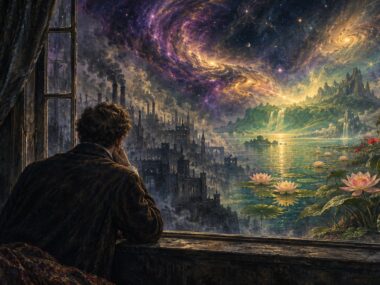
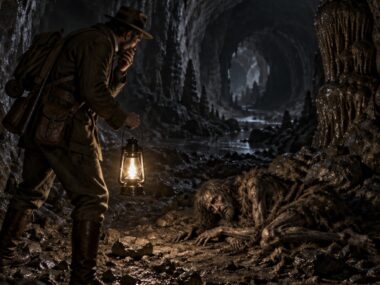


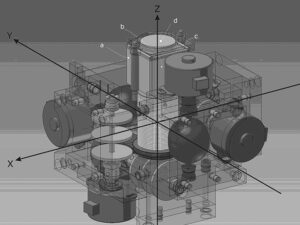
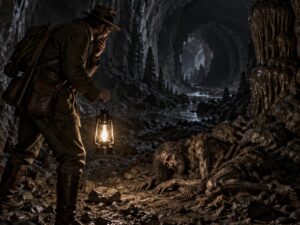
Lascia un commento
Devi essere connesso per inviare un commento.