Un giovane medico scopre, attraverso i sogni deliranti di un paziente morente, l’esistenza di una dimensione cosmica oltre i confini della coscienza umana.
Un misterioso legame telepatico svela una realtà in cui le anime attraversano lo spazio e il tempo, ben oltre la vita terrena.
Oltre il muro del sonno (versione italiana) 19~28 min Beyond the Wall of Sleep (English version) 19~28 min
«Mi è venuta un’esposizione sul sonno.» — Shakespeare.
Mi sono spesso domandato se la maggior parte degli uomini si soffermi mai a riflettere sull’occasionale significato titanico dei sogni e del mondo oscuro al quale appartengono. Sebbene la maggior parte delle nostre visioni notturne non sia forse altro che pallidi e fantastici riflessi delle esperienze vissute durante la veglia — Freud sostenga pure il contrario con il suo puerile simbolismo — ve n’è tuttavia una certa parte il cui carattere ultraterreno ed etereo non consente alcuna interpretazione ordinaria e il cui effetto vagamente eccitante e inquietante suggerisce possibili, fugaci scorci su una sfera dell’esistenza mentale non meno importante della vita fisica, eppure separata da essa da una barriera pressoché insormontabile. In base alla mia esperienza, non posso dubitare che l’uomo, quando si smarrisce nella coscienza terrena, dimori in effetti in un’altra vita incorporea, di natura assai diversa da quella che conosciamo, della quale, al risveglio, sopravvivono soltanto i ricordi più vaghi e indistinti. Da quei ricordi confusi e frammentari possiamo dedurre molto, ma dimostrare ben poco. Possiamo supporre che nei sogni la vita, la materia e la vitalità, così come la Terra le conosce, non siano necessariamente costanti; e che il tempo e lo spazio non esistano nel modo in cui li concepiamo durante la veglia. Talvolta credo che questa vita meno materiale sia la nostra esistenza più autentica e che la nostra vana presenza sul globo terracqueo costituisca essa stessa un fenomeno secondario, o meramente virtuale.
Fu da una fantasticheria giovanile, colma di speculazioni di questo genere, che mi ridestai un pomeriggio dell’inverno tra il 1900 e il 1901, quando, presso l’istituto psichiatrico statale nel quale prestavo servizio come medico interno, venne condotto un uomo il cui caso, da allora, non ha mai cessato di tormentarmi. Il suo nome, così come riportato nei registri, era Joe Slater, o Slaader, e il suo aspetto era quello del tipico abitante della regione dei monti Catskill: uno di quei singolari e ripugnanti discendenti di un primitivo ceppo di contadini coloniali che, isolatisi per quasi tre secoli nelle impervie roccaforti collinari di una contrada poco frequentata, erano sprofondati in una sorta di degenerazione barbarica, anziché progredire al pari dei loro fratelli più fortunati, stanziati nelle regioni densamente popolate. Tra quella strana gente, che corrispondeva esattamente all’elemento decadente dei cosiddetti white trash del Sud — la feccia bianca —, legge e morale erano inesistenti; e il loro livello intellettivo generale era probabilmente inferiore a quello di qualsiasi altra componente della popolazione nativa americana.
Joe Slater, giunto all’istituto sotto la vigile custodia di quattro agenti della polizia statale e descritto come un individuo estremamente pericoloso, non mostrava certamente alcun segno della sua indole minacciosa quando lo vidi per la prima volta. Sebbene fosse ben al di sopra della statura media e di corporatura piuttosto robusta, il pallore sonnolento dei suoi piccoli occhi azzurri e acquosi, la rada peluria trascurata di una barba giallastra mai rasata e il floscio abbassarsi del pesante labbro inferiore gli conferivano un’assurda aria di innocua ottusità. La sua età era sconosciuta, poiché tra quelli della sua stirpe non esistevano né registri familiari né legami parentali duraturi; tuttavia, osservando la calvizie sulla parte anteriore del capo e lo stato di deterioramento dei denti, il primario lo registrò come un uomo di circa quarant’anni.
Dai documenti medici e giudiziari apprendemmo tutto ciò che era possibile ricostruire sul suo caso. Quell’uomo, vagabondo, cacciatore e trapper, era sempre apparso strano agli occhi dei suoi primitivi compagni. Aveva l’abitudine di dormire durante la notte ben oltre il tempo consueto e, al risveglio, parlava spesso di cose sconosciute in modo talmente bizzarro da suscitare paura persino nel cuore di una popolazione priva d’immaginazione. Non che il suo linguaggio fosse in qualche modo insolito, poiché non parlava mai se non nello sconcio dialetto del suo ambiente; erano piuttosto il tono e il tenore delle sue parole ad avere una natura così misteriosamente selvaggia che nessuno poteva ascoltarlo senza provare apprensione. Egli stesso appariva generalmente terrorizzato e disorientato quanto i suoi ascoltatori e, entro un’ora dal risveglio, dimenticava tutto ciò che aveva detto, o quantomeno le ragioni che lo avevano indotto a parlare in quel modo; ricadendo così nella sua consueta normalità bovina e semibenevola, simile a quella degli altri abitanti delle montagne.
Con l’avanzare dell’età, a quanto pareva, le sue aberrazioni mattutine erano gradualmente aumentate in frequenza e violenza, finché, circa un mese prima del suo arrivo all’istituto, si verificò la sconvolgente tragedia che ne provocò l’arresto da parte delle autorità. Un giorno, verso mezzogiorno, dopo un sonno profondo iniziato intorno alle cinque del pomeriggio precedente, in seguito a una colossale bevuta di whisky, l’uomo si era destato all’improvviso, lanciando ululati tanto orribili e innaturali da attirare alla sua capanna diversi vicini. Si trattava di una sudicia tana nella quale viveva con una famiglia indescrivibile quanto lui. Irrompendo nella neve, aveva scagliato le braccia verso l’alto e cominciato a compiere una serie di salti in verticale, gridando al contempo la propria determinazione a raggiungere una certa «grande, grande dimora, con luce nel tetto, nelle pareti e nel pavimento, e quella strana musica fragorosa in lontananza».
Quando due uomini di corporatura media avevano cercato di trattenerlo, egli aveva reagito con una forza e una furia maniacali, urlando il proprio desiderio e bisogno di trovare e uccidere una certa «cosa che risplende, trema e ride». Alla fine, dopo aver temporaneamente abbattuto uno dei suoi trattenitori con un colpo improvviso, si era scagliato contro l’altro in un demoniaco accesso di sete di sangue, strillando come un demonio che avrebbe «spiccato un salto altissimo nell’aria e si sarebbe aperto la strada bruciando qualsiasi cosa avesse osato sbarrargli il cammino». A quel punto la famiglia e i vicini erano fuggiti in preda al panico e, quando i più coraggiosi erano tornati, Slater era scomparso, lasciandosi alle spalle un ammasso informe e irriconoscibile di ciò che, appena un’ora prima, era stato un uomo in vita. Nessuno degli abitanti delle montagne aveva osato mettersi sulle sue tracce e, probabilmente, avrebbero accolto con favore la sua morte per assideramento; ma quando, alcune mattine più tardi, avevano udito le sue grida provenire da un burrone lontano, si erano resi conto che in qualche modo era riuscito a sopravvivere e che sarebbe stato necessario eliminarlo, in un modo o nell’altro. Seguì allora una spedizione di ricerca armata, il cui scopo — qualunque fosse stato in origine — finì per coincidere con quello di una squadra di uomini al seguito dello sceriffo, dopo che uno dei raramente benvoluti agenti della polizia statale si era imbattuto per caso nei ricercatori, li aveva interrogati e infine si era unito a loro.
Il terzo giorno Slater fu trovato privo di sensi nella cavità di un albero e condotto nella prigione più vicina, dove alcuni psichiatri provenienti da Albany lo esaminarono non appena riacquistò i sensi. A loro raccontò una storia semplice. Disse di essersi addormentato un pomeriggio, verso il tramonto, dopo aver bevuto una grande quantità di alcolici. Al risveglio si era ritrovato in piedi, con le mani insanguinate, nella neve davanti alla propria capanna, mentre ai suoi piedi giaceva il cadavere orrendamente mutilato del vicino Peter Slader. Inorridito, si era rifugiato nei boschi, nel vago tentativo di fuggire dal luogo di quello che doveva essere stato il suo crimine. Oltre a questi fatti, sembrava non sapere nulla e neppure gli interrogatori più scrupolosi degli esperti riuscirono a ottenere un solo particolare aggiuntivo. Quella notte Slater dormì tranquillamente e, la mattina seguente, si svegliò senza mostrare nulla di particolare, fatta eccezione per una certa alterazione dell’espressione. Il dottor Barnard, che aveva sorvegliato il paziente, credette di scorgere nei suoi pallidi occhi azzurri un bagliore di qualità insolita e, nelle labbra flaccide, un irrigidimento quasi impercettibile, come se fosse animato da una consapevole determinazione. Ma, quando venne interrogato, Slater ricadde nell’abituale vacuità dell’abitante delle montagne e si limitò a ripetere quanto aveva già dichiarato il giorno precedente.
La mattina del terzo giorno si verificò il primo degli attacchi mentali dell’uomo. Dopo aver manifestato una certa inquietudine durante il sonno, esplose in un accesso di furia così violento che fu necessario lo sforzo congiunto di quattro uomini per immobilizzarlo in una camicia di forza. Gli psichiatri ascoltarono con grande attenzione le sue parole, poiché la loro curiosità era stata portata al culmine dai racconti suggestivi, benché perlopiù contraddittori e incoerenti, dei suoi familiari e dei vicini. Per oltre quindici minuti Slater delirò, blaterando nel suo dialetto delle regioni boscose di enormi edifici di luce, oceani di spazio, musiche sconosciute e montagne e vallate avvolte nell’ombra. Ma, soprattutto, insisteva nel parlare di una misteriosa entità fiammeggiante che tremava, rideva e si faceva beffe di lui. Quella personalità immensa e indefinita sembrava avergli inflitto un torto terribile e il suo desiderio supremo era ucciderla per ottenere una vendetta trionfante. Per raggiungerla, dichiarava, avrebbe attraversato in volo abissi di vuoto, bruciando qualsiasi ostacolo gli si fosse parato davanti. Così proseguì il suo discorso, finché, con la massima improvvisazione, si interruppe. Il fuoco della follia si spense nei suoi occhi ed egli guardò i suoi interrogatori con ottuso stupore, chiedendo perché fosse legato. Il dottor Barnard slacciò le cinghie di cuoio e non gliele rimise fino a sera, quando riuscì a convincere Slater a indossarle spontaneamente, per il suo stesso bene. L’uomo aveva ormai ammesso che talvolta gli capitava di parlare in modo strano, benché non sapesse spiegarsene il motivo.
Nel giro di una settimana si verificarono altri due attacchi, ma i medici riuscirono a ricavarne ben poco. Si interrogarono a lungo sull’origine delle visioni di Slater, poiché, non sapendo né leggere né scrivere e non avendo apparentemente mai udito alcuna leggenda o fiaba, le sue straordinarie immagini erano del tutto inspiegabili. Che non potessero provenire da alcun mito o racconto fantastico conosciuto risultava particolarmente evidente dal fatto che lo sventurato folle si esprimeva esclusivamente nel suo modo semplice e rudimentale. Delirava su cose che non comprendeva e che non era in grado di interpretare; cose che sosteneva di aver vissuto, ma che non avrebbe potuto apprendere attraverso alcun racconto ordinario o coerente. Gli psichiatri concordarono ben presto che alla base del disturbo vi fossero sogni anormali: sogni la cui vividezza era in grado, per un certo tempo, di dominare completamente la mente desta di quell’uomo, fondamentalmente ottuso. Con tutte le formalità del caso, Slater fu processato per omicidio, assolto per infermità mentale e internato nell’istituto presso il quale ricoprivo un incarico tanto modesto.
Ho già detto di essere un assiduo speculatore sulla vita onirica, e da ciò si può facilmente comprendere con quale fervore mi dedicai allo studio del nuovo paziente, non appena ebbi accertato pienamente i fatti relativi al suo caso. Sembrava percepire una certa benevolenza nei miei confronti, dovuta senza dubbio all’interesse che non riuscivo a nascondere e al modo gentile con cui lo interrogavo. Non che mi riconoscesse mai durante i suoi attacchi, quando io pendevo col fiato sospeso dalle sue caotiche, ma cosmiche descrizioni verbali; tuttavia mi conosceva nei momenti di tranquillità, quando sedeva accanto alla finestra sbarrata intrecciando cesti di paglia e salice, forse struggendosi per quella libertà montana di cui non avrebbe più potuto godere. Nessuno della sua famiglia venne mai a fargli visita; probabilmente, secondo l’usanza di quella decadente gente di montagna, aveva già trovato un altro capofamiglia provvisorio.
A poco a poco cominciai a provare un senso di stupore incontenibile dinanzi alle concezioni folli e fantastiche di Joe Slater. L’uomo, in sé, era miseramente inferiore tanto sul piano mentale quanto su quello linguistico; eppure le sue visioni luminose e titaniche, benché descritte attraverso un gergo barbaro e sconnesso, erano certamente concezioni che soltanto una mente superiore, o addirittura eccezionale, avrebbe potuto concepire. Mi domandavo spesso come potesse l’ottusa immaginazione di un degenerato dei Catskill evocare visioni la cui stessa esistenza presupponeva una latente scintilla di genio. Come avrebbe potuto un qualsiasi sempliciotto delle regioni boscose farsi anche soltanto un’idea di quei regni scintillanti di luce sovrumana e di spazio, dei quali Slater delirava durante i suoi furiosi accessi? Sempre più mi convincevo che nella miserevole personalità che si rannicchiava davanti a me si celasse il nucleo sconvolto di qualcosa che trascendeva la mia comprensione; qualcosa di immensamente superiore persino alla capacità di intendere dei miei colleghi medici e scienziati, più esperti di me ma meno dotati d’immaginazione.
Eppure non riuscivo a ricavare nulla di preciso da quell’uomo. Il risultato complessivo delle mie indagini era che, in una sorta di vita onirica semincorporea, Slater vagava o fluttuava attraverso valli, praterie, giardini, città e palazzi di luce, splendidi e prodigiosi, in una regione sconfinata e sconosciuta all’uomo. Là non era un contadino né un degenerato, bensì una creatura importante, animata da una vita intensa, che si muoveva con fierezza e autorità, ostacolata soltanto da un certo nemico mortale, il quale sembrava essere un’entità di struttura visibile, eppure eterea, e non appariva avere forma umana, poiché Slater non vi si riferiva mai come a un uomo, né come a qualsiasi altra cosa se non a una cosa. Questa cosa aveva inflitto a Slater un torto orrendo, ma mai precisato, che il folle — ammesso che tale fosse — bramava vendicare. Dal modo in cui Slater alludeva ai loro rapporti, dedussi che lui e l’entità luminosa si fossero affrontati su un piano di parità; che nella sua esistenza onirica l’uomo stesso fosse un essere luminoso, appartenente alla medesima stirpe del suo nemico. Tale impressione era avvalorata dai frequenti riferimenti al suo volare attraverso lo spazio e al suo bruciare tutto ciò che ne intralciava il cammino. Eppure queste concezioni venivano formulate attraverso parole rustiche, del tutto inadeguate a esprimerle, circostanza che mi spinse a concludere che, se un autentico mondo dei sogni esisteva davvero, il linguaggio orale non poteva esserne il mezzo di trasmissione del pensiero. Era possibile che l’anima onirica che abitava quel corpo inferiore si dibattesse disperatamente nel tentativo di esprimere concetti che la lingua semplice e impacciata di un essere ottuso non era in grado di pronunciare? Era possibile che mi trovassi di fronte a emanazioni intellettuali che avrebbero svelato il mistero, se soltanto fossi riuscito a scoprirle e a decifrarle? Non parlai di queste cose ai medici più anziani, poiché la mezza età è scettica, cinica e poco incline ad accogliere nuove idee. Inoltre, il direttore dell’istituto mi aveva recentemente ammonito, con paterna sollecitudine, che lavoravo troppo e che la mia mente aveva bisogno di riposo.
Da tempo sostenevo che il pensiero umano fosse costituito, nella sua essenza, da movimenti atomici o molecolari, convertibili in onde eteree di energia radiante, come il calore, la luce e l’elettricità. Questa convinzione mi aveva condotto fin dagli inizi a contemplare la possibilità della telepatia, ovvero della comunicazione mentale mediante apparecchiature adeguate; e, durante gli anni universitari, avevo costruito un insieme di strumenti trasmittenti e riceventi alquanto simili agli ingombranti dispositivi impiegati nella telegrafia senza fili in quell’ancora rudimentale epoca precedente alla radio. Li avevo collaudati insieme a un compagno di studi, ma, non avendo ottenuto alcun risultato, li avevo ben presto riposti con altri oggetti scientifici di varia natura, in attesa di un possibile impiego futuro. Ora, nel mio ardente desiderio di penetrare nella vita onirica di Joe Slater, tornai a cercare quegli strumenti e trascorsi diversi giorni a ripararli per rimetterli in funzione. Una volta completato il lavoro, non persi occasione per sperimentarli. A ogni esplosione di violenza di Slater, gli applicavo il trasmettitore sulla fronte e il ricevitore sulla mia, apportando continuamente delicati aggiustamenti per le diverse lunghezze d’onda ipotetiche dell’energia intellettuale. Avevo soltanto una vaga idea di come le impressioni del pensiero, qualora fossero state trasmesse con successo, avrebbero potuto suscitare una risposta intelligente nel mio cervello; ma ero certo che sarei stato in grado di rilevarle e interpretarle. Proseguii dunque i miei esperimenti, senza informare nessuno della loro natura.
Fu il 21 febbraio 1901 che, finalmente, accadde l’evento. Ripensandoci a distanza di tanti anni, mi rendo conto di quanto tutto ciò sembri irreale; e talvolta mi domando, quasi controvoglia, se il vecchio dottor Fenton non avesse ragione ad attribuire ogni cosa alla mia immaginazione eccitata. Ricordo che mi ascoltò con grande gentilezza e pazienza quando gliene parlai, ma in seguito mi prescrisse un calmante per i nervi e organizzò per me il congedo semestrale durante il quale partii la settimana successiva.
Quella notte fatale ero in uno stato di estrema agitazione e turbamento, poiché, nonostante le eccellenti cure ricevute, Joe Slater stava inequivocabilmente morendo. Forse gli mancava la libertà delle sue montagne, oppure il tumulto nel suo cervello era diventato troppo intenso per il suo fisico piuttosto torpido; fatto sta che la fiamma della vitalità ardeva ormai debolmente in quel corpo degenere. Verso la fine era assopito e, al calare dell’oscurità, scivolò in un sonno inquieto. Non gli misi la camicia di forza, come si faceva abitualmente quando dormiva, poiché mi appariva troppo debole per costituire un pericolo, anche nell’eventualità che si fosse risvegliato ancora una volta in preda a un disordine mentale prima di morire. Applicai tuttavia sulla sua testa e sulla mia le due estremità della mia «radio» cosmica, sperando contro ogni speranza di ricevere un primo e ultimo messaggio dal mondo dei sogni nel breve tempo che ancora gli restava. Nella cella con noi c’era un infermiere, un individuo mediocre che non comprendeva lo scopo dell’apparecchiatura e non pensò nemmeno di chiedermi spiegazioni sul mio operato. Con il passare delle ore vidi la sua testa reclinarsi goffamente nel sonno, ma non lo disturbai. Anch’io, cullato dal ritmo del respiro dell’uomo sano e di quello morente, dovetti assopirmi poco dopo.
Fu il suono di una strana melodia lirica a risvegliarmi. Accordi, vibrazioni ed estasi armoniche echeggiavano intensamente tutt’intorno; mentre dinanzi ai miei occhi rapiti si spalancava lo spettacolo grandioso della bellezza suprema. Pareti, colonne e architravi di fuoco vivente ardevano di uno splendore abbagliante intorno al luogo in cui sembravo fluttuare nell’aria, estendendosi verso l’alto fino a una volta immensa, infinitamente elevata, di indescrivibile magnificenza. A fondersi con quella manifestazione di splendore palaziale, o piuttosto a sostituirla a tratti in una rotazione caleidoscopica, apparivano visioni di vaste pianure e leggiadre vallate, alte montagne e invitanti grotte, ornate di ogni meraviglioso elemento paesaggistico che il mio sguardo rapito potesse concepire; eppure erano tutte formate interamente da una qualche entità luminosa, eterea e plastica, la cui consistenza partecipava tanto dello spirito quanto della materia. Mentre contemplavo quello spettacolo, compresi che la chiave di quelle incantevoli metamorfosi risiedeva nel mio stesso cervello; poiché ogni panorama che mi appariva era proprio quello che la mia mente mutevole desiderava maggiormente contemplare. In quel regno elisiaco non dimoravo come uno straniero, poiché ogni visione e ogni suono mi erano familiari, proprio come lo erano stati per innumerevoli eoni di eternità nel passato e come lo sarebbero stati per altrettante eternità a venire.
Allora la splendida aura del mio fratello di luce si avvicinò e prese a conversare con me, anima ad anima, attraverso uno scambio di pensieri silenzioso e perfetto. Era un momento di trionfo imminente: non stava forse il mio simile per liberarsi finalmente da una degradante schiavitù periodica? Non stava per sottrarsi per sempre a quella condizione, preparandosi a inseguire il maledetto oppressore fin nelle regioni più remote dell’etere, affinché su di lui si abbattesse una vendetta cosmica fiammeggiante, capace di scuotere le sfere celesti? Fluttuammo insieme per qualche tempo, finché non percepii un lieve offuscamento e un graduale svanire degli oggetti intorno a noi, come se una qualche forza mi stesse richiamando sulla Terra, proprio là dove meno desideravo tornare. Anche la figura accanto a me sembrò avvertire il mutamento, poiché condusse gradualmente il proprio discorso verso la conclusione e si preparò anch’essa ad abbandonare quella scena, svanendo alla mia vista a una velocità appena inferiore rispetto a quella degli altri oggetti. Ci scambiammo ancora alcuni pensieri e compresi che tanto l’essere luminoso quanto me stavamo per essere ricondotti alla schiavitù, benché per il mio fratello di luce quella sarebbe stata l’ultima volta. Poiché il misero involucro planetario era ormai quasi esaurito, nel giro di meno di un’ora il mio simile sarebbe stato libero di inseguire l’oppressore lungo la Via Lattea, oltrepassando le stelle più vicine, fino agli stessi confini dell’infinito.
Un brusco distacco separa la mia ultima impressione della scena luminosa che andava svanendo dal mio improvviso e alquanto imbarazzato risveglio, quando mi raddrizzai sulla sedia vedendo la figura morente sul lettino muoversi esitante. Joe Slater si stava effettivamente risvegliando, probabilmente per l’ultima volta. Osservandolo più attentamente, notai sulle sue guance giallastre alcune macchie di colore che non vi erano mai state prima. Anche le labbra apparivano insolite: erano serrate con forza, come per effetto della volontà di un carattere assai più forte di quello che Slater aveva mai posseduto. Infine, tutto il volto cominciò a tendersi e la testa si mosse inquieta, con gli occhi chiusi. Non svegliai l’infermiere addormentato, ma riassestai le fasce, leggermente spostate, del mio apparecchio telepatico, la «radio», deciso a cogliere qualsiasi messaggio d’addio il sognatore avesse ancora da trasmettere. All’improvviso la testa si voltò bruscamente nella mia direzione e gli occhi si spalancarono, facendomi fissare con sbigottimento ciò che mi si presentava davanti. L’uomo che era stato Joe Slater, il degenerato dei Catskill, ora mi guardava con un paio di occhi luminosi e dilatati, il cui azzurro sembrava essersi fatto sottilmente più intenso. In quello sguardo non vi era traccia né di follia né di degenerazione, e non ebbi il minimo dubbio di trovarmi di fronte a un volto dietro il quale si celava una mente attiva e di alto livello.
In quel momento il mio cervello divenne consapevole di un’influenza esterna costante che agiva su di esso. Chiusi gli occhi per concentrare più profondamente i pensieri e fui ricompensato dalla certezza assoluta che il messaggio mentale che avevo tanto a lungo cercato era finalmente giunto. Ogni idea trasmessa prendeva rapidamente forma nella mia mente e, sebbene non venisse impiegato alcun linguaggio vero e proprio, la mia abituale associazione tra concetto ed espressione era così radicata che mi sembrava di ricevere il messaggio in inglese corrente.
«Joe Slater è morto», giunse la voce, o meglio l’entità, capace di raggelare l’anima, proveniente da oltre il muro del sonno. Aprii gli occhi e rivolsi uno sguardo di attonito orrore al lettino del dolore, ma gli occhi azzurri continuavano a fissarmi serenamente e il volto conservava un’espressione animata da intelligenza.
«È meglio che sia morto, poiché non era adatto a sostenere l’intelletto attivo di un’entità cosmica. Il suo corpo grossolano non poteva sopportare i necessari adattamenti tra la vita eterea e quella planetaria. Era troppo animale e troppo poco uomo; eppure è proprio grazie alla sua inferiorità che sei giunto a scoprirmi, poiché le anime cosmiche e quelle planetarie non dovrebbero mai incontrarsi, come è giusto che sia.
È stato il mio tormento e la mia prigione diurna per quarantadue dei vostri anni terrestri. Sono un’entità simile a quella che tu stesso diventi nella libertà del sonno senza sogni. Sono tuo fratello di luce e ho fluttuato con te nelle valli splendenti. Non mi è concesso rivelare al tuo io terreno, desto, la tua vera natura; ma siamo tutti viaggiatori di immensi spazi e peregrini attraverso epoche innumerevoli. L’anno prossimo potrei dimorare nell’oscuro Egitto che tu chiami antico, oppure nel crudele impero di Tsan-Chan, che sorgerà fra tremila anni. Tu e io abbiamo vagato verso i mondi che ruotano vorticosamente intorno al rosso Arturo e abbiamo abitato i corpi degli insetti filosofi che si muovono fieramente sulla quarta luna di Giove. Quanto poco sa l’io terrestre della vita e della sua vastità! E quanto poco, in verità, dovrebbe saperne, per preservare la propria tranquillità!
Dell’oppressore non posso parlare. Tu, sulla Terra, ne hai inconsapevolmente avvertito la presenza lontana: tu che, senza saperlo, hai dato per puro caso il nome di Algol, la Stella del Demone, al suo tremolante segnale luminoso. È per affrontare e sconfiggere l’oppressore che mi sono battuto invano per interi eoni, trattenuto dagli impedimenti del corpo. Stanotte partirò come una Nemesi, portatrice di una giusta e fiammeggiante vendetta cataclismica. Osservami nel cielo, vicino alla Stella del Demone.
Non posso parlare oltre, poiché il corpo di Joe Slater si sta raffreddando e irrigidendo, e il cervello grossolano sta cessando di vibrare nel modo che desidero. Tu sei stato mio amico nel cosmo; sei stato il mio unico amico su questo pianeta, l’unica anima capace di percepirmi e cercarmi all’interno della forma ripugnante che giace su questo lettino. Ci incontreremo ancora: forse nelle nebbie scintillanti della Spada di Orione, forse su un desolato altopiano dell’Asia preistorica. Forse nei sogni dimenticati di questa notte; forse sotto un’altra forma, fra un eone, quando il sistema solare sarà stato spazzato via».
A questo punto le onde del pensiero cessarono bruscamente e gli occhi pallidi del sognatore — o dovrei dire del morto? — cominciarono ad assumere una vitrea opacità, simile a quella degli occhi dei pesci. In uno stato di semiottundimento mi avvicinai al lettino e gli tastai il polso, ma lo trovai freddo, rigido e privo di battito. Le guance giallastre impallidirono nuovamente e le grosse labbra si dischiusero, rivelando le ripugnanti zanne marce del degenerato Joe Slater. Rabbrividii, gli coprii il volto orribile con una coperta e svegliai l’infermiere. Poi uscii dalla cella e mi recai in silenzio nella mia stanza. Sentivo un desiderio insistente e inspiegabile di abbandonarmi a un sonno dei cui sogni non avrei conservato memoria.
Il culmine? Quale semplice racconto scientifico potrebbe vantare un simile effetto retorico? Mi sono limitato a riferire alcuni fatti che mi sono parsi tali, lasciando a voi la libertà di interpretarli come meglio credete. Come ho già ammesso, il mio superiore, il vecchio dottor Fenton, nega la realtà di tutto ciò che ho raccontato. Sostiene che fossi esausto per la tensione nervosa e avessi un disperato bisogno di quella lunga vacanza retribuita che tanto generosamente mi concesse. Mi assicura, in fede al proprio onore professionale, che Joe Slater non era altro che un paranoico di basso livello, le cui fantasiose concezioni dovevano necessariamente derivare dalle rozze leggende popolari tramandate per via ereditaria, diffuse persino nelle comunità più decadenti.
Questo è ciò che mi racconta; eppure non riesco a dimenticare ciò che vidi nel cielo la notte successiva alla morte di Slater. Per evitare che mi consideriate un testimone parziale, occorre che un’altra penna aggiunga questa testimonianza conclusiva, che forse potrà fornire il culmine che vi aspettate. Citerò integralmente il seguente resoconto della stella Nova Persei, tratto dalle pagine di un’autorità astronomica di chiara fama, il professor Garrett P. Serviss:
«Il 22 febbraio 1901 fu scoperta dal dottor Anderson, di Edimburgo, una meravigliosa stella nuova, non molto lontano da Algol. In precedenza, in quel punto, non era visibile alcuna stella. Nel giro di ventiquattr’ore il nuovo astro era diventato così luminoso da superare Capella in splendore. Nel giro di una settimana o due la sua luminosità era visibilmente diminuita e, nel corso di alcuni mesi, era appena percettibile a occhio nudo».
H.P. Lovecraft (1919) Traduzione: ChatGPT mantenendo un registro letterario d’epoca, evitando di modernizzare eccessivamente il lessico.
Note terminologiche: – Alienists con «psichiatri», pur essendo il termine storico riferito agli specialisti delle malattie mentali, e interne con «medico interno». – Backwoods con «regioni boscose», conservando il carattere arcaico e provinciale del linguaggio originale. – Brother of light: «fratello di luce», mantenuto letteralmente perché è una delle immagini centrali del racconto. – Daemon-Star: «Stella del Demone», conservando la connotazione soprannaturale di daemon. – Nemesis: «Nemesi», personificazione mitologica della giustizia punitiva e della vendetta. – Orion’s Sword: «Spada di Orione», denominazione astronomica tradizionale della regione della costellazione di Orione.
Nota sul finale: Lovecraft costruisce la conclusione accostando la testimonianza soggettiva del narratore a un evento astronomico documentato: la comparsa della Nova Persei 1901, oggi identificata come GK Persei. Il riferimento alla vicinanza ad Algol costituisce il collegamento decisivo con le ultime parole dell’entità cosmica.
Beyond the Wall of Sleep
By H. P. Lovecraft
“I have an exposition of sleep come upon me.” —Shakespeare.
I have frequently wondered if the majority of mankind ever pause to reflect upon the occasionally titanic significance of dreams, and of the obscure world to which they belong. Whilst the greater number of our nocturnal visions are perhaps no more than faint and fantastic reflections of our waking experiences—Freud to the contrary with his puerile symbolism—there are still a certain remainder whose immundane and ethereal character permits of no ordinary interpretation, and whose vaguely exciting and disquieting effect suggests possible minute glimpses into a sphere of mental existence no less important than physical life, yet separated from that life by an all but impassable barrier. From my experience I cannot doubt but that man, when lost to terrestrial consciousness, is indeed sojourning in another and uncorporeal life of far different nature from the life we know; and of which only the slightest and most indistinct memories linger after waking. From those blurred and fragmentary memories we may infer much, yet prove little. We may guess that in dreams life, matter, and vitality, as the earth knows such things, are not necessarily constant; and that time and space do not exist as our waking selves comprehend them. Sometimes I believe that this less material life is our truer life, and that our vain presence on the terraqueous globe is itself the secondary or merely virtual phenomenon. It was from a youthful reverie filled with speculations of this sort that I arose one afternoon in the winter of 1900–1901, when to the state psychopathic institution in which I served as an interne was brought the man whose case has ever since haunted me so unceasingly. His name, as given on the records, was Joe Slater, or Slaader, and his appearance was that of the typical denizen of the Catskill Mountain region; one of those strange, repellent scions of a primitive colonial peasant stock whose isolation for nearly three centuries in the hilly fastnesses of a little-travelled countryside has caused them to sink to a kind of barbaric degeneracy, rather than advance with their more fortunately placed brethren of the thickly settled districts. Among these odd folk, who correspond exactly to the decadent element of “white trash” in the South, law and morals are non-existent; and their general mental status is probably below that of any other section of the native American people. Joe Slater, who came to the institution in the vigilant custody of four state policemen, and who was described as a highly dangerous character, certainly presented no evidence of his perilous disposition when first I beheld him. Though well above the middle stature, and of somewhat brawny frame, he was given an absurd appearance of harmless stupidity by the pale, sleepy blueness of his small watery eyes, the scantiness of his neglected and never-shaven growth of yellow beard, and the listless drooping of his heavy nether lip. His age was unknown, since among his kind neither family records nor permanent family ties exist; but from the baldness of his head in front, and from the decayed condition of his teeth, the head surgeon wrote him down as a man of about forty. From the medical and court documents we learned all that could be gathered of his case. This man, a vagabond, hunter, and trapper, had always been strange in the eyes of his primitive associates. He had habitually slept at night beyond the ordinary time, and upon waking would often talk of unknown things in a manner so bizarre as to inspire fear even in the hearts of an unimaginative populace. Not that his form of language was at all unusual, for he never spoke save in the debased patois of his environment; but the tone and tenor of his utterances were of such mysterious wildness, that none might listen without apprehension. He himself was generally as terrified and baffled as his auditors, and within an hour after awakening would forget all that he had said, or at least all that had caused him to say what he did; relapsing into a bovine, half-amiable normality like that of the other hill-dwellers. As Slater grew older, it appeared, his matutinal aberrations had gradually increased in frequency and violence; till about a month before his arrival at the institution had occurred the shocking tragedy which caused his arrest by the authorities. One day near noon, after a profound sleep begun in a whiskey debauch at about five of the previous afternoon, the man had roused himself most suddenly; with ululations so horrible and unearthly that they brought several neighbours to his cabin—a filthy sty where he dwelt with a family as indescribable as himself. Rushing out into the snow, he had flung his arms aloft and commenced a series of leaps directly upward in the air; the while shouting his determination to reach some ‘big, big cabin with brightness in the roof and walls and floor, and the loud queer music far away’. As two men of moderate size sought to restrain him, he had struggled with maniacal force and fury, screaming of his desire and need to find and kill a certain ‘thing that shines and shakes and laughs’. At length, after temporarily felling one of his detainers with a sudden blow, he had flung himself upon the other in a daemoniac ecstasy of bloodthirstiness, shrieking fiendishly that he would ‘jump high in the air and burn his way through anything that stopped him’. Family and neighbours had now fled in a panic, and when the more courageous of them returned, Slater was gone, leaving behind an unrecognisable pulp-like thing that had been a living man but an hour before. None of the mountaineers had dared to pursue him, and it is likely that they would have welcomed his death from the cold; but when several mornings later they heard his screams from a distant ravine, they realised that he had somehow managed to survive, and that his removal in one way or another would be necessary. Then had followed an armed searching party, whose purpose (whatever it may have been originally) became that of a sheriff’s posse after one of the seldom popular state troopers had by accident observed, then questioned, and finally joined the seekers. On the third day Slater was found unconscious in the hollow of a tree, and taken to the nearest gaol; where alienists from Albany examined him as soon as his senses returned. To them he told a simple story. He had, he said, gone to sleep one afternoon about sundown after drinking much liquor. He had awaked to find himself standing bloody-handed in the snow before his cabin, the mangled corpse of his neighbour Peter Slader at his feet. Horrified, he had taken to the woods in a vague effort to escape from the scene of what must have been his crime. Beyond these things he seemed to know nothing, nor could the expert questioning of his interrogators bring out a single additional fact. That night Slater slept quietly, and the next morning he wakened with no singular feature save a certain alteration of expression. Dr. Barnard, who had been watching the patient, thought he noticed in the pale blue eyes a certain gleam of peculiar quality; and in the flaccid lips an all but imperceptible tightening, as if of intelligent determination. But when questioned, Slater relapsed into the habitual vacancy of the mountaineer, and only reiterated what he had said on the preceding day. On the third morning occurred the first of the man’s mental attacks. After some show of uneasiness in sleep, he burst forth into a frenzy so powerful that the combined efforts of four men were needed to bind him in a strait-jacket. The alienists listened with keen attention to his words, since their curiosity had been aroused to a high pitch by the suggestive yet mostly conflicting and incoherent stories of his family and neighbours. Slater raved for upward of fifteen minutes, babbling in his backwoods dialect of great edifices of light, oceans of space, strange music, and shadowy mountains and valleys. But most of all did he dwell upon some mysterious blazing entity that shook and laughed and mocked at him. This vast, vague personality seemed to have done him a terrible wrong, and to kill it in triumphant revenge was his paramount desire. In order to reach it, he said, he would soar through abysses of emptiness, burning every obstacle that stood in his way. Thus ran his discourse, until with the greatest suddenness he ceased. The fire of madness died from his eyes, and in dull wonder he looked at his questioners and asked why he was bound. Dr. Barnard unbuckled the leathern harness and did not restore it till night, when he succeeded in persuading Slater to don it of his own volition, for his own good. The man had now admitted that he sometimes talked queerly, though he knew not why. Within a week two more attacks appeared, but from them the doctors learned little. On the source of Slater’s visions they speculated at length, for since he could neither read nor write, and had apparently never heard a legend or fairy tale, his gorgeous imagery was quite inexplicable. That it could not come from any known myth or romance was made especially clear by the fact that the unfortunate lunatic expressed himself only in his own simple manner. He raved of things he did not understand and could not interpret; things which he claimed to have experienced, but which he could not have learned through any normal or connected narration. The alienists soon agreed that abnormal dreams were the foundation of the trouble; dreams whose vividness could for a time completely dominate the waking mind of this basically inferior man. With due formality Slater was tried for murder, acquitted on the ground of insanity, and committed to the institution wherein I held so humble a post. I have said that I am a constant speculator concerning dream life, and from this you may judge of the eagerness with which I applied myself to the study of the new patient as soon as I had fully ascertained the facts of his case. He seemed to sense a certain friendliness in me; born no doubt of the interest I could not conceal, and the gentle manner in which I questioned him. Not that he ever recognised me during his attacks, when I hung breathlessly upon his chaotic but cosmic word-pictures; but he knew me in his quiet hours, when he would sit by his barred window weaving baskets of straw and willow, and perhaps pining for the mountain freedom he could never enjoy again. His family never called to see him; probably it had found another temporary head, after the manner of decadent mountain folk. By degrees I commenced to feel an overwhelming wonder at the mad and fantastic conceptions of Joe Slater. The man himself was pitiably inferior in mentality and language alike; but his glowing, titanic visions, though described in a barbarous and disjointed jargon, were assuredly things which only a superior or even exceptional brain could conceive. How, I often asked myself, could the stolid imagination of a Catskill degenerate conjure up sights whose very possession argued a lurking spark of genius? How could any backwoods dullard have gained so much as an idea of those glittering realms of supernal radiance and space about which Slater ranted in his furious delirium? More and more I inclined to the belief that in the pitiful personality who cringed before me lay the disordered nucleus of something beyond my comprehension; something infinitely beyond the comprehension of my more experienced but less imaginative medical and scientific colleagues. And yet I could extract nothing definite from the man. The sum of all my investigation was, that in a kind of semi-uncorporeal dream life Slater wandered or floated through resplendent and prodigious valleys, meadows, gardens, cities, and palaces of light; in a region unbounded and unknown to man. That there he was no peasant or degenerate, but a creature of importance and vivid life; moving proudly and dominantly, and checked only by a certain deadly enemy, who seemed to be a being of visible yet ethereal structure, and who did not appear to be of human shape, since Slater never referred to it as a man, or as aught save a thing. This thing had done Slater some hideous but unnamed wrong, which the maniac (if maniac he were) yearned to avenge. From the manner in which Slater alluded to their dealings, I judged that he and the luminous thing had met on equal terms; that in his dream existence the man was himself a luminous thing of the same race as his enemy. This impression was sustained by his frequent references to flying through space and burning all that impeded his progress. Yet these conceptions were formulated in rustic words wholly inadequate to convey them, a circumstance which drove me to the conclusion that if a true dream-world indeed existed, oral language was not its medium for the transmission of thought. Could it be that the dream-soul inhabiting this inferior body was desperately struggling to speak things which the simple and halting tongue of dulness could not utter? Could it be that I was face to face with intellectual emanations which would explain the mystery if I could but learn to discover and read them? I did not tell the older physicians of these things, for middle age is sceptical, cynical, and disinclined to accept new ideas. Besides, the head of the institution had but lately warned me in his paternal way that I was overworking; that my mind needed a rest. It had long been my belief that human thought consists basically of atomic or molecular motion, convertible into ether waves of radiant energy like heat, light, and electricity. This belief had early led me to contemplate the possibility of telepathy or mental communication by means of suitable apparatus, and I had in my college days prepared a set of transmitting and receiving instruments somewhat similar to the cumbrous devices employed in wireless telegraphy at that crude, pre-radio period. These I had tested with a fellow-student; but achieving no result, had soon packed them away with other scientific odds and ends for possible future use. Now, in my intense desire to probe into the dream life of Joe Slater, I sought these instruments again; and spent several days in repairing them for action. When they were complete once more I missed no opportunity for their trial. At each outburst of Slater’s violence, I would fit the transmitter to his forehead and the receiver to my own; constantly making delicate adjustments for various hypothetical wave-lengths of intellectual energy. I had but little notion of how the thought-impressions would, if successfully conveyed, arouse an intelligent response in my brain; but I felt certain that I could detect and interpret them. Accordingly I continued my experiments, though informing no one of their nature.
It was on the twenty-first of February, 1901, that the thing finally occurred. As I look back across the years I realise how unreal it seems; and sometimes half wonder if old Dr. Fenton was not right when he charged it all to my excited imagination. I recall that he listened with great kindness and patience when I told him, but afterward gave me a nerve-powder and arranged for the half-year’s vacation on which I departed the next week. That fateful night I was wildly agitated and perturbed, for despite the excellent care he had received, Joe Slater was unmistakably dying. Perhaps it was his mountain freedom that he missed, or perhaps the turmoil in his brain had grown too acute for his rather sluggish physique; but at all events the flame of vitality flickered low in the decadent body. He was drowsy near the end, and as darkness fell he dropped off into a troubled sleep. I did not strap on the strait-jacket as was customary when he slept, since I saw that he was too feeble to be dangerous, even if he woke in mental disorder once more before passing away. But I did place upon his head and mine the two ends of my cosmic “radio”; hoping against hope for a first and last message from the dream-world in the brief time remaining. In the cell with us was one nurse, a mediocre fellow who did not understand the purpose of the apparatus, or think to inquire into my course. As the hours wore on I saw his head droop awkwardly in sleep, but I did not disturb him. I myself, lulled by the rhythmical breathing of the healthy and the dying man, must have nodded a little later. The sound of weird lyric melody was what aroused me. Chords, vibrations, and harmonic ecstasies echoed passionately on every hand; while on my ravished sight burst the stupendous spectacle of ultimate beauty. Walls, columns, and architraves of living fire blazed effulgently around the spot where I seemed to float in air; extending upward to an infinitely high vaulted dome of indescribable splendour. Blending with this display of palatial magnificence, or rather, supplanting it at times in kaleidoscopic rotation, were glimpses of wide plains and graceful valleys, high mountains and inviting grottoes; covered with every lovely attribute of scenery which my delighted eye could conceive of, yet formed wholly of some glowing, ethereal, plastic entity, which in consistency partook as much of spirit as of matter. As I gazed, I perceived that my own brain held the key to these enchanting metamorphoses; for each vista which appeared to me, was the one my changing mind most wished to behold. Amidst this elysian realm I dwelt not as a stranger, for each sight and sound was familiar to me; just as it had been for uncounted aeons of eternity before, and would be for like eternities to come. Then the resplendent aura of my brother of light drew near and held colloquy with me, soul to soul, with silent and perfect interchange of thought. The hour was one of approaching triumph, for was not my fellow-being escaping at last from a degrading periodic bondage; escaping forever, and preparing to follow the accursed oppressor even unto the uttermost fields of ether, that upon it might be wrought a flaming cosmic vengeance which would shake the spheres? We floated thus for a little time, when I perceived a slight blurring and fading of the objects around us, as though some force were recalling me to earth—where I least wished to go. The form near me seemed to feel a change also, for it gradually brought its discourse toward a conclusion, and itself prepared to quit the scene; fading from my sight at a rate somewhat less rapid than that of the other objects. A few more thoughts were exchanged, and I knew that the luminous one and I were being recalled to bondage, though for my brother of light it would be the last time. The sorry planet-shell being well-nigh spent, in less than an hour my fellow would be free to pursue the oppressor along the Milky Way and past the hither stars to the very confines of infinity. A well-defined shock separates my final impression of the fading scene of light from my sudden and somewhat shamefaced awakening and straightening up in my chair as I saw the dying figure on the couch move hesitantly. Joe Slater was indeed awaking, though probably for the last time. As I looked more closely, I saw that in the sallow cheeks shone spots of colour which had never before been present. The lips, too, seemed unusual; being tightly compressed, as if by the force of a stronger character than had been Slater’s. The whole face finally began to grow tense, and the head turned restlessly with closed eyes. I did not arouse the sleeping nurse, but readjusted the slightly disarranged head-bands of my telepathic “radio”, intent to catch any parting message the dreamer might have to deliver. All at once the head turned sharply in my direction and the eyes fell open, causing me to stare in blank amazement at what I beheld. The man who had been Joe Slater, the Catskill decadent, was now gazing at me with a pair of luminous, expanded eyes whose blue seemed subtly to have deepened. Neither mania nor degeneracy was visible in that gaze, and I felt beyond a doubt that I was viewing a face behind which lay an active mind of high order. At this juncture my brain became aware of a steady external influence operating upon it. I closed my eyes to concentrate my thoughts more profoundly, and was rewarded by the positive knowledge that my long-sought mental message had come at last. Each transmitted idea formed rapidly in my mind, and though no actual language was employed, my habitual association of conception and expression was so great that I seemed to be receiving the message in ordinary English. “Joe Slater is dead,” came the soul-petrifying voice or agency from beyond the wall of sleep. My opened eyes sought the couch of pain in curious horror, but the blue eyes were still calmly gazing, and the countenance was still intelligently animated. “He is better dead, for he was unfit to bear the active intellect of cosmic entity. His gross body could not undergo the needed adjustments between ethereal life and planet life. He was too much of an animal, too little a man; yet it is through his deficiency that you have come to discover me, for the cosmic and planet souls rightly should never meet. He has been my torment and diurnal prison for forty-two of your terrestrial years. I am an entity like that which you yourself become in the freedom of dreamless sleep. I am your brother of light, and have floated with you in the effulgent valleys. It is not permitted me to tell your waking earth-self of your real self, but we are all roamers of vast spaces and travellers in many ages. Next year I may be dwelling in the dark Egypt which you call ancient, or in the cruel empire of Tsan-Chan which is to come three thousand years hence. You and I have drifted to the worlds that reel about the red Arcturus, and dwelt in the bodies of the insect-philosophers that crawl proudly over the fourth moon of Jupiter. How little does the earth-self know of life and its extent! How little, indeed, ought it to know for its own tranquillity! Of the oppressor I cannot speak. You on earth have unwittingly felt its distant presence—you who without knowing idly gave to its blinking beacon the name of Algol, the Daemon-Star. It is to meet and conquer the oppressor that I have vainly striven for aeons, held back by bodily encumbrances. Tonight I go as a Nemesis bearing just and blazingly cataclysmic vengeance. Watch me in the sky close by the Daemon-Star. I cannot speak longer, for the body of Joe Slater grows cold and rigid, and the coarse brains are ceasing to vibrate as I wish. You have been my friend in the cosmos; you have been my only friend on this planet—the only soul to sense and seek for me within the repellent form which lies on this couch. We shall meet again—perhaps in the shining mists of Orion’s Sword, perhaps on a bleak plateau in prehistoric Asia. Perhaps in unremembered dreams tonight; perhaps in some other form an aeon hence, when the solar system shall have been swept away.” At this point the thought-waves abruptly ceased, and the pale eyes of the dreamer—or can I say dead man?—commenced to glaze fishily. In a half-stupor I crossed over to the couch and felt of his wrist, but found it cold, stiff, and pulseless. The sallow cheeks paled again, and the thick lips fell open, disclosing the repulsively rotten fangs of the degenerate Joe Slater. I shivered, pulled a blanket over the hideous face, and awakened the nurse. Then I left the cell and went silently to my room. I had an insistent and unaccountable craving for a sleep whose dreams I should not remember. The climax? What plain tale of science can boast of such a rhetorical effect? I have merely set down certain things appealing to me as facts, allowing you to construe them as you will. As I have already admitted, my superior, old Dr. Fenton, denies the reality of everything I have related. He vows that I was broken down with nervous strain, and badly in need of the long vacation on full pay which he so generously gave me. He assures me on his professional honour that Joe Slater was but a low-grade paranoiac, whose fantastic notions must have come from the crude hereditary folk-tales which circulate in even the most decadent of communities. All this he tells me—yet I cannot forget what I saw in the sky on the night after Slater died. Lest you think me a biassed witness, another’s pen must add this final testimony, which may perhaps supply the climax you expect. I will quote the following account of the star Nova Persei verbatim from the pages of that eminent astronomical authority, Prof. Garrett P. Serviss:
“On February 22, 1901, a marvellous new star was discovered by Dr. Anderson, of Edinburgh, not very far from Algol. No star had been visible at that point before. Within twenty-four hours the stranger had become so bright that it outshone Capella. In a week or two it had visibly faded, and in the course of a few months it was hardly discernible with the naked eye.”
Un giovane sviluppa un’ossessione per un antico mausoleo della famiglia Hyde, fino a convincersi di essere legato ai suoi defunti proprietari da un misterioso vincolo che sfida i confini tra realtà e follia. (racconto breve di di H. P. Lovecraft del giugno 1917)
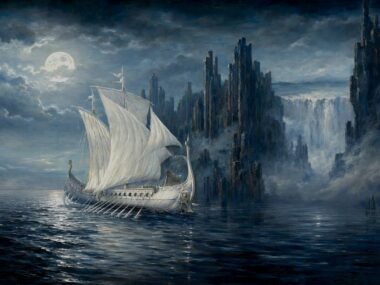
Basil Elton, custode di un faro, viene attirato da una misteriosa nave bianca per raggiungere terre meravigliose e inquietanti. Non sazio si spinge alla ricerca della mitica Cathuria, ignorando le avvertenze sui pericoli. (racconto breve di H.P. Lovecraft – Novembre 1919)
Una maledizione secolare, un castello infestato e un alchimista sopravvissuto per seicento anni in nome della vendetta. (altro racconto breve di H.P. Lovecraft del 1908)
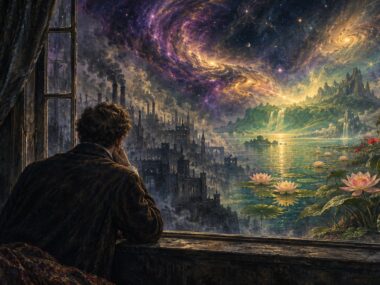
Il protagonista è semplicemente un uomo anonimo che, attraverso il sogno, evade dalla desolazione del mondo moderno e raggiunge una dimensione fantastica. Azathoth – di H. P. Lovecraft – Giugno 1922.
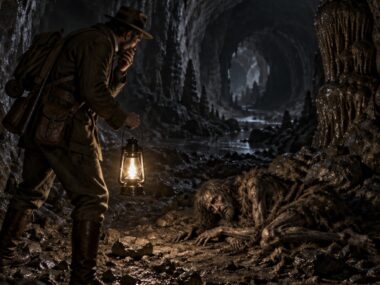
Nelle profondità di una caverna, dove nell’oscurità la civiltà sembra un ricordo lontano, la paura coglie l’uomo che non riconosce sé stesso nel proprio simile.

 Lucien


 Lucien




Lascia un commento
Devi essere connesso per inviare un commento.